
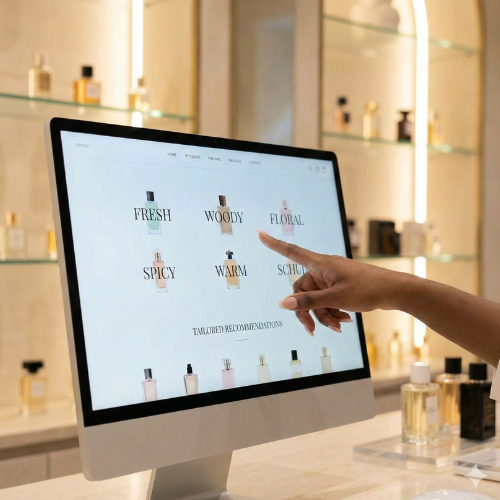
Scent is the next digital frontier
The global perfume market is undergoing a technological revolution. IBM's Philyra has analyzed over two million fragrance formulas. Tom Ford’s 2025 Fragrance of the Year was AI-assisted. From Google → Osmo's neural networks mapping molecular structure to scent, to EEG headsets predicting fragrance preferences, to deep learning models optimizing how perfumes evolve through space and time. This piece explores how advanced technologies are reshaping perfumery while preserving its artistry.
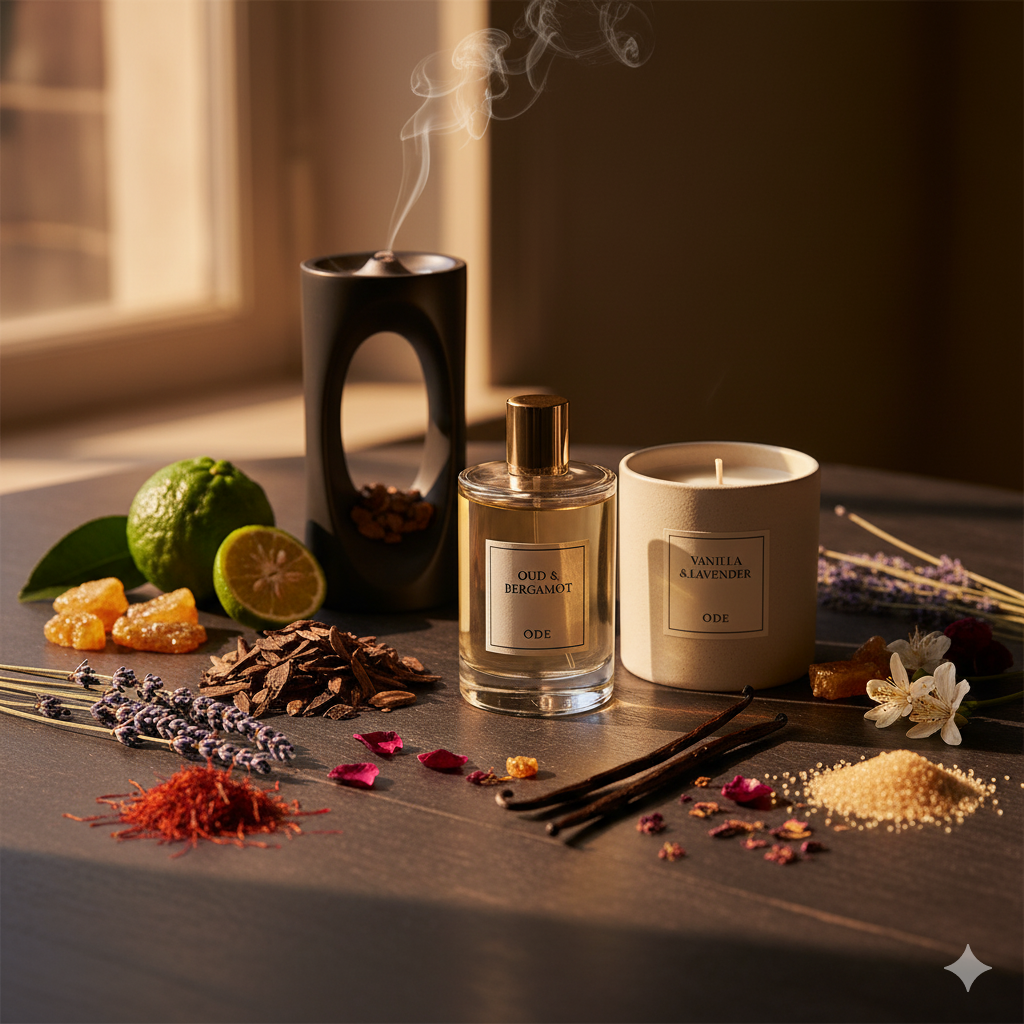
Perfume was our first algorithm
Long before formal math, Tapputi of Mesopotamia was already experimenting with scent. Around 1200 BCE, she distilled flowers, adjusted ingredients, and tested how perfumes evolved on skin and made people feel over time. What she understood intuitively is what we now call the three acts of perfume: the first impression, the heart you live in, and the memory that lingers. We still experiment the same way today, through layering and building scent wardrobes for different moods and moments. Perfumery was one of our earliest systems: input ingredients, test combinations, optimize for feeling.
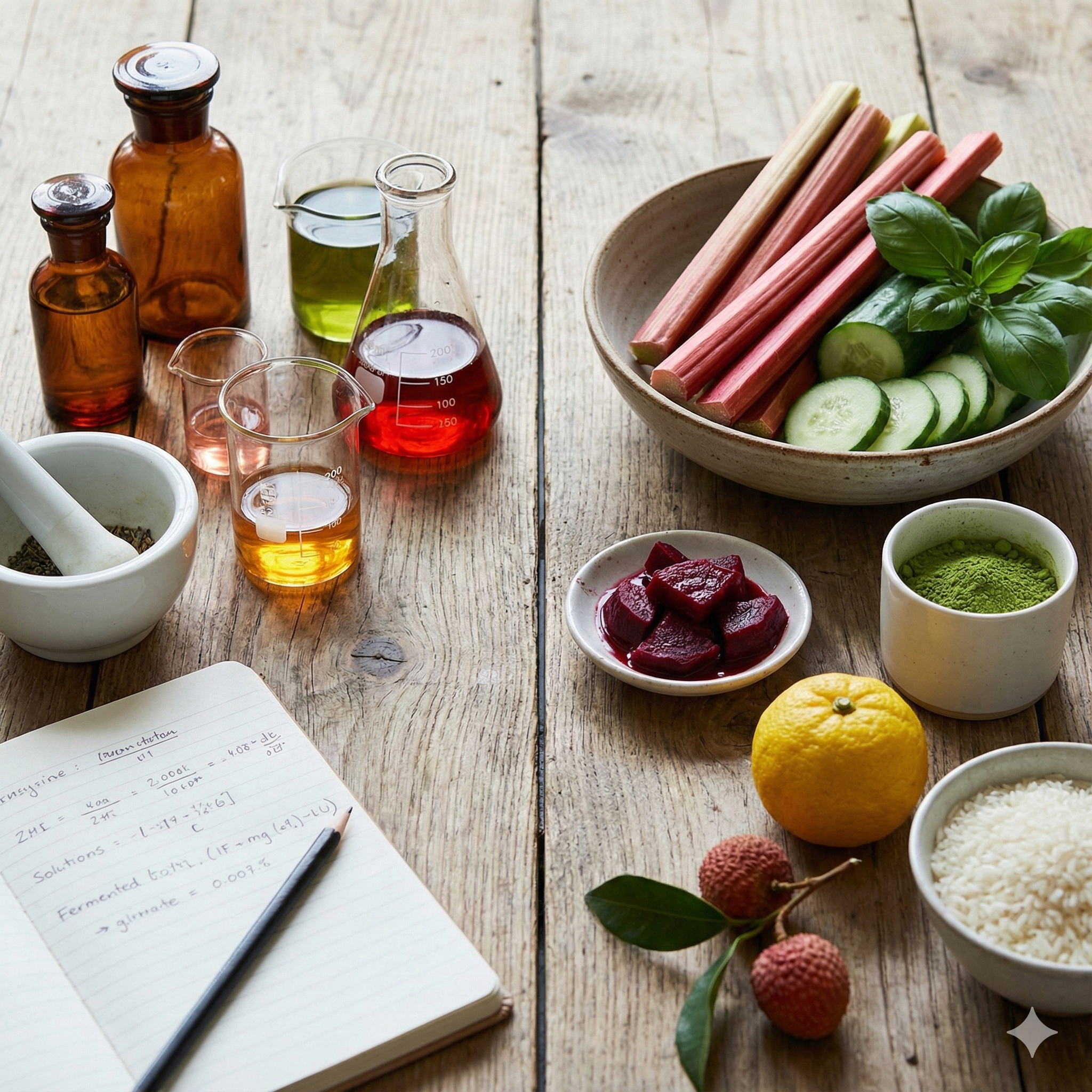
Savory gourmands & the next big fragrance trends
Pistachio perfumes were everywhere in 2025. But the sweet, dessert-style scent trend is starting to change. Perfumers are looking to experiment more with fresher, more savory smells. It feels a lot like what’s happening in food right now. There’s also an interesting angle on the reduction in appetite and turning to food-smelling perfumes. This piece looks at how food trends turn into fragrance trends, and what that means for what we’ll be smelling in 2026.
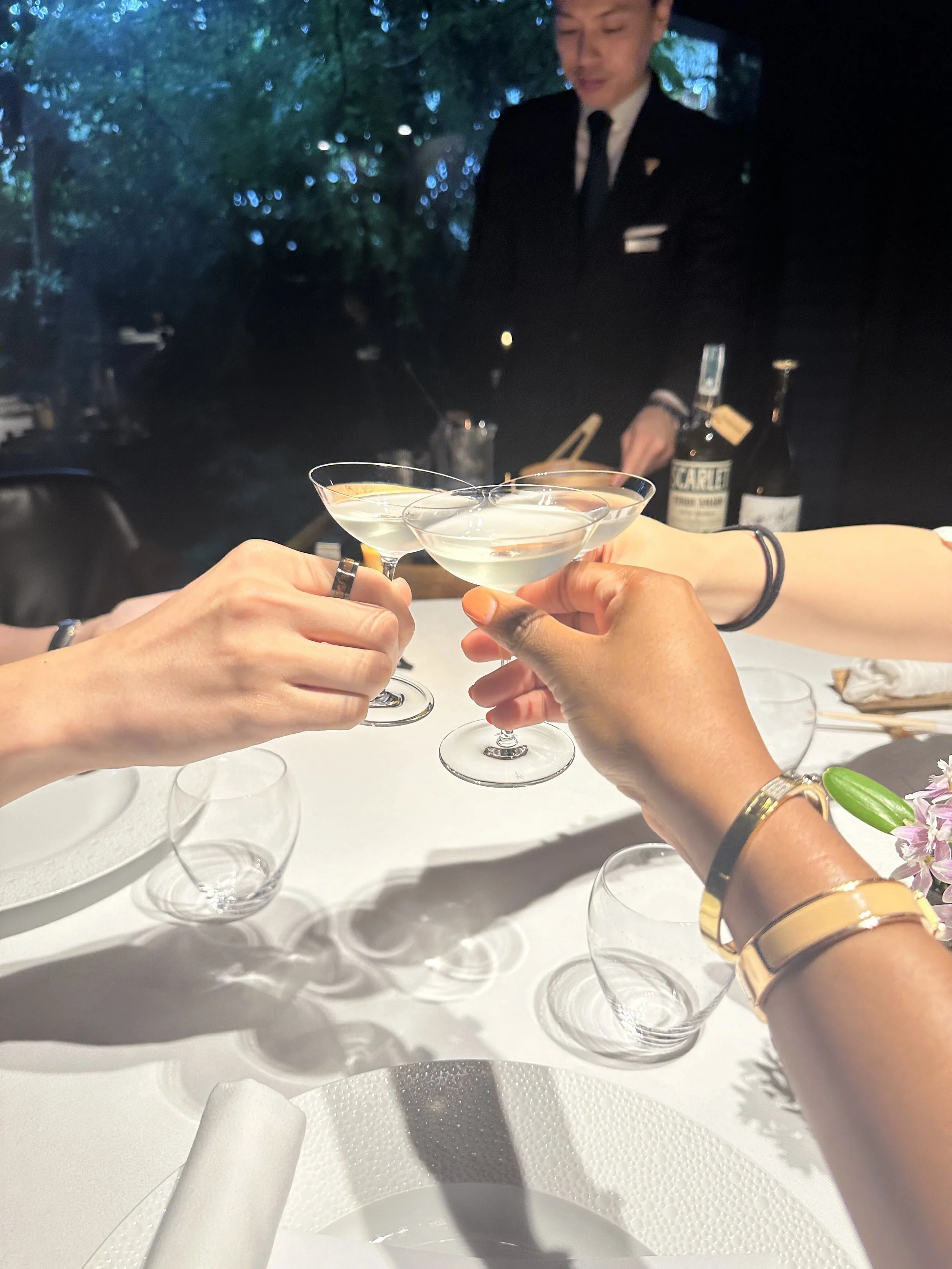
Dining in 2026 | experience economy 2.0
Dining in 2026 is all about the experience. I gathered data from top industry reports (OpenTable, EHL, AF&CO. + Carbonate, dsm-firmenich, and more) to break down what's actually happening. Experiential dining is up 46%. People are paying for the story, the interaction, the memory. Flights of everything, one-hit-wonder restaurants, prix-fixe menus; people want to sample & explore. And discovery is shifting: Reddit is now the #2 site by search traffic, & 44% of people plan to use AI for restaurant discovery. Here's everything you need to know about where dining is headed next year.
Travel in 2026 | experience economy 2.0
People are choosing trips based on how they want to feel, and that’s really what the experience economy 2.0 looks like. In this guide, I pulled insights from the biggest travel and hospitality reports for 2026 and broke down everything from high-energy trips like Rio Carnival, World Cup, and Detty December in Lagos to emerging spots like the Red Sea, Phu Quoc, and the Faroe Islands. You’ll find ideas for solo travel, beaches and wellness, food-focused trips, rare events like the 2026 solar eclipse, and more. If you’re planning travel next year, start here.
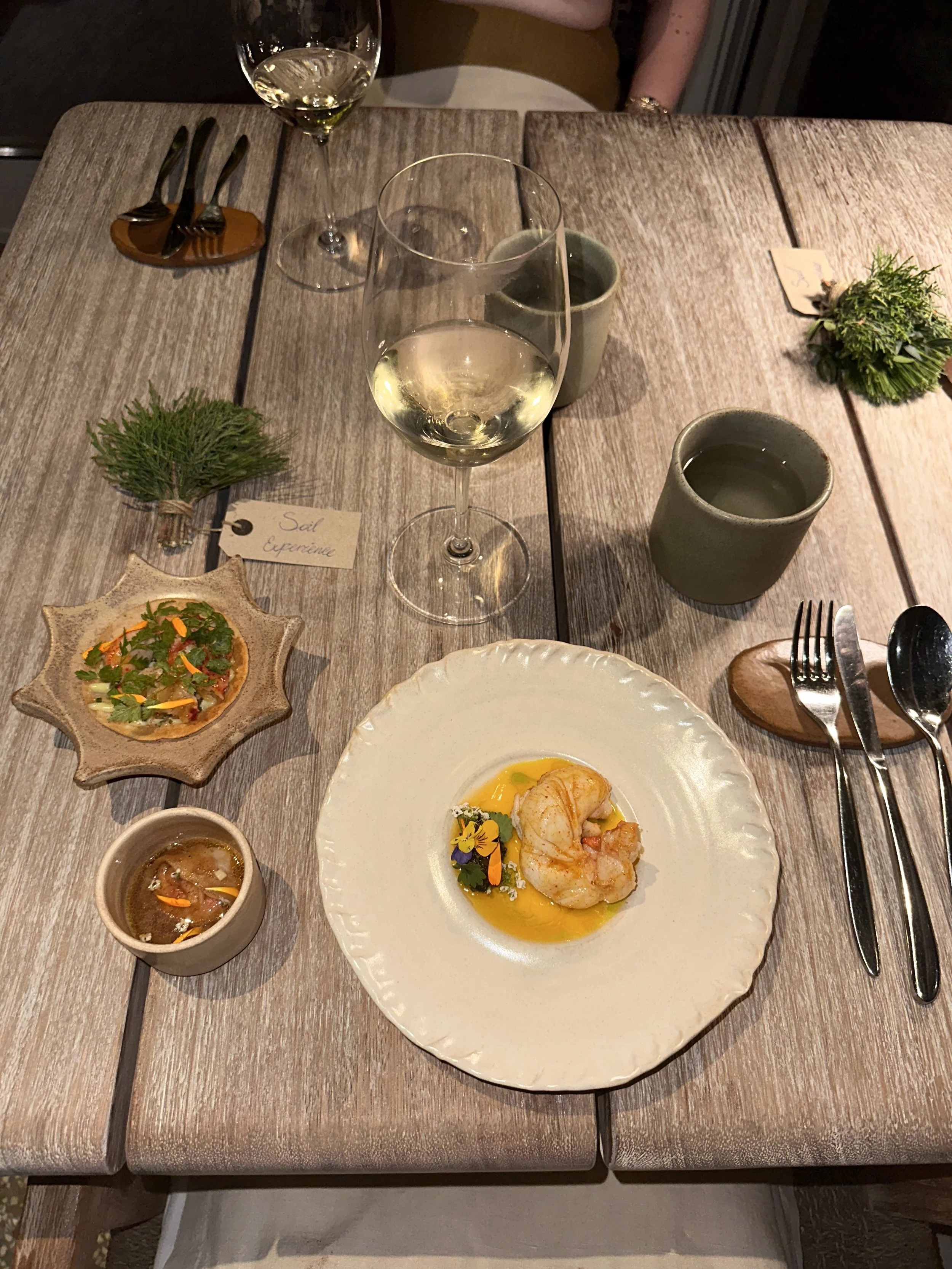
experience value = emotional impact ÷ time spent
Something fundamental has shifted in how consumers measure value. It's no longer about what you buy, it's about what you feel. Across industries from fragrance to hospitality, from fine dining to beauty retail, I derived that experience value equals emotional impact divided by time spent. Welcome to the Experience Economy 2.0, where brands across sectors are shifting from products and services to holistic sensory experiences that engage emotions, memories, and multiple senses simultaneously.
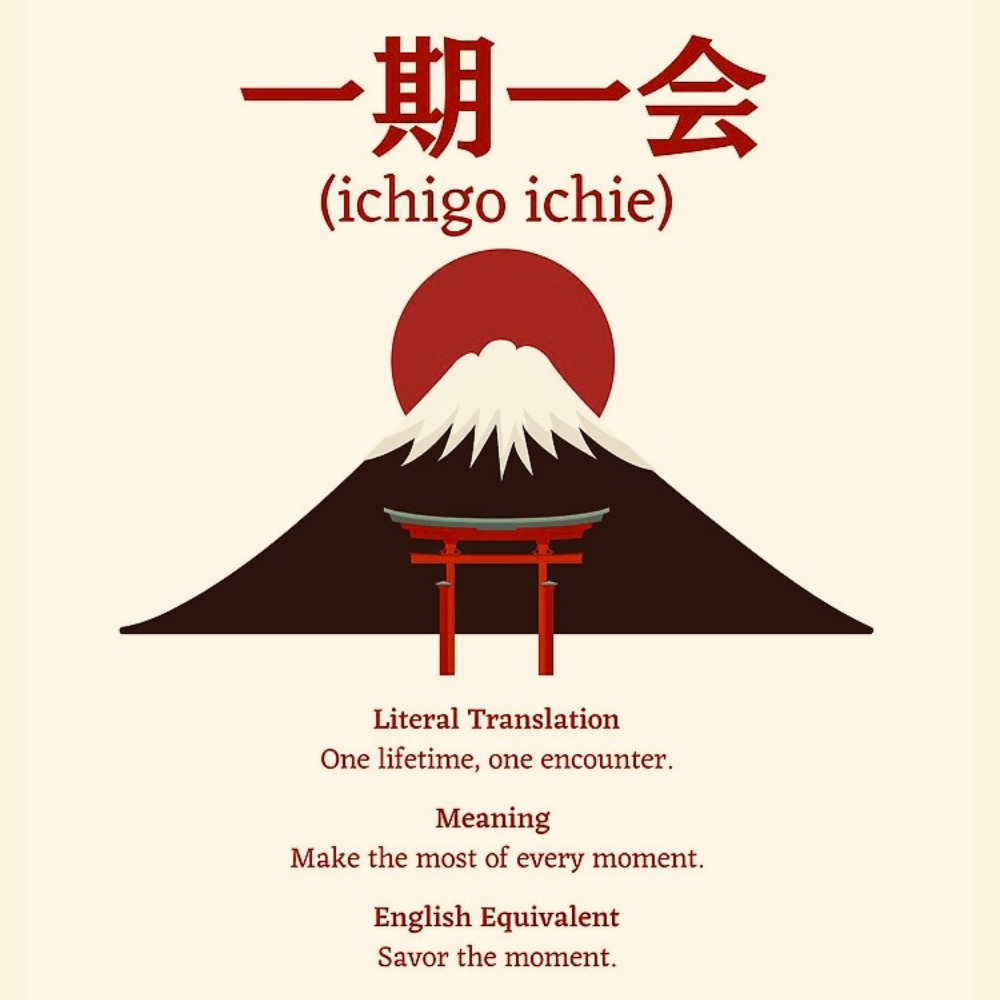
experience = space · time
In my last post, I wrote about how how brands now design for how we spend time with them, not just what we buy. The attention/creator economy has turned time into a sense of its own: something you feel, allocate, and remember. So in this post, I’m introducing the Ode Experience, a way of planning around time as a sense. And I’ll use Japan, a trip I planned with two friends, to show how this plays out. The experiences that stay with us are the ones where time is intentionally shaped & the Ode Experience is simply time well spent.
t = t₀ + Δt · (signal strength)
I’ve been thinking about time as a kind of diagnostic tool, a way to understand the moment we’re living in. If future time = present time + (Δt × signal strength), then the future isn’t somewhere ahead of us. It’s here... but blurry. Lists like Forbes 30 Under 30 are one of those signals. This year’s top cities (NY, SF, LA, Boston, Chicago) map almost perfectly onto the places with the highest AI job density + the strongest builder/creator ecosystems. Even the funding tells its own story: $3.8B distributed across 600 honorees. Time leaves traces of signals to anticipate & I’ll dive deeper into the data.

The digital divide 2.0
I was wondering, if the “Imagine if…” spaces ever became real, where would they appear first? Probably in the cities that already have the tech, density, and money to support them. And that’s the real point, just like some places have bad physical UX, some have bad digital UX. The new digital divide is about AI: where you live now shapes what tools you can use, what jobs you can access, and whether you can compete at all. There are a handful of “hotspots,” creating pressure on community, relationships, and affordability. This shift affects where we live, which properties hold value, and how invisible digital systems are quietly shaping opportunity.
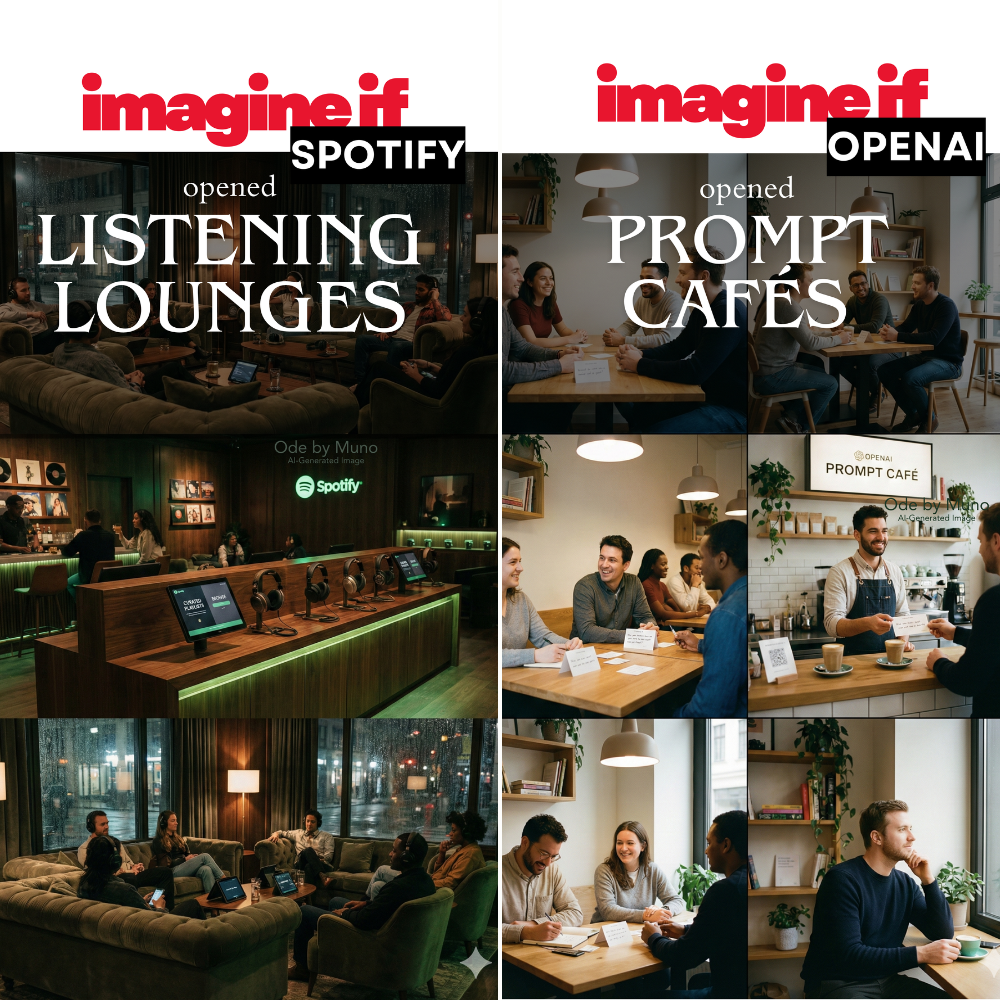
“Imagine if…” : thoughts on future spaces
What if the spaces we already use every day were redesigned for connection instead of efficiency? Imagine AMC theaters turning into culture rooms for watch parties, Trader Joe’s adding tasting lounges, gyms creating cooldown cafés, or museums offering sketch-friendly community hours. Picture Sephora running free beauty classes again, Spotify opening listening lounges, or Discord hosting IRL local servers for gaming and board games. None of these require building new infrastructure; just rethinking what’s already there.
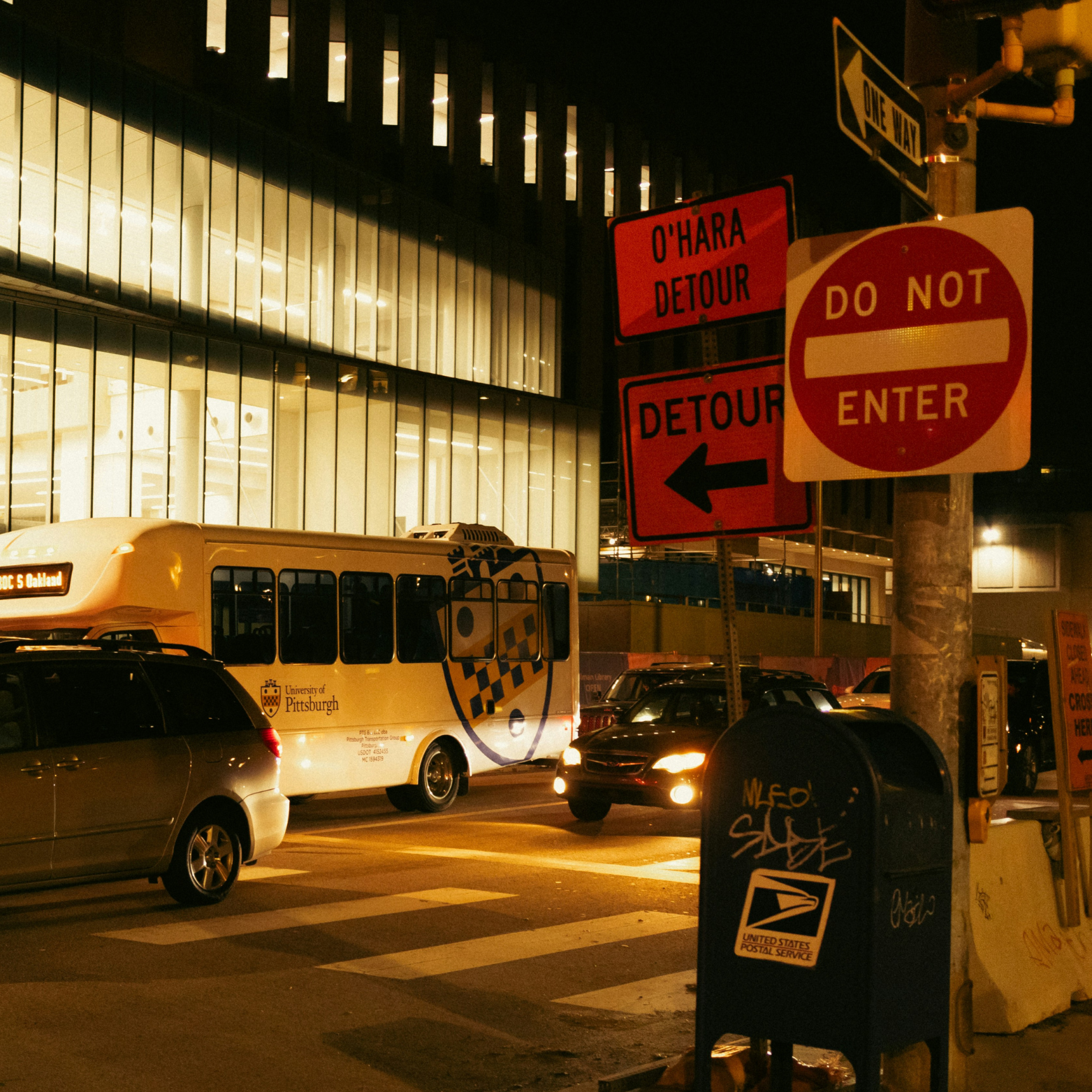
Some cities have bad UX
I came to Pittsburgh for grad school and somehow I'm still here. The city revolves around sports bars, hockey, football: none of it my vibe. Making friends feels like playing chess as an amateur. The demographics skew older & non “me” in ways that make connecting harder. The infrastructure doesn't help. Houston’s similar... people basically live 40 mins apart. NY has access, but every trip is a mission. Urban design is interface design. Some cities are cognitively expensive: car-dependent, confusing, spatially stressful. Bad planning is a daily tax on relationships, activities, access. Let’s talk about it.
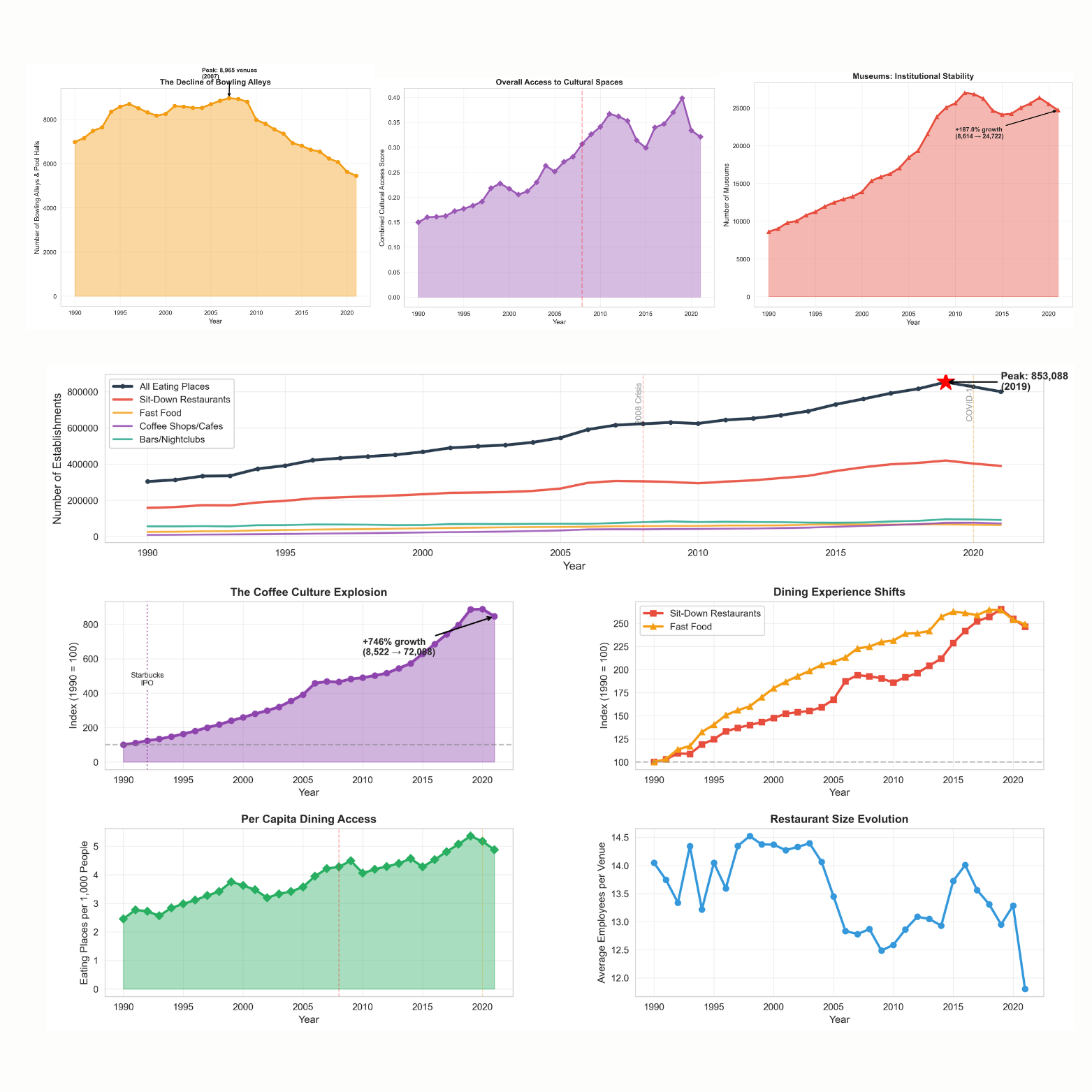
Third places are disappearing — here’s the data
My last post shared my personal experience with disappearing third places. This one looks at the data. Using the National Neighborhood Data Archive (NaNDA), I analyzed three decades of establishment trends across U.S. neighborhoods where people could eat, shop, exercise, and gather from 1990 to 2021. The dataset shows which spaces grew, which collapsed, and where access declined. It also reveals a clear pattern: America’s social infrastructure shifted, segmented, and became more paywalled.

Third places are disappearing
I've always been someone who learns through experience: cooking, exploring, new activities. But the spaces where casual interaction happened are disappearing. Coffee shops are remote offices now. Libraries feel formal. Parks require a reason. Malls don't feel safe. Froyo shops closed. Nice bars are too expensive. These every day spaces between home and work/school places shaped how we connect. Without them, we're finding it hard to meet and be around people casually. Where are your third places? I'm still searching for mine.
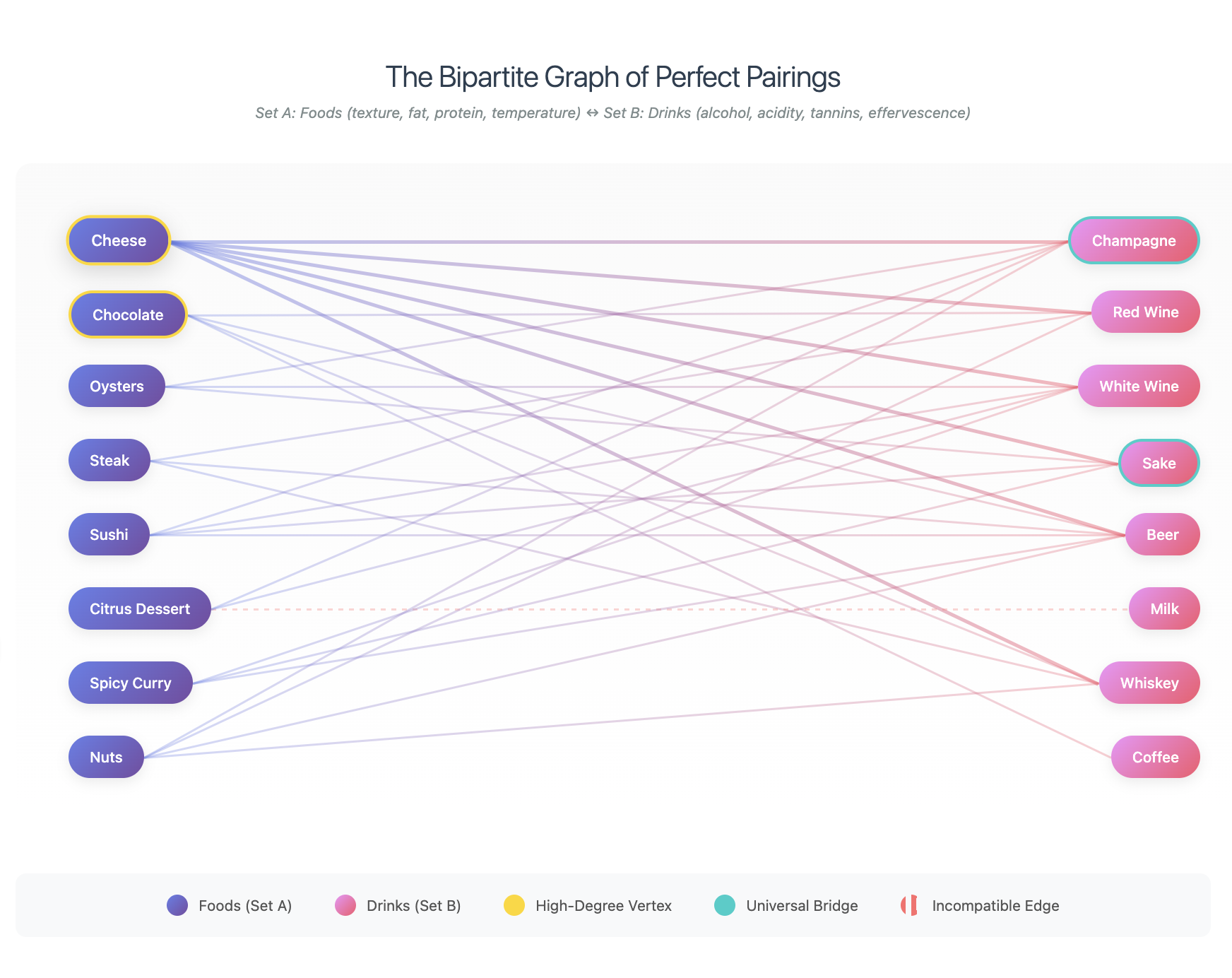
food ⇔ drink : the bipartite graph of perfect pairings
I’ve always found pairings fascinating and exciting. This year I started experimenting more myself, putting together little food-and-drink menus at home. Somewhere in that process, I’ve been building a mental graph. Set A: foods. Set B: drinks. The “edges” are whatever actually works: harmony, contrast, surprise. I used to think pairing was mostly rules but now it feels like learning which nodes in your taste map want to connect, and why.
Your cooking style is an edible social graph
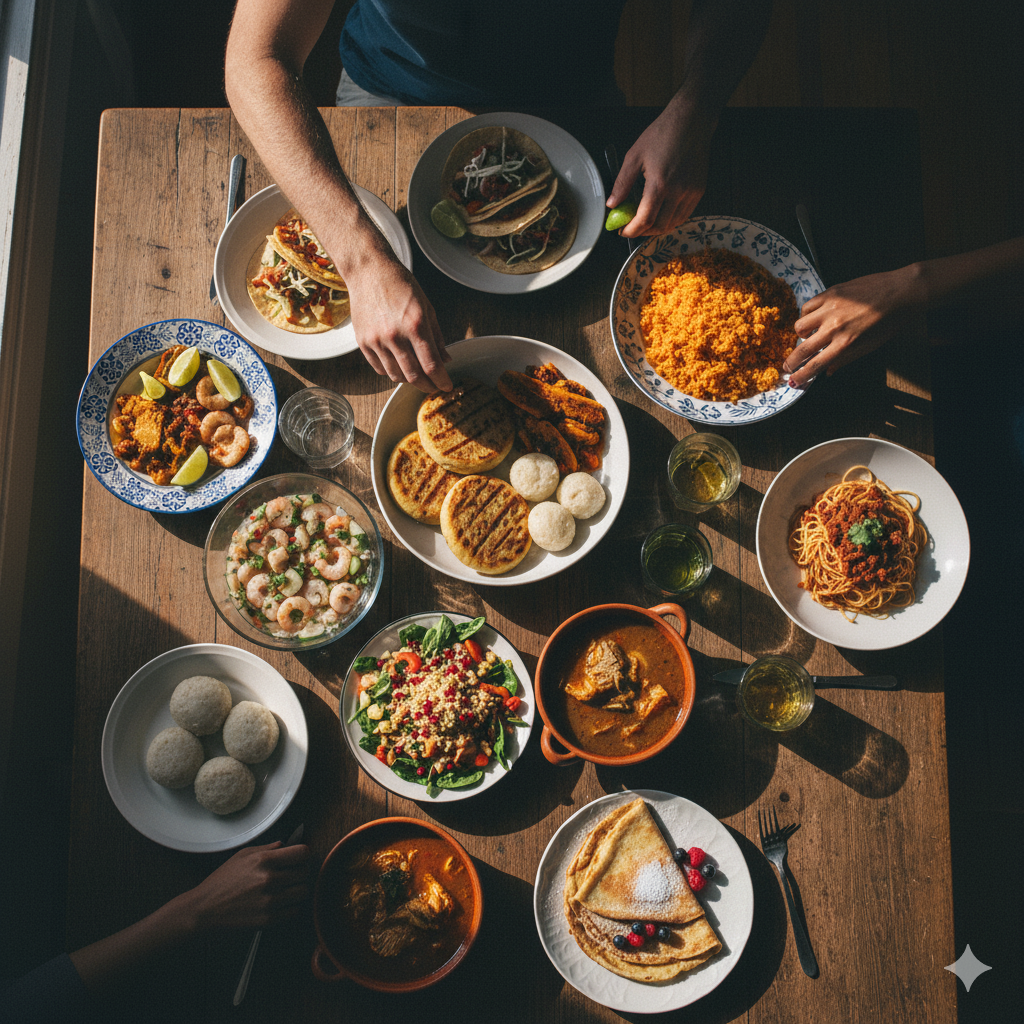
I didn't really learn to cook from recipes. I learned from my mom & friends showing me how, from cooking shows, from all the chefs that let me experience their dishes, from that one 4-hr food tour I did in Greece. Every time I make something now, I'm thinking about someone or somewhere. My cooking style is just everyone I've ever shared a meal with and all the places I’ve eaten at, all mixed together.
Taste has infrastructure too. Here's how to notice it.
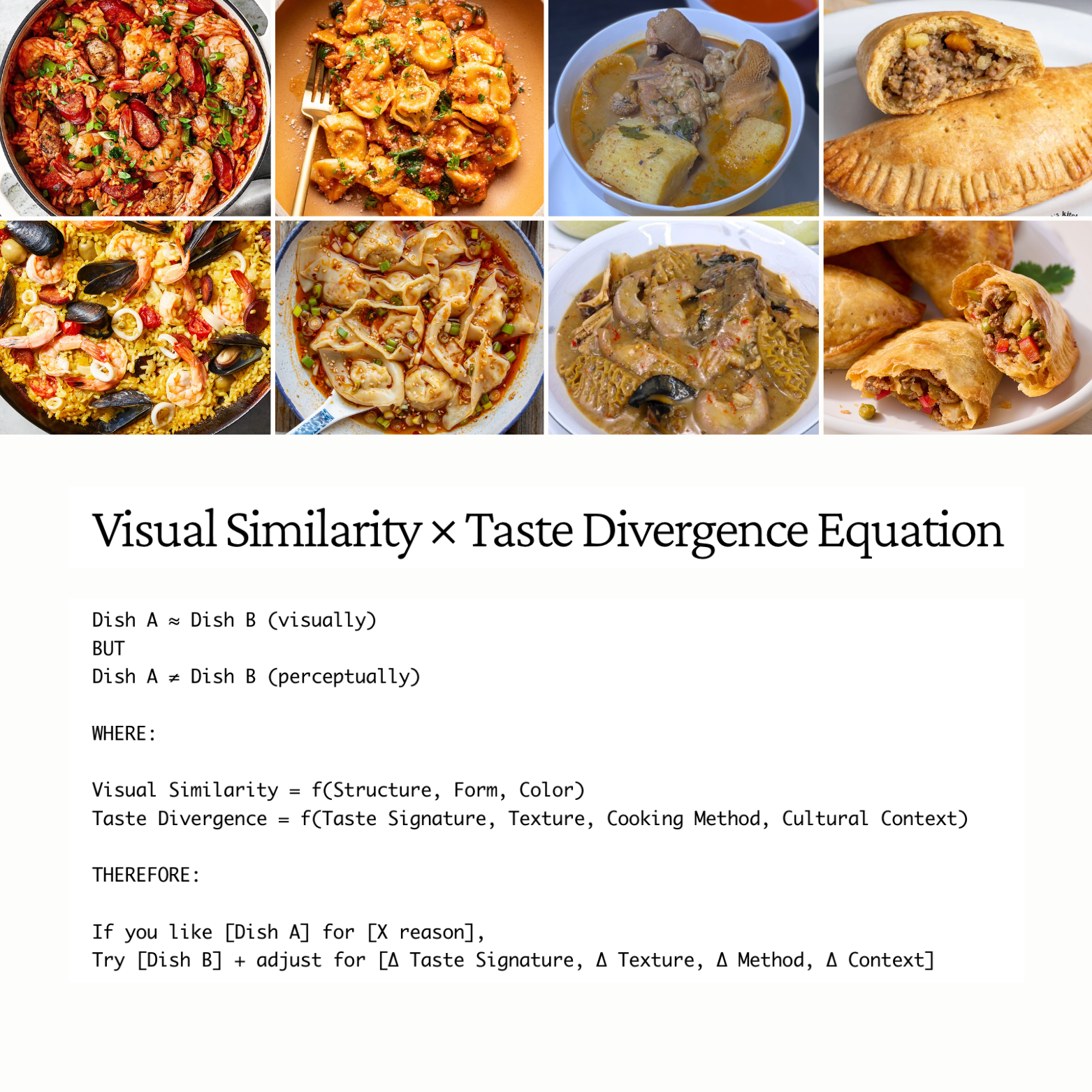
You know that moment when you're craving something familiar but the menu's full of unknowns? Or when you've moved somewhere new and can't find your comfort foods? I've found a way to decode unfamiliar dishes by recognizing their hidden connections to what you already love. Through 10 paired examples — from fried plantains vs. fried bananas to empanadas vs. meat pies — I demonstrate how to read the invisible architecture beneath what we eat.

Infrastructure is invisible until it isn't
I was updating my map of the AI ecosystem when a pattern emerged: most people talk about AI as if it's invisible software. It is a stack of dependencies, from rare earth minerals to power grids and massive data centers. Industries that never had to think about each other are now completely interconnected. The "invisible" physical systems that power our digital world are becoming visible, not to just a few.
How AI names encode design philosophy: a timeline
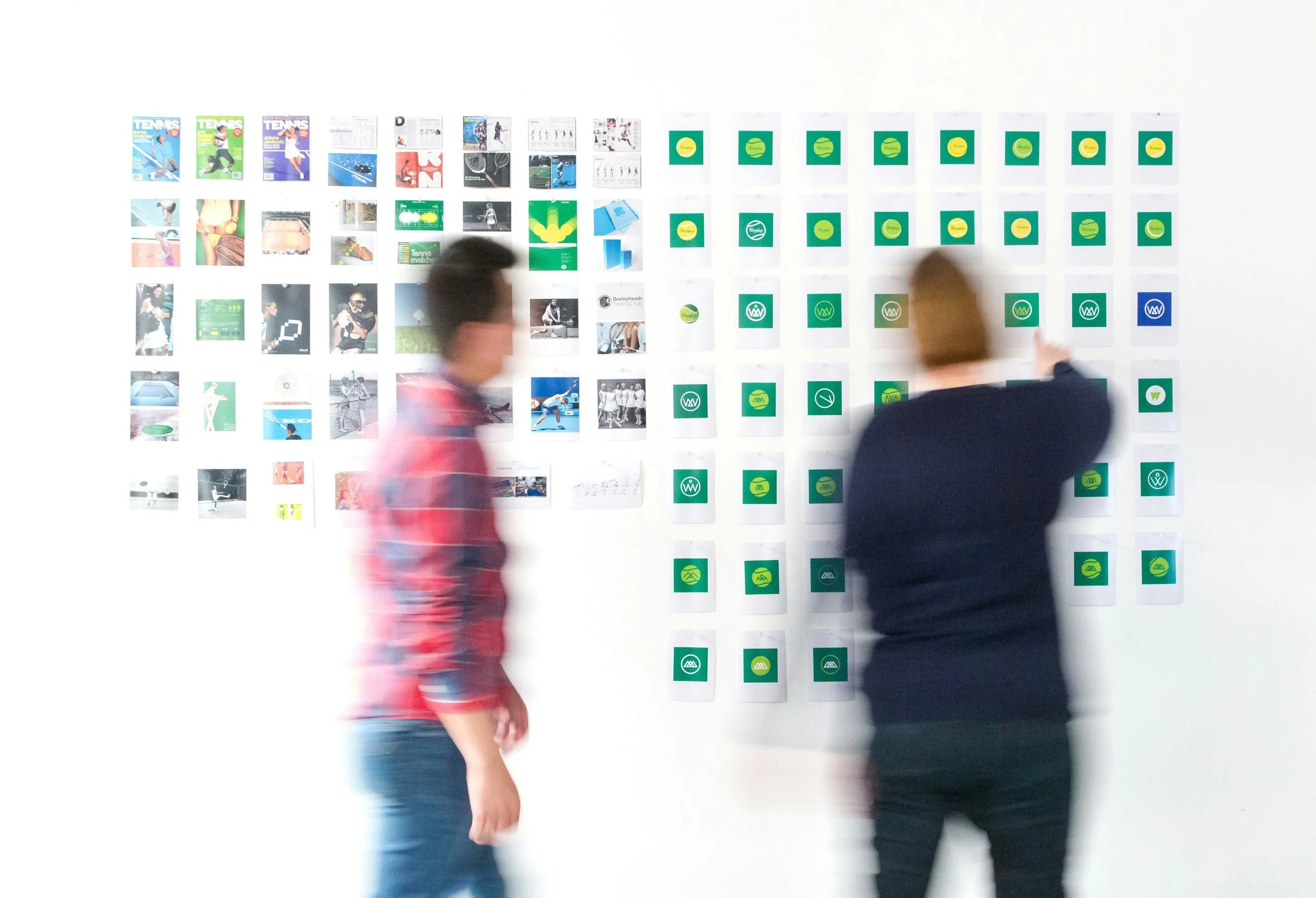
From AlphaZero's blank slate to Superhuman's rebrand from Grammarly, 20 systems across 8 years reveal how AI naming evolved from functional to philosophical. Transformer announced a paradigm shift in 2017. ELMo and BERT made NLP approachable through Sesame Street characters. Agents/copilots are creating a new system. The metaphors are changing our relationship with technology.
Why AI models have poetic names
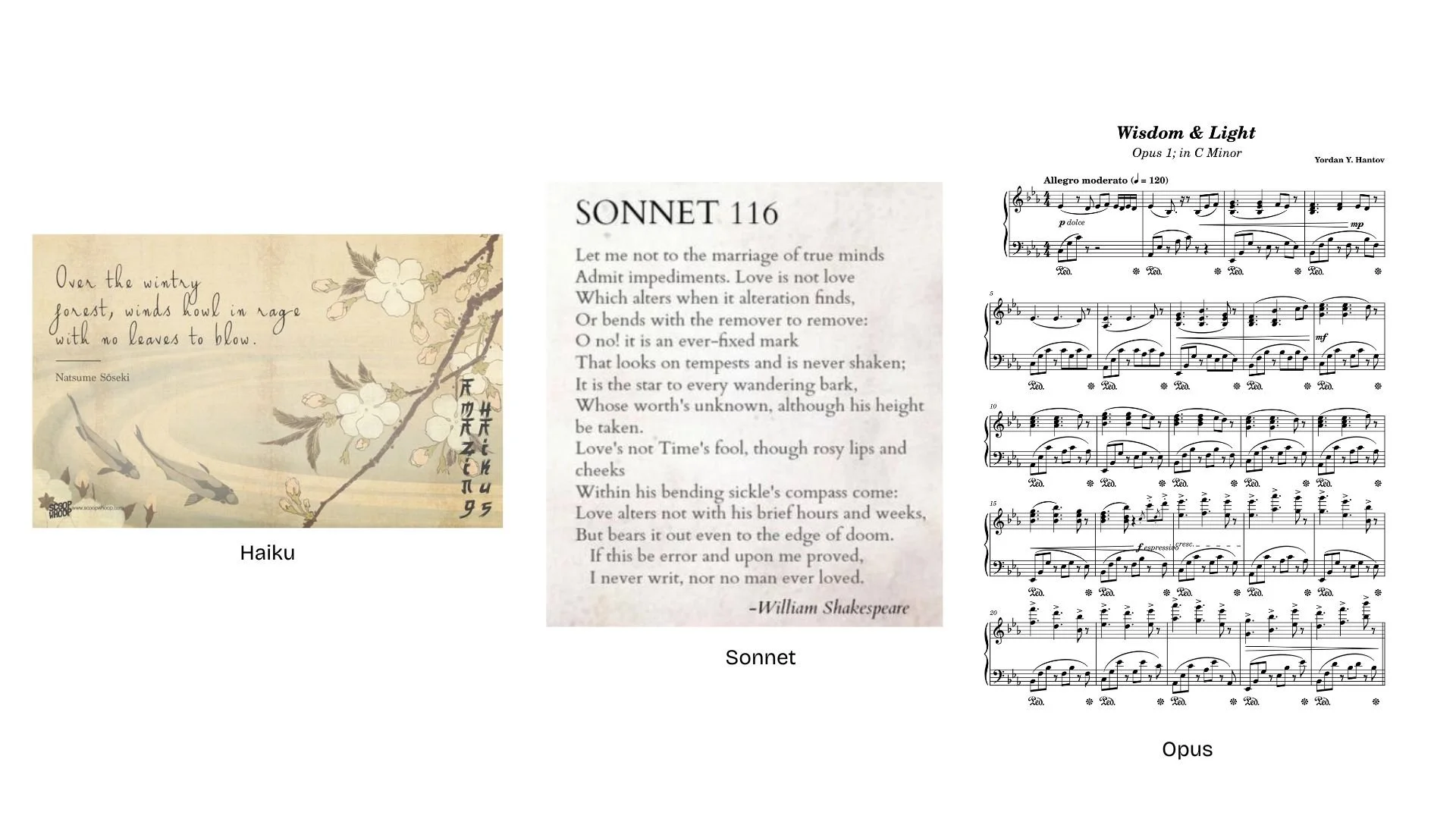
When Anthropic names a model "Haiku," they're encoding design philosophy: maximum meaning, minimum tokens. AI vocabulary shifted from mechanical (overfitting, regression) to psychological (hallucination, memory). We don't panic about logistic regression the way we do for LLMs. Because once you name something like it has a mind, you've already committed to treating it that way.

Think about thinking
When you interact with ChatGPT, you start noticing how you think. You refine prompts and realize you're mapping what you really want to know. You're not just getting answers, you're discovering how you ask questions. AI becomes a mirror, making the invisible systems of thought suddenly visible. We've always been part of feedback loops, shaping and shaped by the systems around us. The only difference now is that this feedback loop is immediate, responsive, and "feels more personal," forcing us to confront our role within it.