Scent is the next digital frontier
The global perfume market is substantial and growing, with forecasts predicting growth from USD 33.5 billion in 2021 to USD 47.6 billion by 2027, representing a CAGR of 6.0% (Yahoo Finance).
But creating the perfect fragrance is far from simple. Perfume selection and formulation are influenced by numerous factors including concentration, cost, sensoriality, experience, memory, sensitivity, lifestyle, seasons, age, cultural background, and individual influence.
The fragrance industry extends far beyond personal perfumes. Fragrances are incorporated into:
Skin products (perfumes, colognes)
Clothing (fabric fresheners)
Cleaning products
Cosmetics
Air fresheners
Candles
Each application requires careful consideration of how the scent will evolve and interact with its environment.
The architecture of fragrance: top, middle, and base notes
I spoke about this in a bit more detail in my previous post. Perfumes are structured in three distinct layers, each playing a crucial role in the overall scent experience:
Top Notes (30%): What you smell immediately after the perfume touches your skin. These components have high volatility and evaporate quickly.
Middle Notes (50%): The aromas that appear as your perfume evolves on your skin, forming the heart of the fragrance.
Base Notes (20%): Dry-down notes that have lingering depth and warmth. These components reduce the evaporation rate of top and middle notes.
Application 1: scent generation and molecular odor mapping
The Challenge
One of perfumery's greatest challenges is predicting how a molecule will smell based on its structure. The human olfactory system is remarkably complex:
100-400 olfactory receptors detect different chemical compounds
~10,000 distinct odors can be perceived by humans
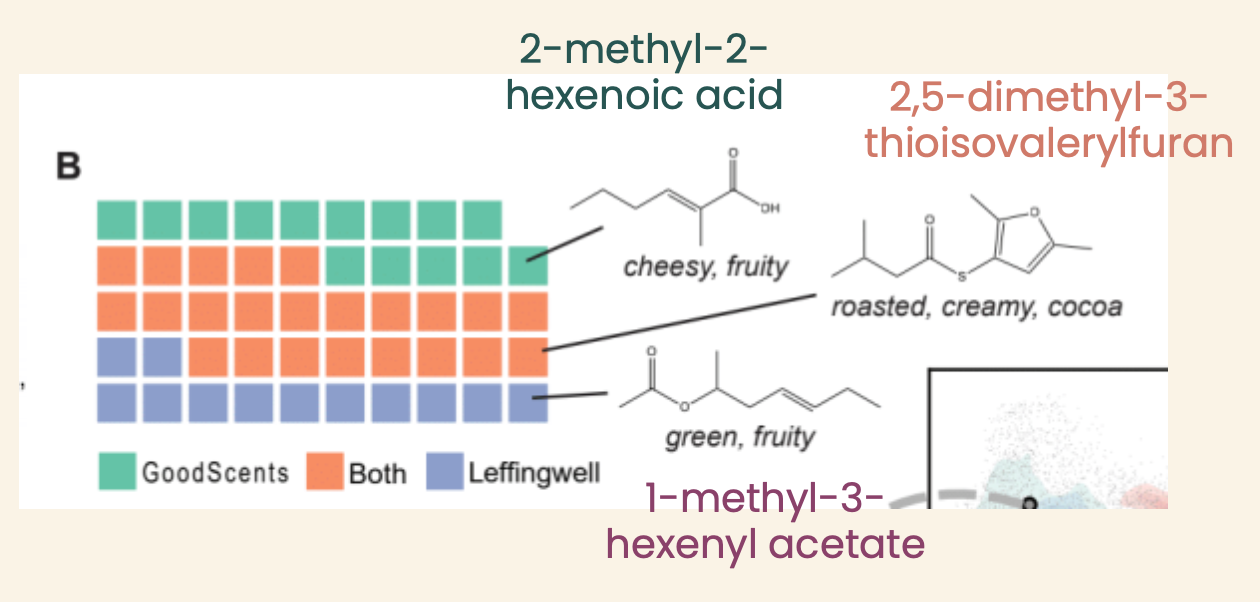
55 distinct classes are used to label scent data
15 panelists are typically needed for each labeled data point
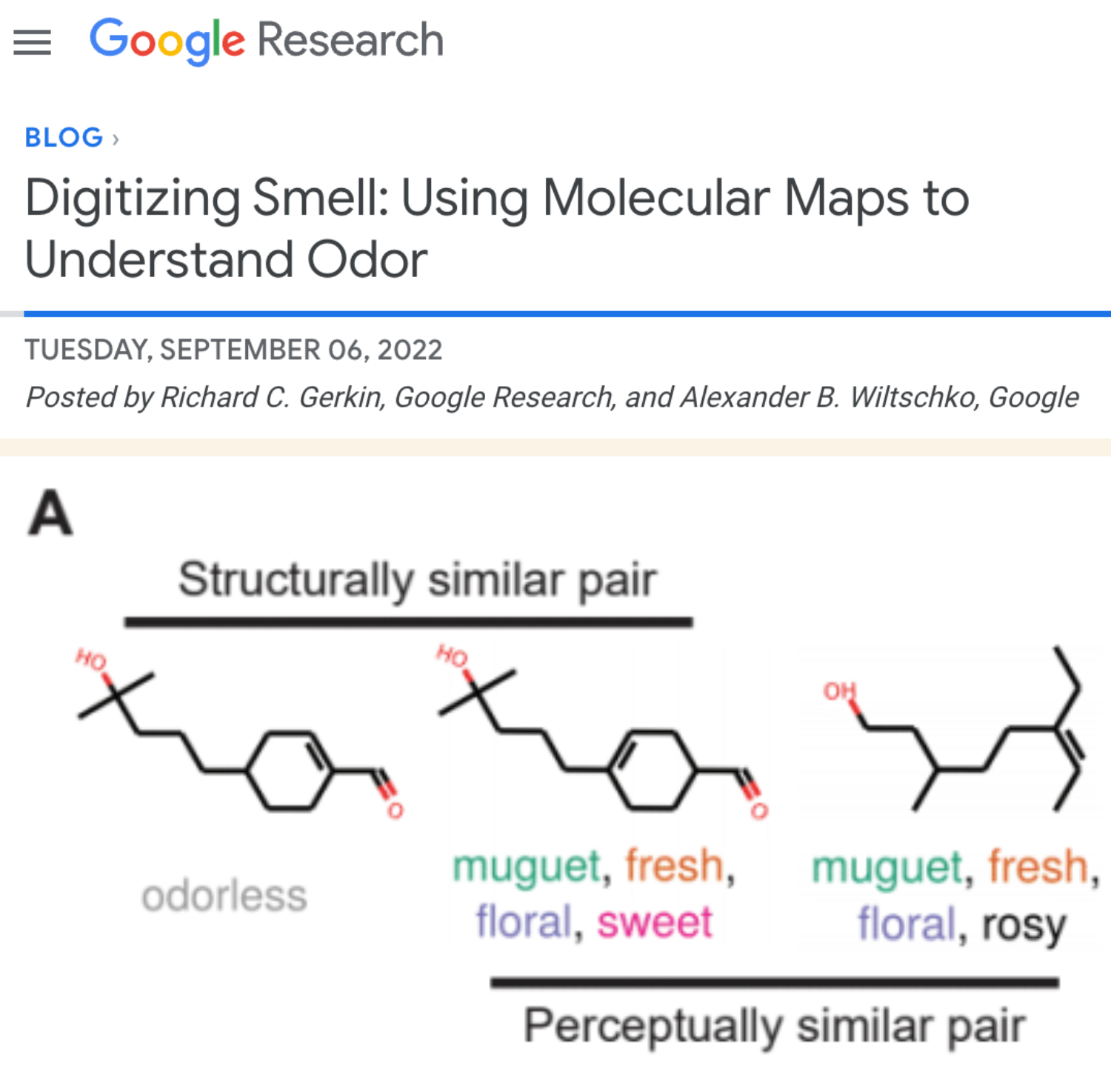
What makes this particularly challenging is that structurally similar molecules can smell completely different, while perceptually similar scents may come from structurally dissimilar molecules.
Google's Solution: Graph Neural Networks and Principal Odor Maps
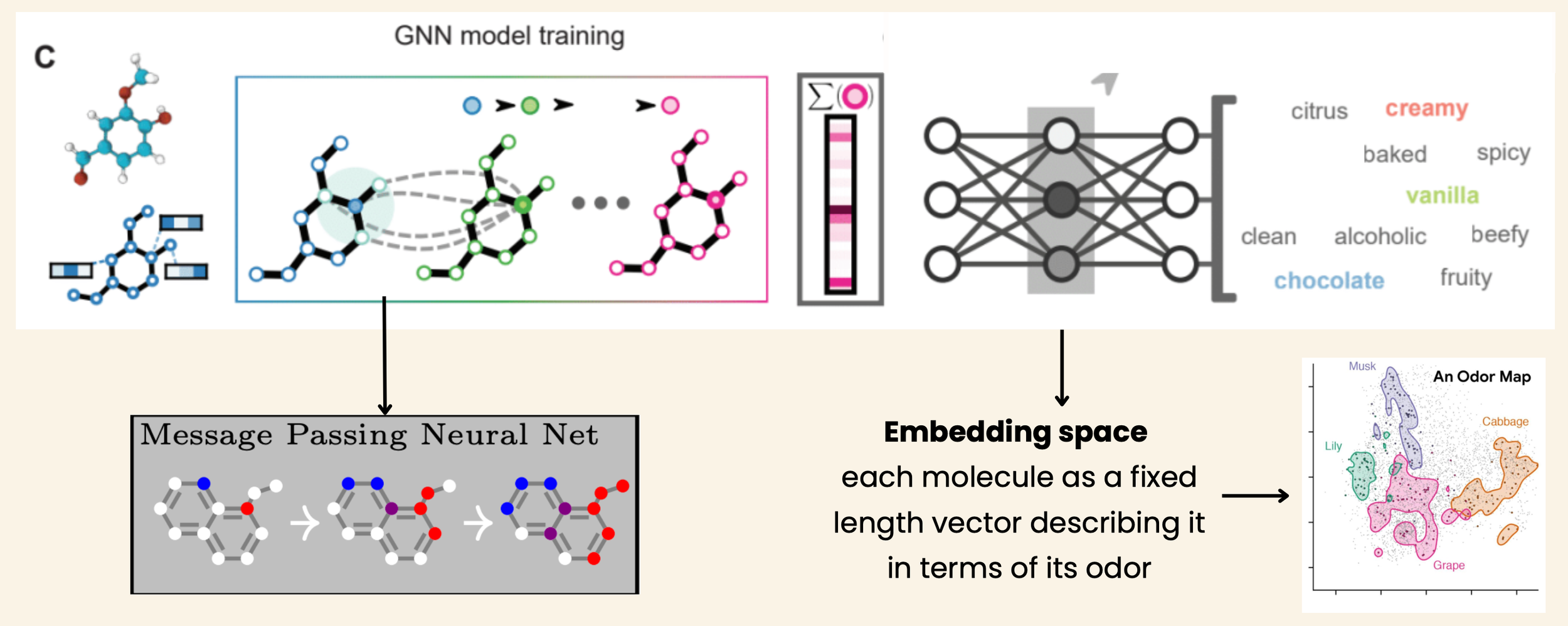
Google Research developed an innovative approach using Graph Neural Networks (GNNs) to learn the relationship between a molecule's structure and the probability it would have each smell label.
The Training Process:
Training set: ~5,000 labeled molecules
Test set: 400 novel molecules
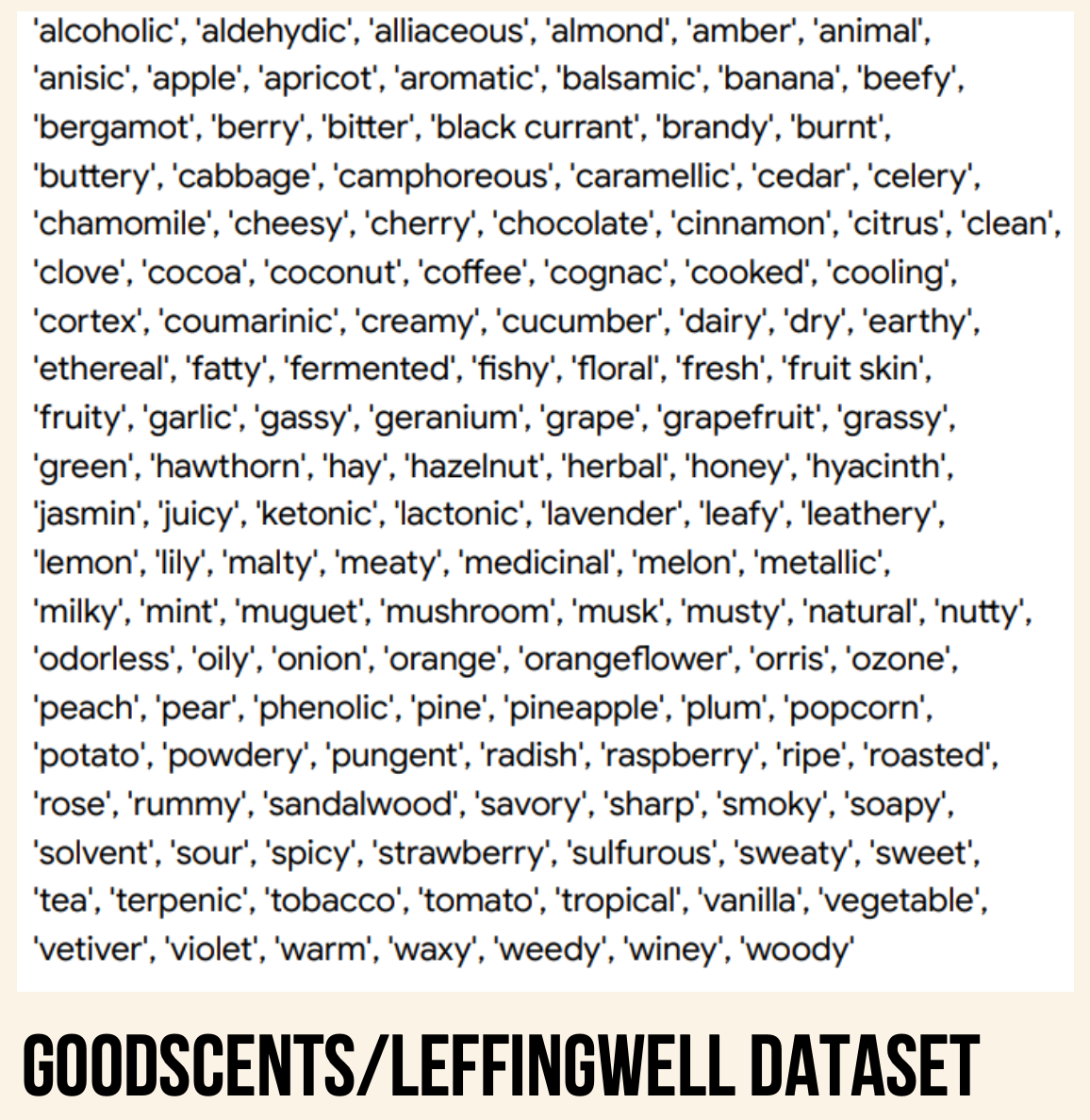
Labels: 55 distinct odor classes from the GoodScents/Leffingwell dataset
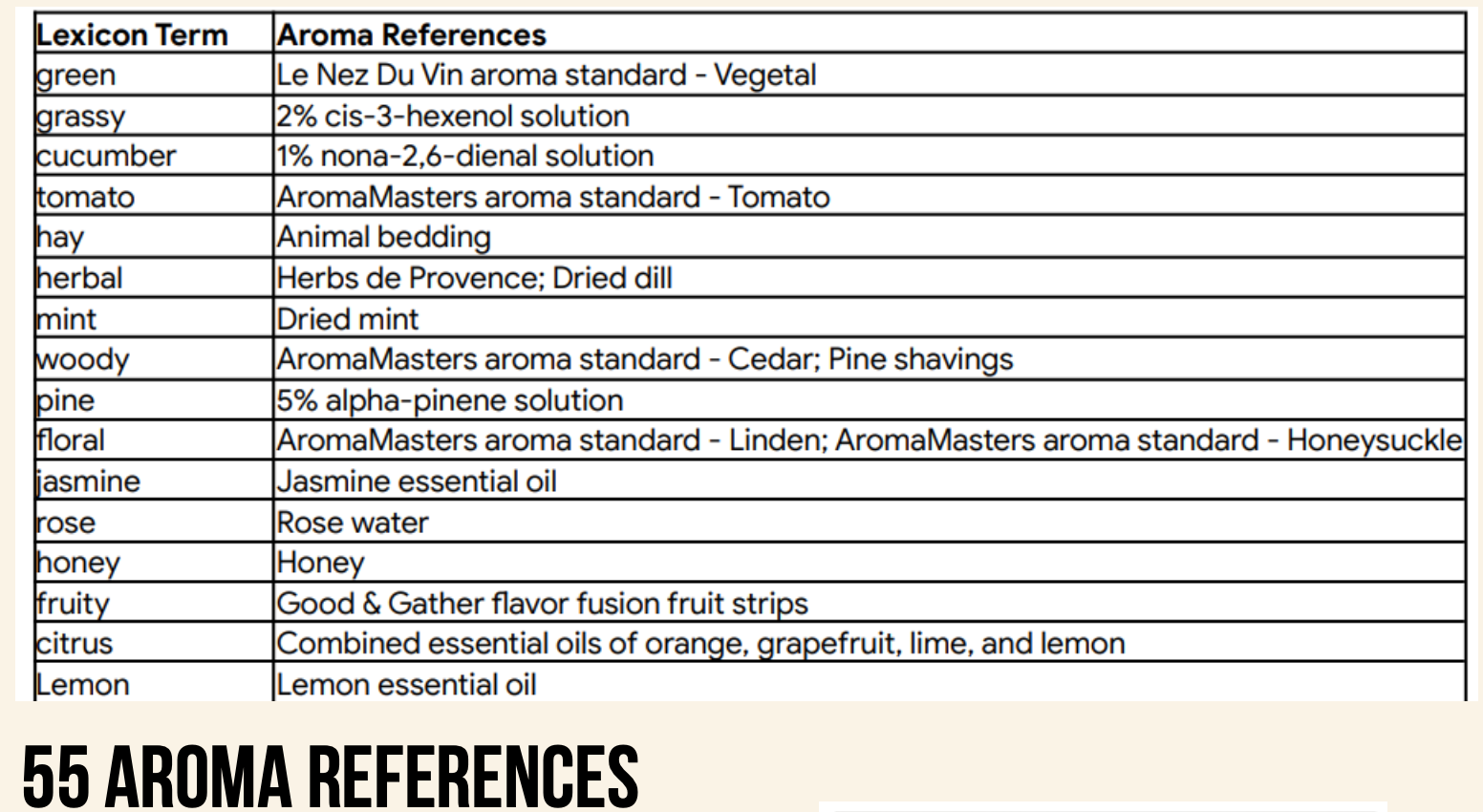
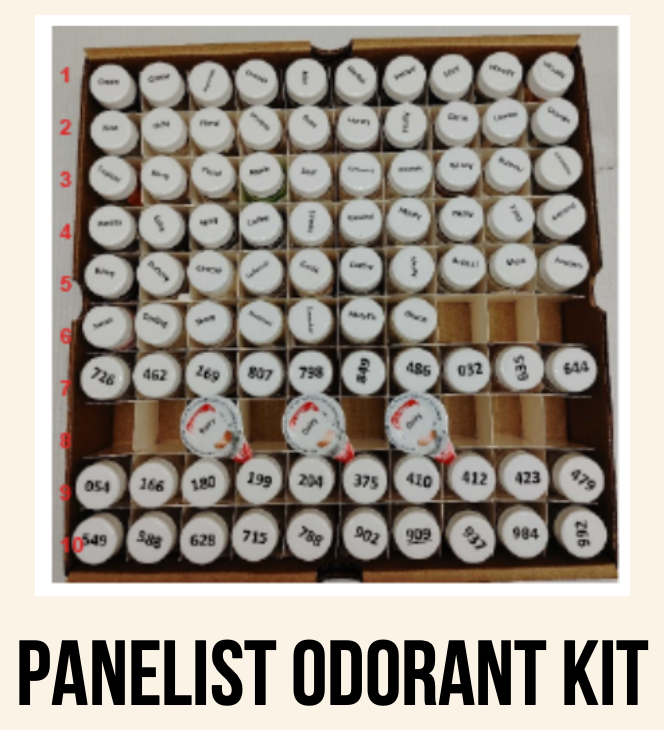
The team used a Panelist Odorant Kit with 55 aroma references, including specific chemical standards for each scent category (e.g., Le Nez Du Vin aroma standard for "Vegetal," 2% cis-3-hexenol solution for "grassy," 1% nona-2,6-dienal solution for "cucumber").
The Model Architecture: The GNN uses a Message Passing Neural Network that processes molecular graphs, where atoms are nodes and chemical bonds are edges. This creates an embedding space where each molecule is represented as a fixed-length vector describing it in terms of its odor, called a Principal Odor Map (POM).
Results and Insights
The model's performance varied significantly based on the complexity of the structure-odor mapping:
High Accuracy Predictions:
Garlic/sulfur compounds
Fishy/amine compounds
Lower Accuracy Predictions:
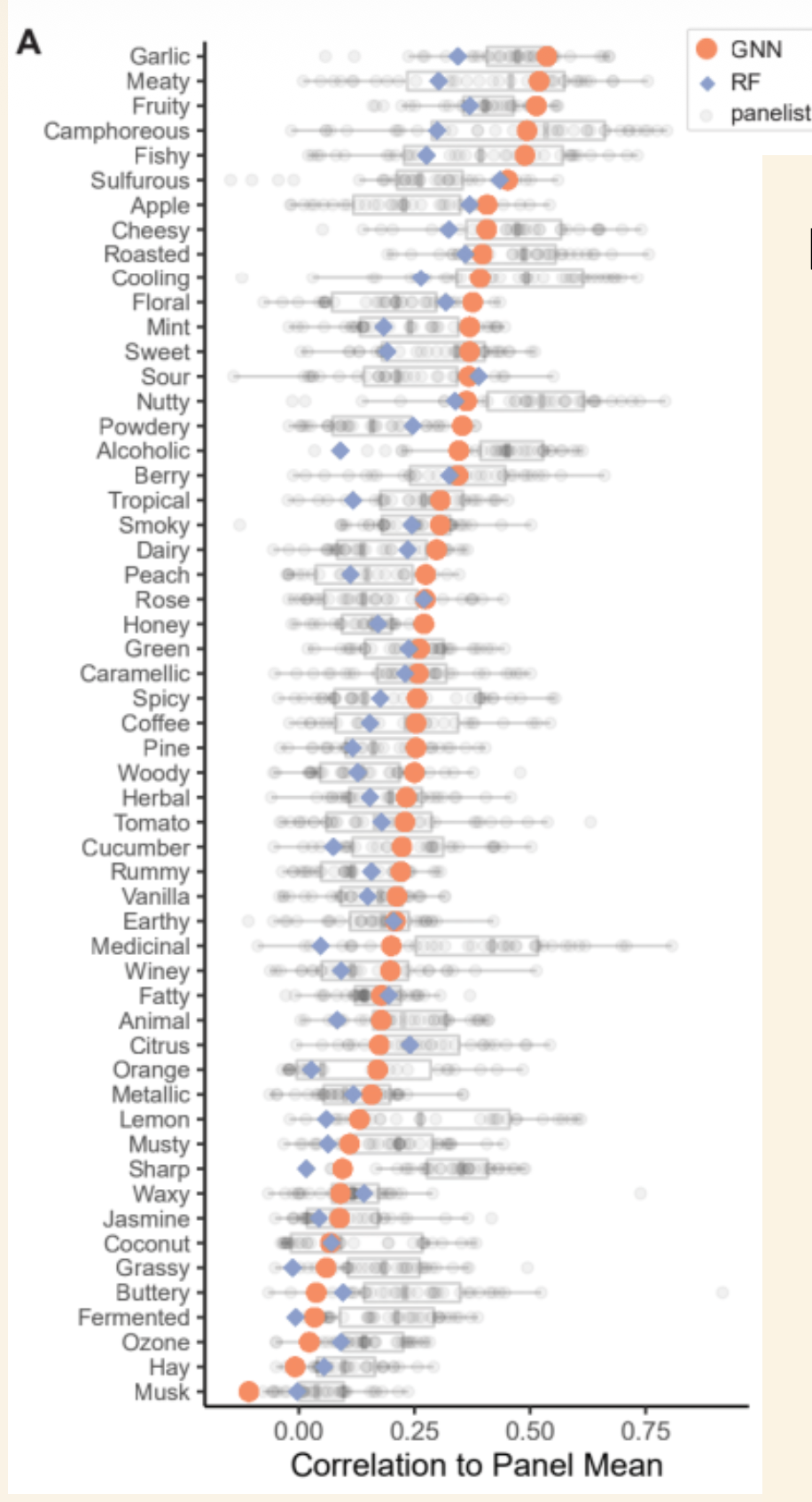
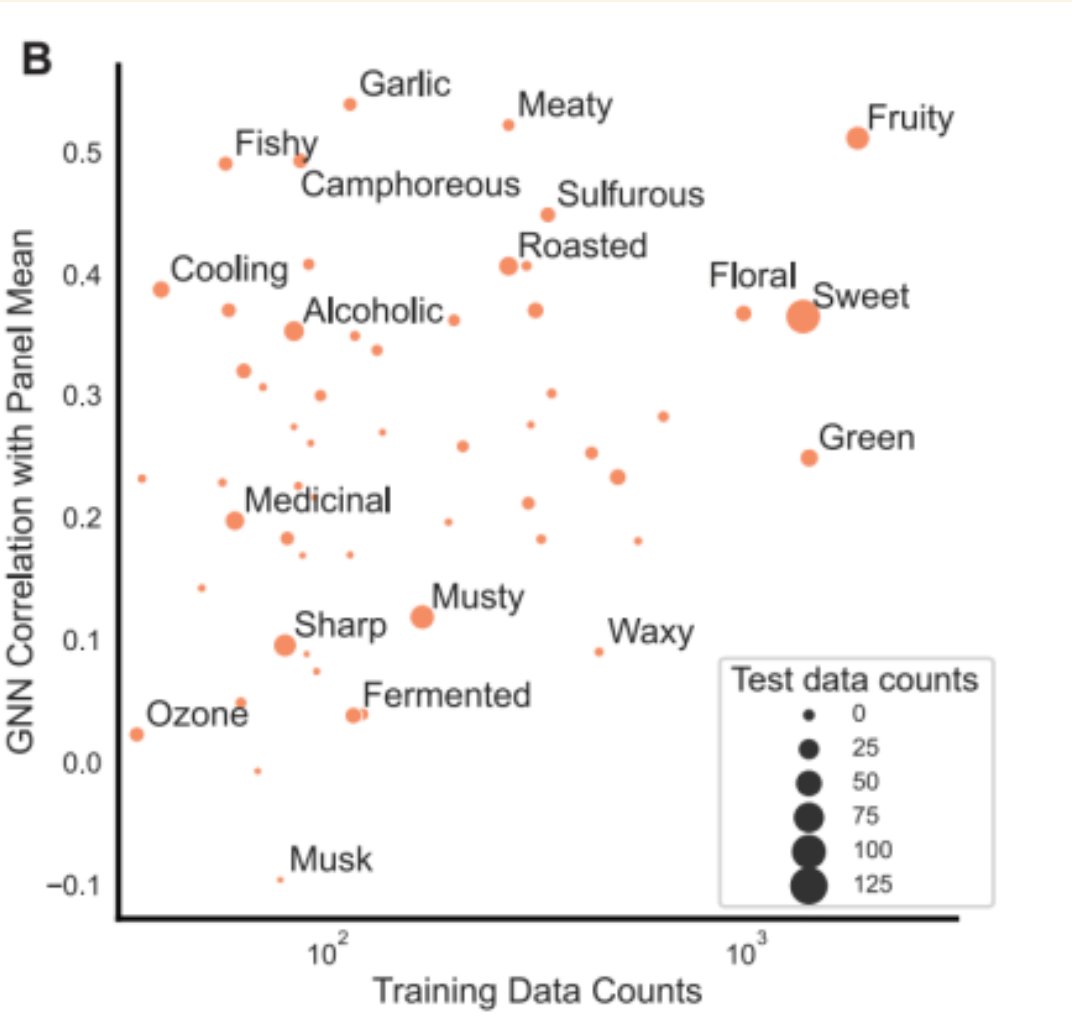
Musk (due to macrocyclic, polycyclic, nitro, steroid-type, and straight-chain structural diversity)
Ozone (limited training examples <10²)
A key finding: predictive model performance depends heavily on the number of training examples. Compounds with >10³ training examples showed much better prediction accuracy than those with <10² examples.
Interestingly, the study also revealed that model performance mirrors human performance, both depend on familiarity with the smell and the complexity of the structure-odor relationship.
Application 2: optimal perfume formulation
The Challenge
Creating a perfume is about optimizing how those molecules evaporate and diffuse through space and time. A successful perfume must:
Provide balanced top and middle notes at close range
Maintain pleasant scent profiles at varying distances
Minimize undesirable solvent odors (like ethanol)
Evolve gracefully over time as components evaporate
This is fundamentally a chemical engineering problem with psychophysical constraints.
The Deep Learning Solution
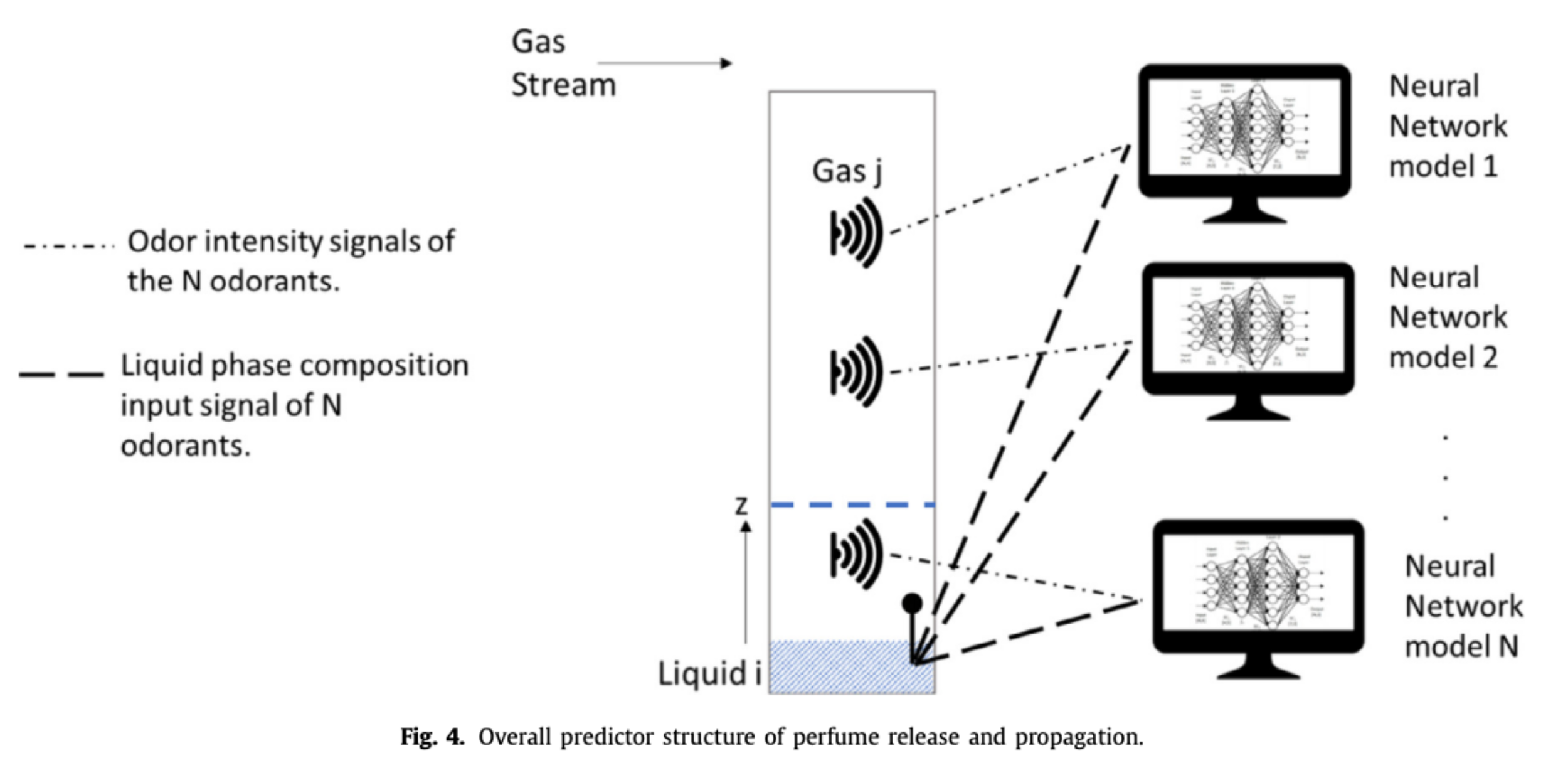
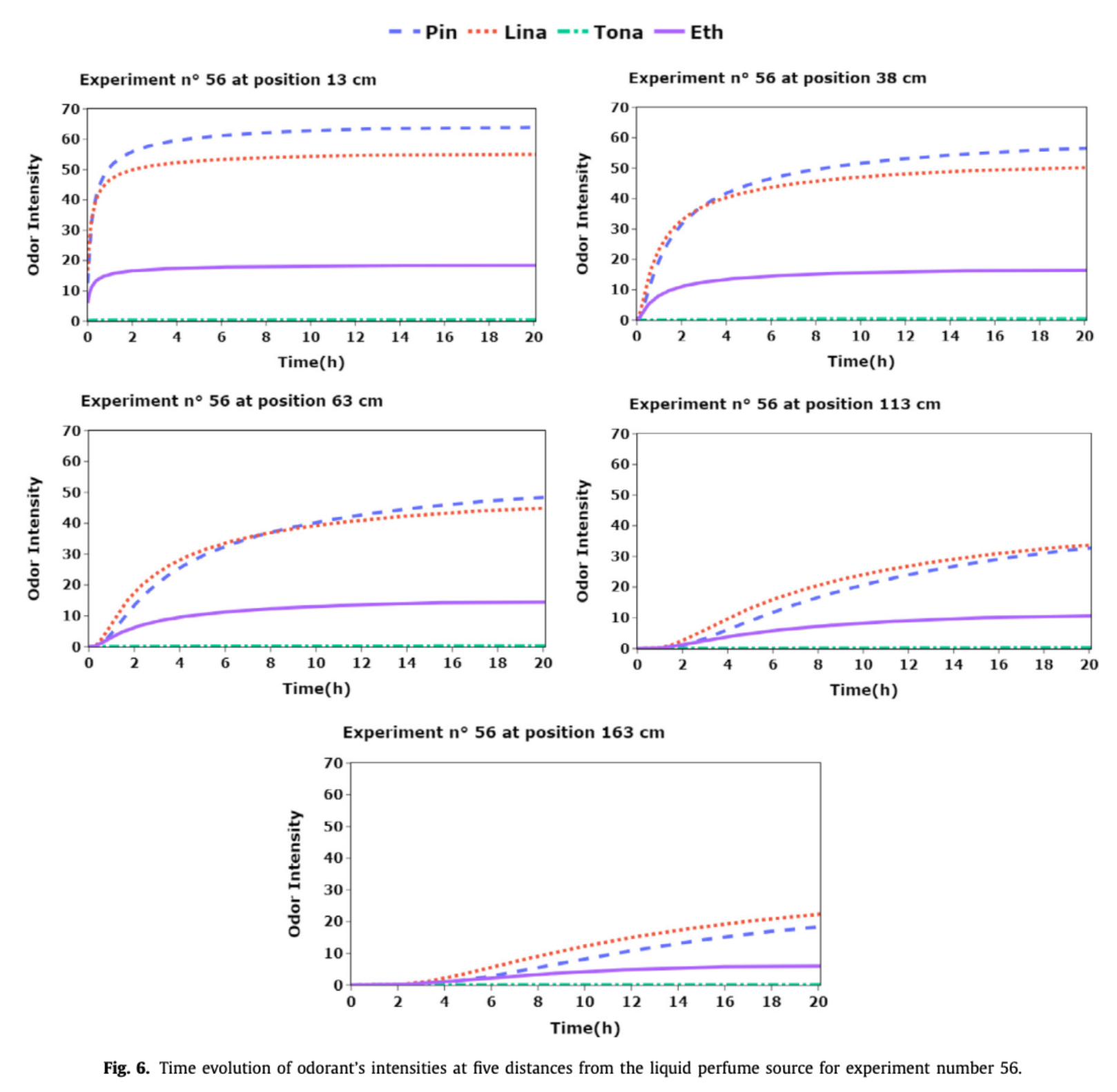
Researchers developed a systematic approach combining perfume diffusion modeling, odor intensity modeling, and deep neural networks (specifically NOE-LSTM architecture) to optimize fragrance formulation.
The System Components:
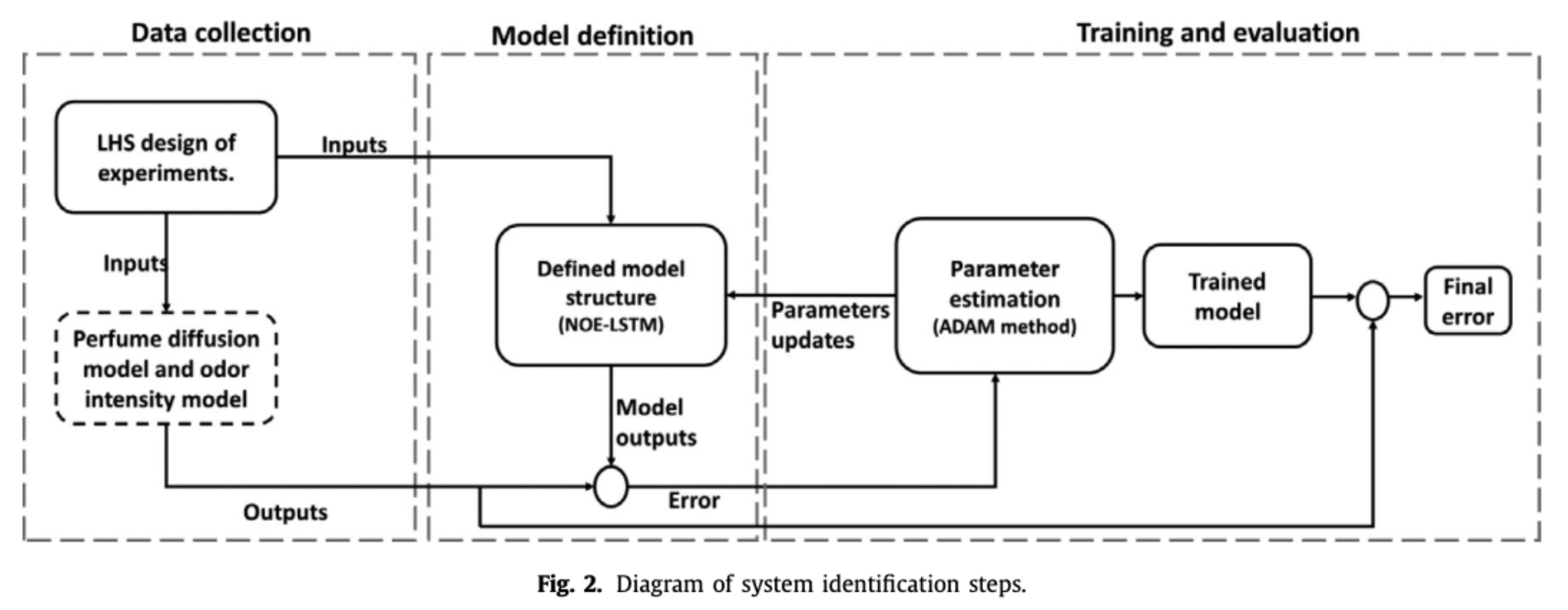
Data Collection: Latin Hypercube Sampling (LHS) method
Efficiently recreates input distributions from fewer samples
Inputs: Number of moles of odorants per mol of solvent in the liquid
Outputs: Odor intensity of each odorant at several distances from the perfume source
Model Definition: NOE-LSTM (Neural Ordinary Equations - Long Short-Term Memory)
Captures the temporal dynamics of perfume evolution
Models how concentration changes affect perception
Training: ADAM optimization method with parameter updates based on comparison between model outputs and actual perfume diffusion/odor intensity measurements
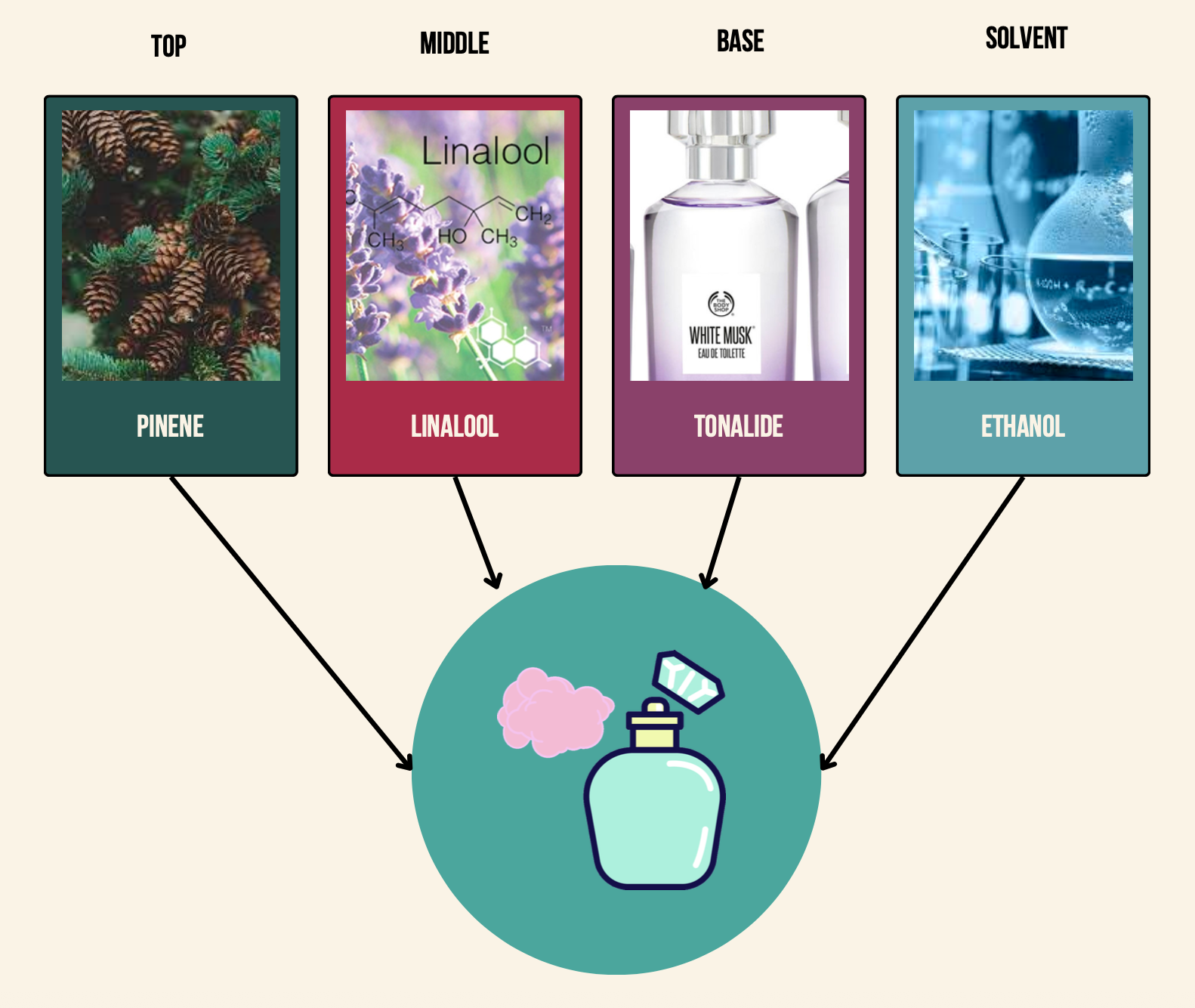
The Experimental Setup: The study used a four-component system, each with specific mole fraction ranges:
Pinene (Top note - pine forest scent; 0.01 - 0.44)
Linalool (Middle note - floral scent; 0.06 - 0.78)
Tonalide (Base note - musk scent; 0.03 - 0.76)
Ethanol (Solvent; 0.07 - 0.40)
Results: Temporal and Spatial Optimization
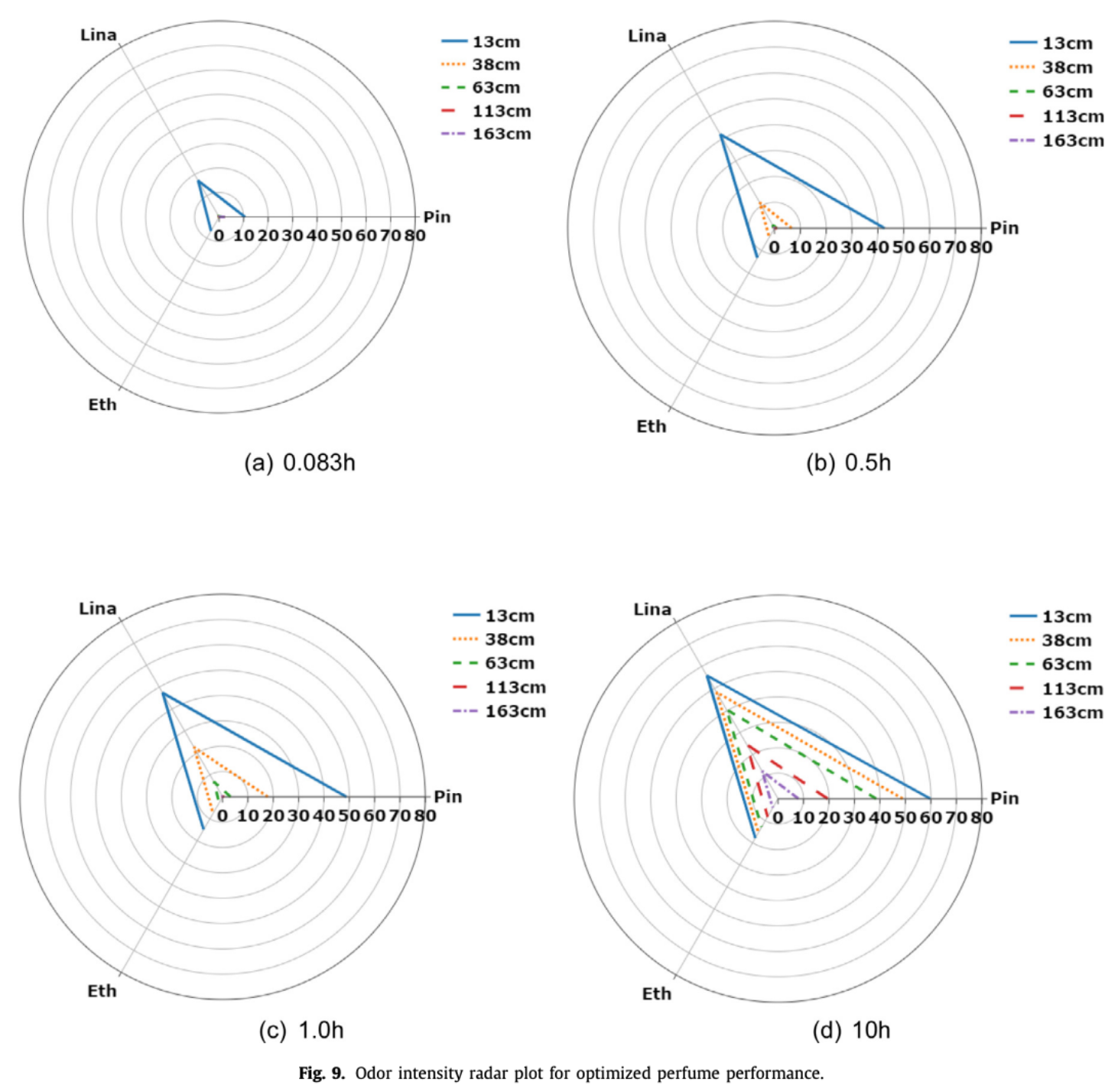
The optimization successfully balanced the perfume's odor profile across both time and space:
At 0.5 hours:
Only distances 13cm and 38cm had significant odor intensity
At 13cm: well-balanced pine-floral combination
At 38cm: predominantly floral (linalool)
At 10 hours:
63cm distance joined the profile
Showed linalool-pinene-ethanol presence but maintained well-balanced top and middle notes (pine-floral)
Successfully minimized ethanol odor perception
This demonstrates how algorithms can create perfumes that maintain desired scent profiles throughout their "lifetime" on the skin.
Application 3: perfume recommendation systems
Scent-Station: Neuroscience Meets Fragrance
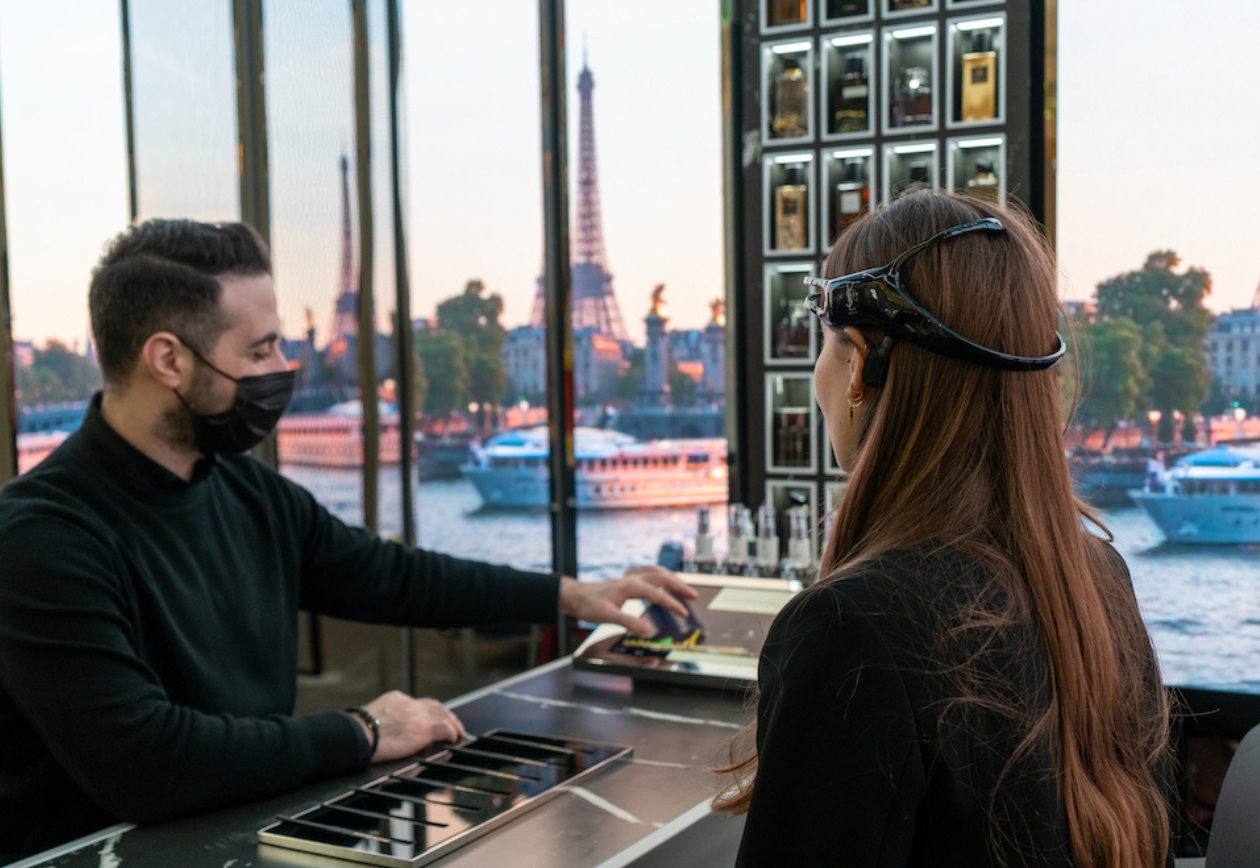
In 2021, EMOTIV and L'Oréal Groupe launched the first consumer EEG (electroencephalography) fragrance experience powered by neuroscience: the YSL SCENT-SATION.
Understanding Brain Responses to Scent
The technology measures electrical activity in the brain using electrodes attached to the scalp. Brain cells communicate via electrical impulses continuously, even during sleep, creating patterns that can be analyzed to understand cognitive and emotional states.
The Science Behind It:
In perfumery, an accord is the combination of different raw materials, balanced and harmonized to create a unique scent or "note" that defines the soul of a fragrance. For example:
Citrus accord = lemon + bitter/sweet orange + bergamot + mandarin
Woody accord = sandalwood + cedarwood + patchouli + vanilla
Floral accord, Amber accord, etc.
How Scent-Station Works
Data Collection:
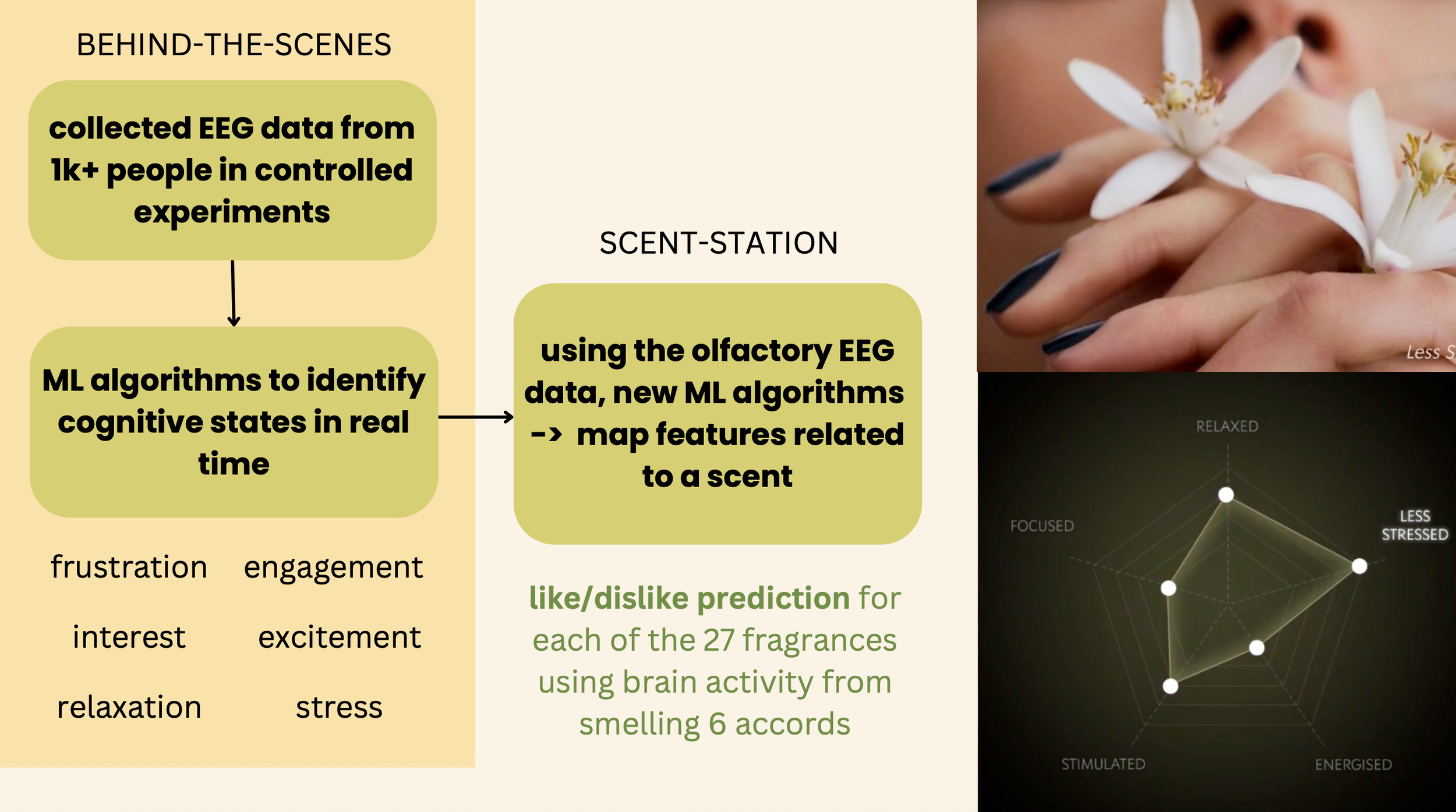
EEG data collected from 1,000+ people in controlled experiments
Participants exposed to 6 different accords
Brain activity monitored in real-time
Machine Learning Analysis:
First ML algorithms identify cognitive states in real-time:
Frustration vs. Engagement
Interest vs. Excitement
Relaxation vs. Stress
New ML algorithms then map features related to scent perception from the olfactory EEG data
Finally, the system predicts like/dislike for each of 27 fragrances using brain activity patterns from smelling just 6 accords
The Technical Pipeline:
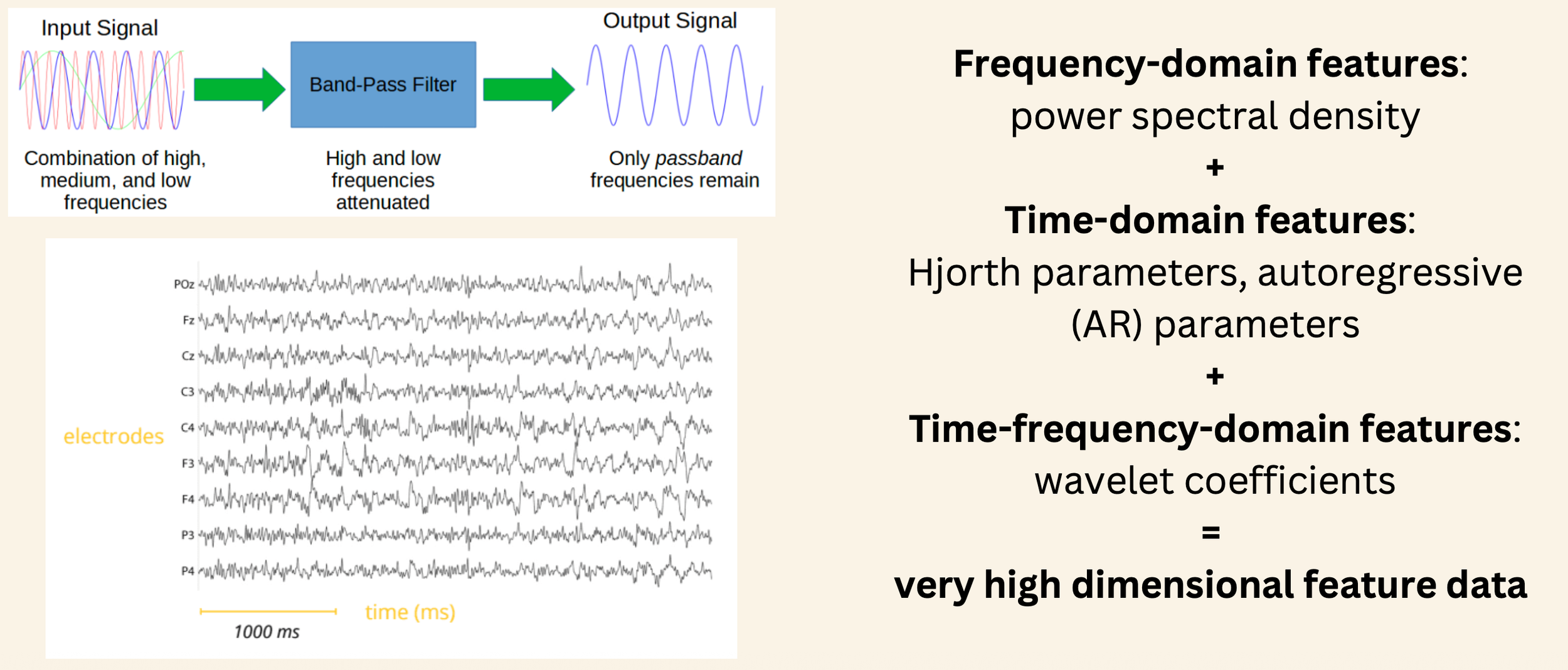
Pre-Processing: Band-pass filtering to remove noise while preserving relevant brain wave frequencies
Feature Extraction: Three types of features are extracted:
Frequency-domain: Power spectral density (PSD)
Time-domain: Hjorth parameters and autoregressive (AR) parameters
Time-frequency-domain: Wavelet coefficients
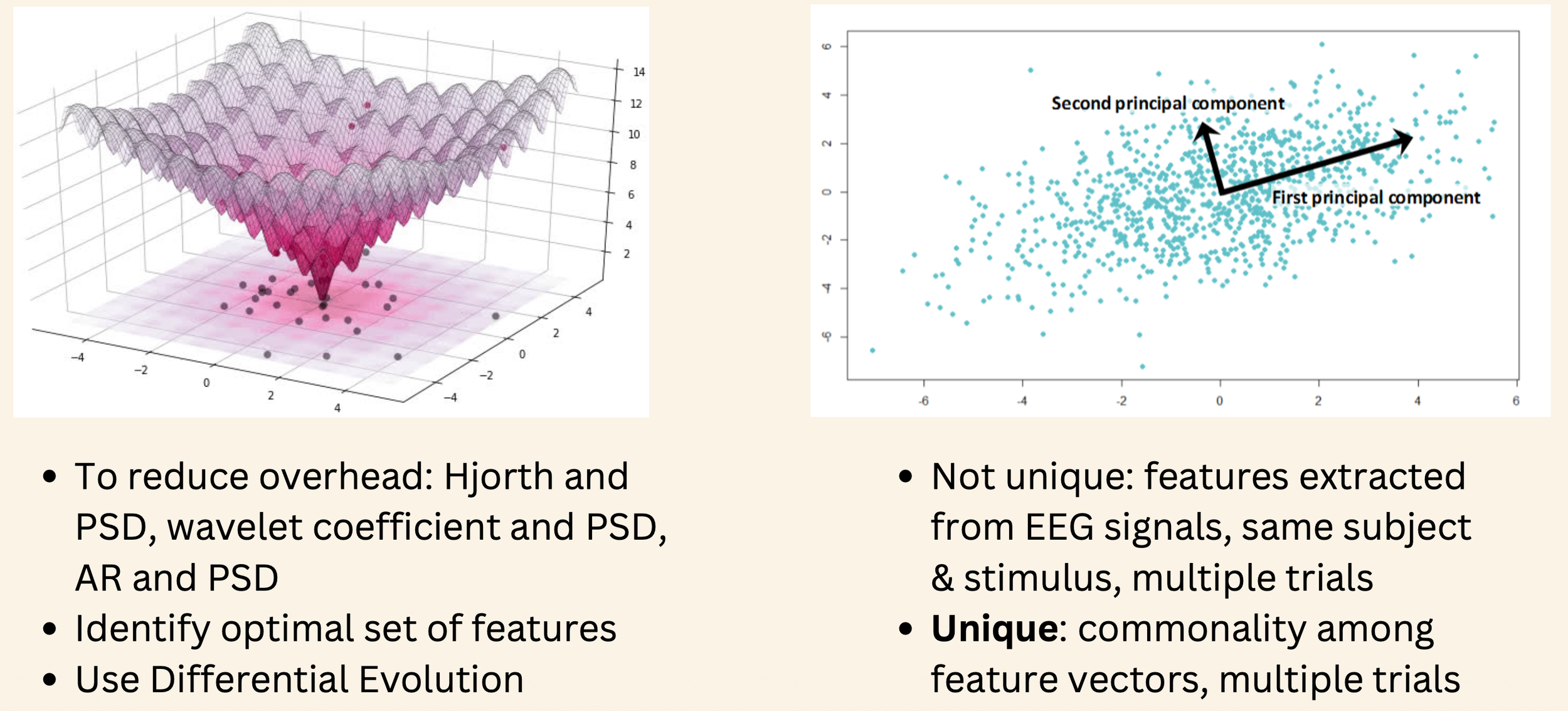
Feature Selection: Differential Evolution algorithm identifies optimal feature sets, reducing dimensionality while preserving predictive power
Data Reduction: Principal Component Analysis (PCA) identifies commonality among feature vectors from multiple trials
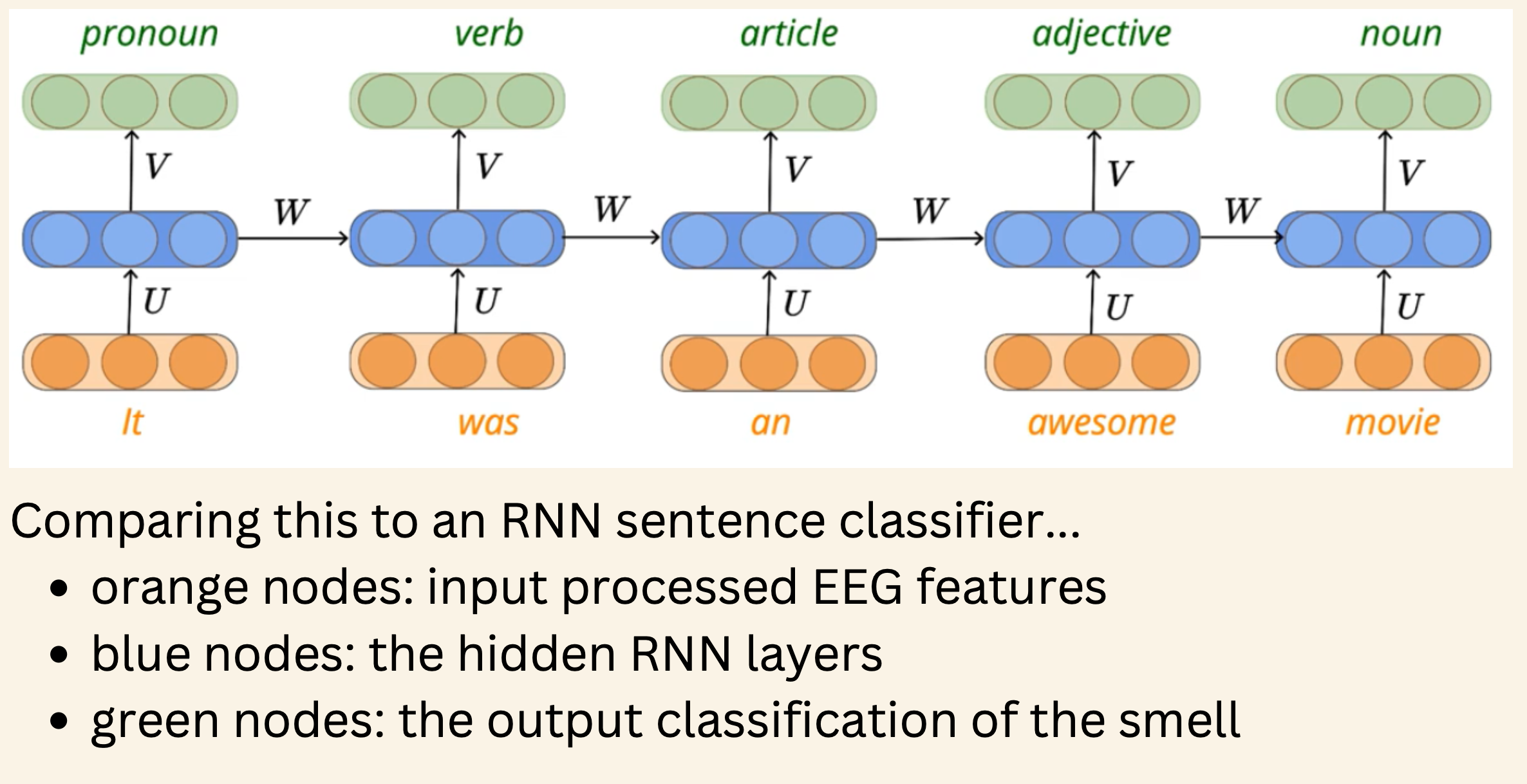
Classification: Recurrent Neural Network (RNN) classifier processes the temporal sequence of EEG features to predict scent preferences
The RNN architecture is conceptually similar to sentence classification, where individual words are replaced by time-stamped EEG features, and the output classification predicts the smell preference rather than sentiment.
Recent advanced technologies in the fragrance industry
The fragrance industry has undergone a remarkable digital transformation in recent years, with computational models, machine learning algorithms, and data-driven systems revolutionizing every aspect of perfume creation, from molecular design to consumer personalization. Here's a detailed breakdown of major implementations:
Major Corporate Technology Investments
Fragrance Houses & Ingredient Suppliers
| Company | Technology Platform | Use Case | Year |
|---|---|---|---|
| Osmo | Generation | World’s first fully algorithmic-powered fragrance house using proprietary Olfactory Intelligence (OI) to transform data into scent for rapid, precise fragrance creation. | 2025 |
| DSM-Firmenich | EmotiON | Neuroscience-integrated platform designed to create fragrances that evoke specific emotional responses. | 2025 |
| International Flavors & Fragrances (IFF) | ScentChat™ | NLP-powered messaging tool that captures real-time consumer feedback during fragrance creation and translates responses into perfumer insights. | 2025 |
| International Flavors & Fragrances (IFF) | Science of Wellness Program | Program analyzing psychological and physiological effects of scent to support stress reduction, sleep, and overall well-being. | 2021 |
| Givaudan | MoodScentz | Predictive algorithms estimating the emotional impact of fragrances to support personalization and faster creative iteration. | 2020 |
| Givaudan | Carto | Visual mapping system for scent families with real-time complex combination visualization. Helps perfumers innovate faster and reduce formulation errors. | 2019 |
| Symrise & IBM | Philyra | AI system scanning thousands of formulas and market data to generate novel fragrances while evaluating chemical compatibility and regulatory constraints. | 2019 |
| DSM-Firmenich | EcoScent Compass | Environmental footprint assessment tool that enables dynamic formula changes without compromising olfactive quality. | 2018 |
Beauty & Fashion Brands
| Company | Technology Implementation | Use Case | Year |
|---|---|---|---|
| Tom Ford Beauty (Estée Lauder) | Bois Pacifique (via Givaudan Carto) | First high-luxury AI-developed fragrance for Estée Lauder, using algorithmic formulation and the sustainable ingredient Akigalawood. | 2025 |
| Jo Malone London | AI Scent Advisor | Built with Google's Gemini and Vertex AI, designed to meet the challenge of finding (and understanding) a scent online while recreating the in-store experience. | 2025 |
| Unilever | U.S. Fragrance Lab | €100m global investment focused on personalization, elevated scent experiences, and trend-driven product development. | 2025 |
| Oriflame & Symrise | Three-Scent Collection (Across Space, Time Loop, Earth Wonder) | Co-created fragrance collection combining human perfumers with Symrise’s Philyra AI platform. | 2024 |
| L’Oréal & EMOTIV | YSL SCENT-SATION | Consumer-facing EEG fragrance experience using brain activity to predict scent preferences with ~95% accuracy. | 2022 |
| Amorepacific | “Bathbot” Experience | Real-time biodata-driven customization experience creating personalized scents based on physiological responses. | 2021 |
| EveryHuman | Algorithmic Perfumery | Questionnaire-based personalization platform analyzing mood, preferences, and context (2025 installation at Atelier Jolie NYC). | 2017 (2025 installation) |
Specialized Use Cases by Category
Personalization & Consumer Experience
Retail-based brain scanning (L'Oréal, EMOTIV): In-store EEG recommendations with 95% consumer satisfaction rate (2021-2024)
Wearable device integration (Philyra, various): Future applications combining stress levels, sleep patterns, and olfactory preferences for real-time custom formulas
Digital scent wardrobes: Consumer demand shifting toward multiple occasion-specific fragrances
Sustainability & Ingredient Innovation
Synthetic alternative development: Biodegradable molecules replacing endangered ingredients (agarwood, musk)
Upcycled ingredients: Waste-to-fragrance using exhausted rose petals, leftover sandalwood chips, coffee grounds
Supply chain optimization: Algorithmic identification of alternative ingredients managing cost, quality, and regional variations
Regulatory compliance: Automated monitoring of banned/restricted ingredients across global markets
Mood & Wellness Enhancement
Functional fragrances: Scents scientifically designed for focus (clean woods), calm (lavender/sandalwood), or energy (citrus)
Therapeutic applications: Integration with smart home diffusers and wearable tech for real-time mood adaptation
Neuroscents: Ingredients known to trigger specific emotional responses or therapeutic benefits
Market Trend Analysis
Real-time consumer feedback loops: Rapid iteration based on social media trends and TikTok/Instagram data
Regional preference mapping: Localized scent development for specific demographics and cultural preferences
Predictive modeling: Anticipating fragrance trends 12-18 months ahead of market demand
Industry Trends Driving Technology Adoption (2026-2027)
Gourmand 2.0: Sophisticated, nostalgic, comforting "foodie" notes (pistachio, spicy vanilla, tea)
Functional & wellness fragrances: Scents designed to enhance mood, reduce stress, improve focus
Sustainability: Upcycled materials and biotech molecules replicating rare ingredients
Artisanal storytelling & "slow perfumery": Small-batch, craftsmanship-focused fragrances
Expanding formats & layering: 65% of US consumers prefer mixing scents; body care, hair mists, layering balms
Unisex signatures: Moving away from "for him/for her" toward adaptable scent profiles
Emerging & Future Applications
Public safety: Scent detection for tracking chemical, gas, or pollutant releases (Osmo, 2025+)
Museum & institutional applications: Custom scent experiences for cultural institutions
Smart home integration: Automated scent adjustment based on time of day, occupancy, and biometric data
Pheromone discovery: Behavioral data analysis to identify new human pheromone compounds
Real-time formulation: On-demand custom perfume creation in retail environments
Consumer Behavior Shifts
74% of consumers now prefer sustainable fragrances (2025)
90% of consumers consider sustainability when buying beauty/wellness products
Fragrance searches grew 26.5% year-over-year on Google and TikTok (2024-2025)
Gourmand fragrance share: Increased from 15% (2022) to 22% (2024) of all new launches
"Scent wardrobe" trend: Consumers owning multiple fragrances for different occasions/moods
The intersection of art, science, and intelligence
From predicting molecular odors to optimizing temporal scent profiles to reading brain waves for personalized recommendations, computational analysis is tackling the multidimensional complexity of fragrance in ways that would be impossible through traditional methods alone.
The applications discussed in this post represent just the beginning. As machine learning models become more sophisticated and datasets grow richer, we can expect:
More accurate prediction of novel molecule scents
Better optimization of perfume longevity and projection
Deeper understanding of individual scent preferences
Discovery of new fragrance compounds and combinations
Integration of psychophysical effects beyond just pleasant smell
Most importantly, these systems are empowering perfumers with new tools to explore the vast space of possible fragrances more efficiently and create scents that better match consumer preferences.
Thank you for thinking with me. This piece is part of Ode by Muno, where I explore the invisible systems shaping how we sense, think, and create.
The quote at the intro is from the book, Systems Intelligence.