“Imagine if…” : thoughts on future spaces
“It is a call for thinking that will seek creativity and innovation from communal contexts characterized by enthusiasm, joy, peer respect and strive for the meaningful. Creating such contexts, in turn, calls for Systems Intelligence.”
My last posts (“third places are disappearing” and “some cities have bad UX”) made me start thinking about what could actually fix this. The data shows what many of us feel: since 1990, bowling alleys are down 40%, movie theaters are shrinking, and the places we used to gather without a purchase or membership have quietly vanished. We have more venues than ever, but they cost more and assume you already know what you came for.
So I made a list of spaces that could exist, spaces that almost exist, some realistic, some wishful. And I keep wondering: if tech companies reshaped how we socialize online, shouldn’t they help rebuild the physical side too? Apple with lounge zones, Google or Meta with neutral hangout spaces, Uber or Lyft with local mobility hubs, Spotify with listening lounges.
But maybe it isn’t just tech. Maybe grocery stores, gyms, even banks should design for unstructured human connection. Gyms with cooldown lounges. Grocery stores with tasting corners.
What would cities look like if connection was a design goal? We don’t need more places to work or spend money, we need places to simply be.
All these ideas came from the same question: what if the brands we already spend time with actually designed for staying “in-person”?
TikTok: CREATOR CAFÉS
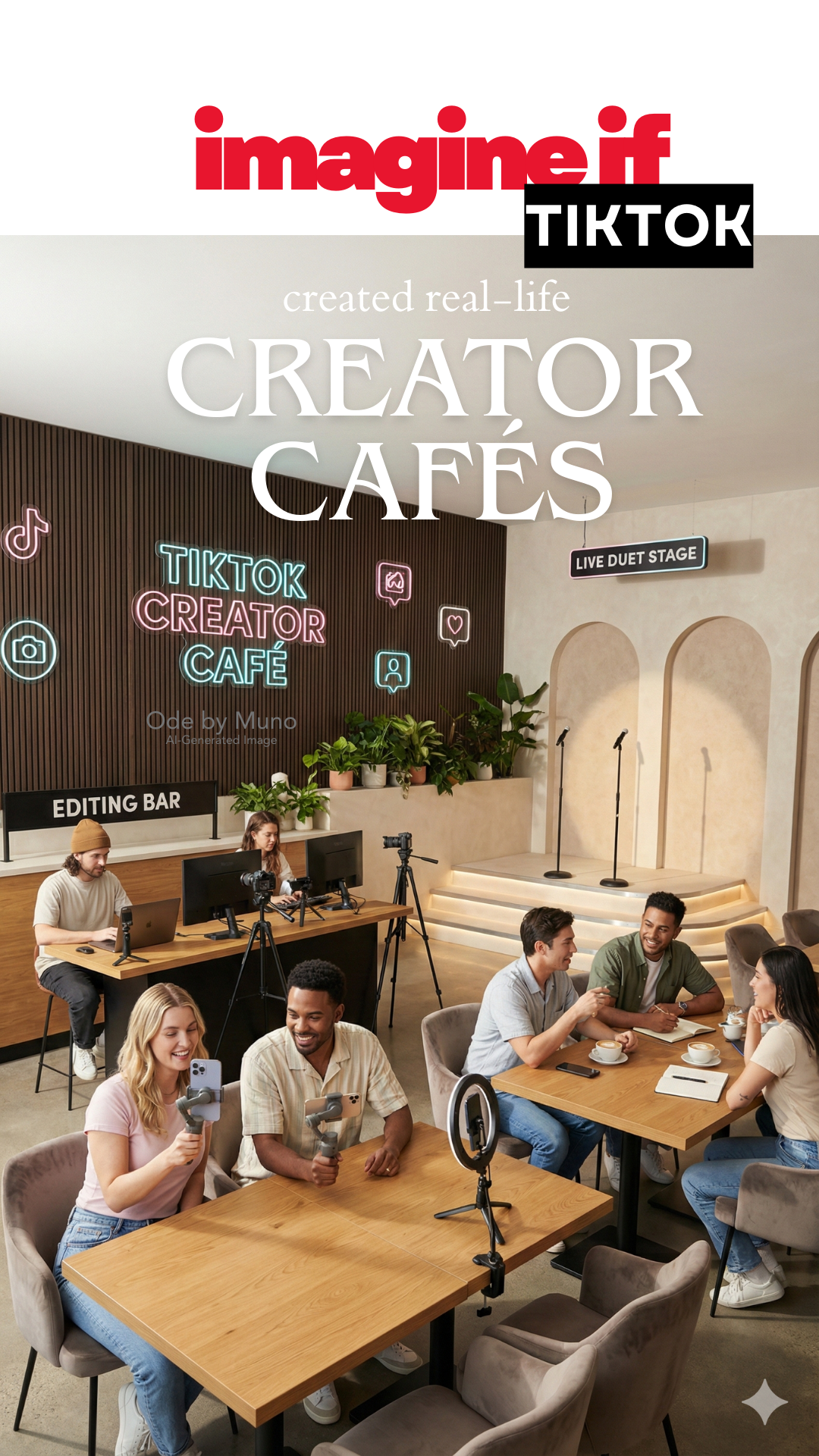
The idea: Real-life spaces for creators. Equipment provided, a live duet stage, editing bars, backdrops for filming.
Why it might work: TikTok's community is massive but entirely virtual. Creators want to meet each other. They already cluster at coffee shops and co-working spaces with bad lighting. Give them a purpose-built space and you create stronger brand loyalty.
Why it might not: TikTok is a tech company, not a hospitality company. Running physical locations is operationally hard. And if the vibe feels corporate or forced, creators will have very negative things to say.
Prompt used to generate image (Gemini Nano Banana Pro): A modern TikTok-style "Creator Café," photographed realistically in soft daylight. Sleek minimalist interior with cozy seating, dark panel walls, warm wood tables, and subtle neon accents in TikTok's signature colors (soft pink, turquoise, black). Visible "editing bars" with ring lights, tripods, and phone stands. A backdrop wall with aesthetic sets for filming (neutral palettes, plants, textured walls). A small stage area for IRL duets. People casually filming, editing, chatting; diverse micro-creators in their 20s and 30s. Latte art, laptops, tripods, and ambient lighting. Clean, bright, inviting atmosphere. High-resolution, editorial style photograph. Portrait.
AMC: WATCH TOGETHER ROOMS
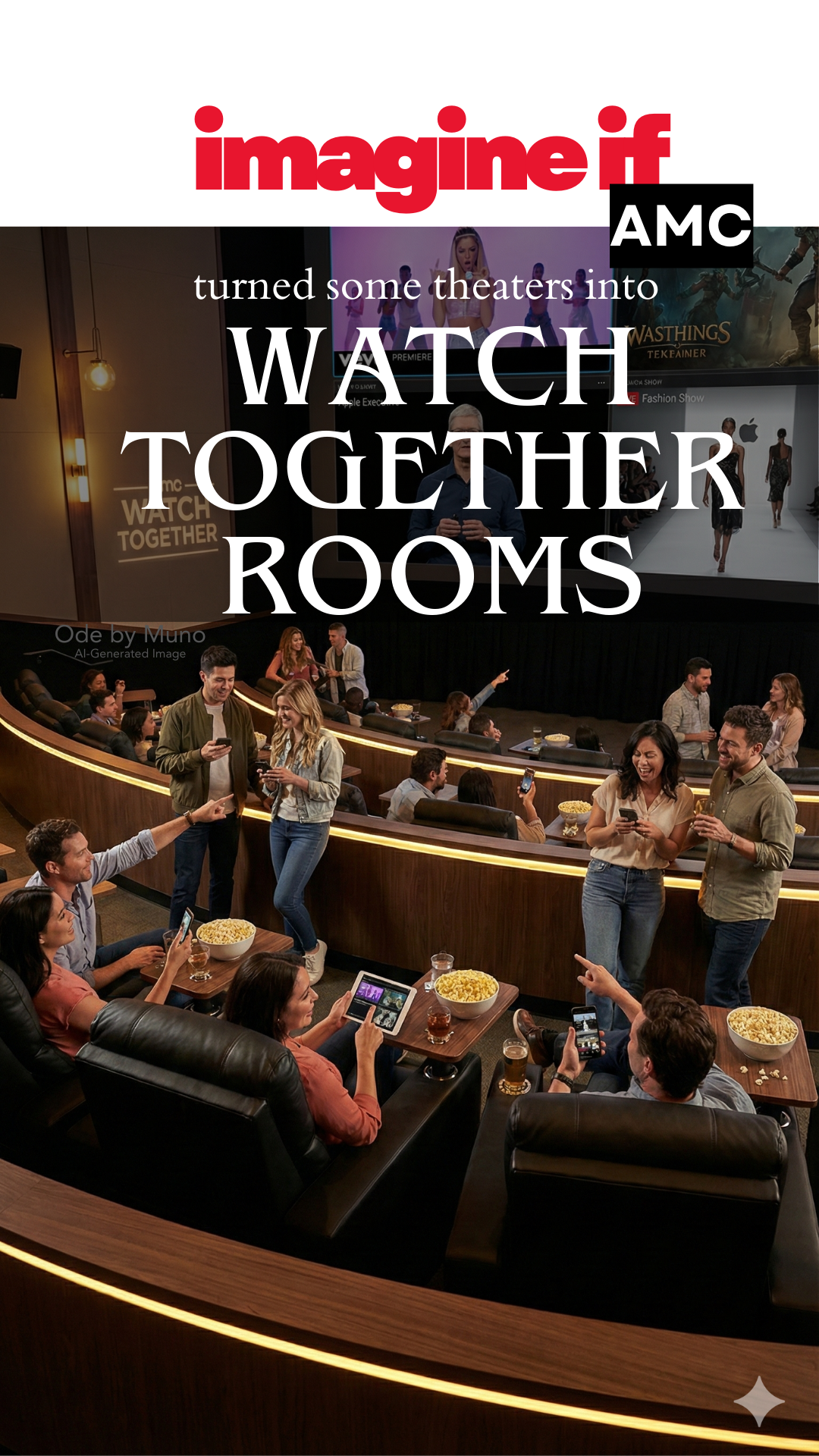
The idea: Turn underutilized theaters into bookable culture rooms. Organizers rent the space for music video premieres, album releases, game trailers, keynotes, livestream events. The stuff we watch alone on our phones, experienced together on a big screen.
Why it might work: AMC has the real estate and the infrastructure. Theaters sit empty during off-peak hours. The demand for communal viewing experiences exists. The technology is already there.
Why it might not: Licensing would be a nightmare from streaming platforms and content owners. And the operational pivot from "show scheduled movies" to "host custom events" requires a different kind of staff and booking system.
Prompt used to generate image (Gemini Nano Banana Pro): A modern movie theater repurposed as a "Watch Together Room." Wide auditorium with reclining seats and warm ambient lighting. A massive high-resolution screen displaying a livestream interface with multiple windows: music video premieres, game trailers, an Apple keynote, and a model launch stream. Small groups of people in their 20s–40s watching together, reacting, taking photos, talking. Subtle AMC branding on walls. Tables with snacks and drinks between seats. The vibe feels communal and energetic ; a culture room instead of a traditional theater. High-definition, editorial, cinematic realism. Portrait.
Museums: ADULT COMMUNITY HOURS
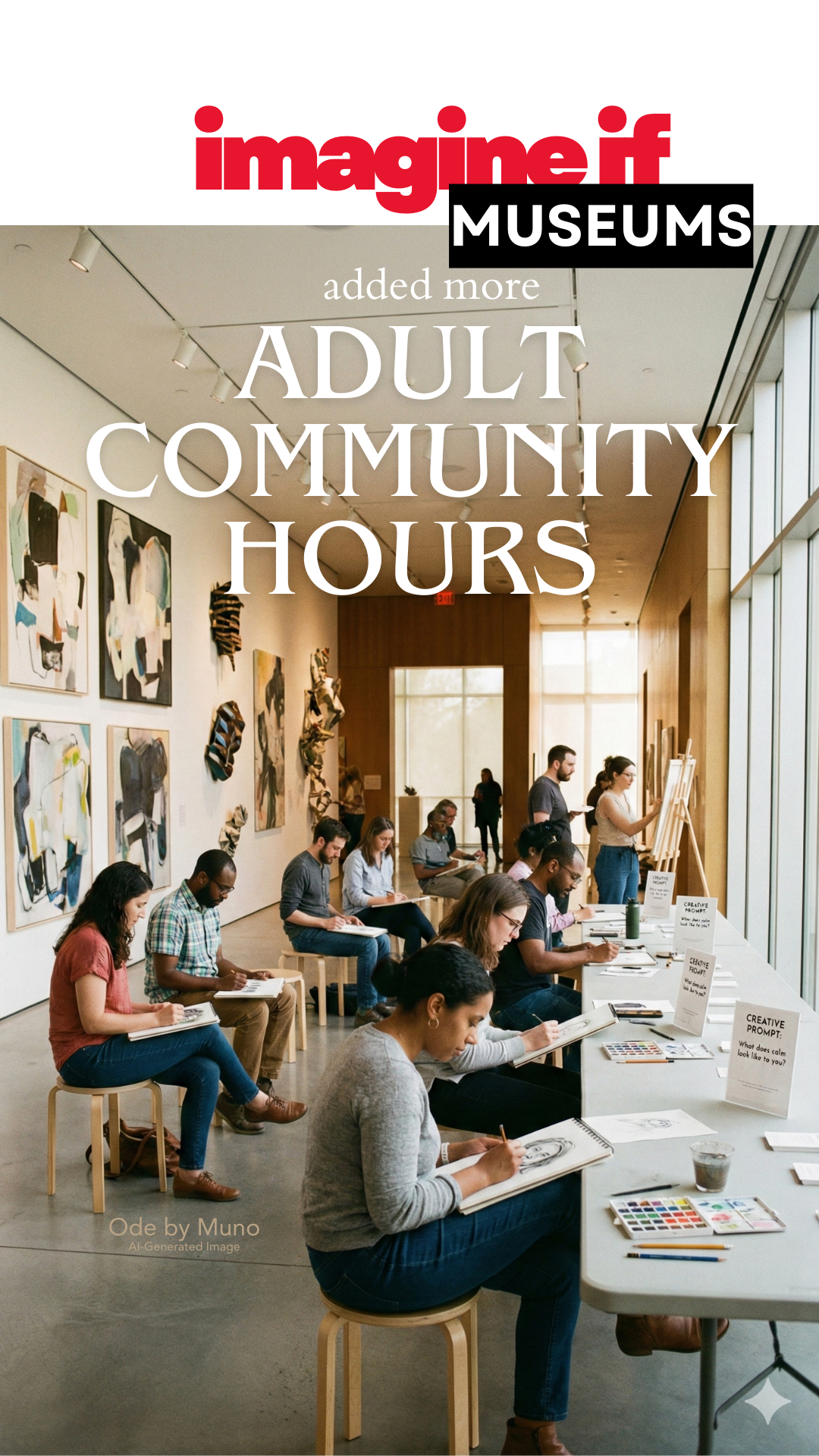
The idea: Designated hours where adults can sit with the art, sketch what they see, or do small activities inspired by the exhibit.
Why it might work: Museums already host special programming. This just extends the invitation to linger without a formal class or event structure. Sketch pads and stools are not expensive. The art is already there. People would love spaces that encourage slow attention.
Why it might not: Insurance, staffing, the fear of damage. Museums are built around preservation, not participation. Shifting that culture may be hard.
Prompt used to generate image (Gemini Nano Banana Pro): A serene, modern art museum hosting adult community hours. Soft warm lighting, quiet atmosphere. Visitors in their 20s–50s sitting on minimalist wooden stools with sketch pads, pencils, and small art materials. A large wall of contemporary paintings or sculptures in the background. Tables with interactive prompt cards encouraging drawing or reflection. People sketching, observing, chatting quietly, some standing at easels. Clean architectural lines, natural light, neutral tones. The mood is calm, focused, and creative, a museum transformed into a community workspace. High-resolution, documentary-style photography. Portrait.
Sephora: FREE MAKEUP CLASSES
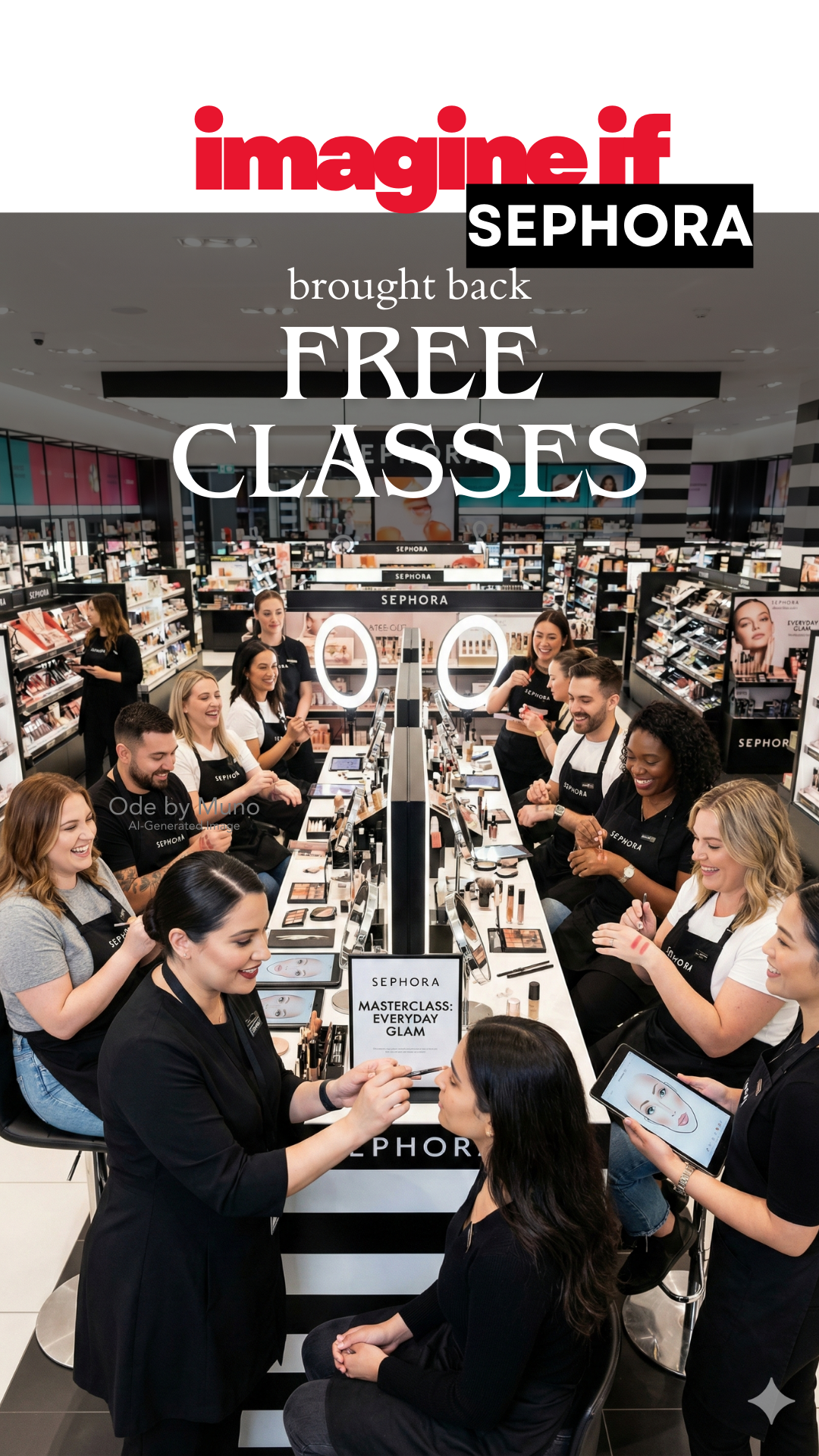
The idea: Bring back free, drop-in makeup classes. Skill-sharing, co-learning, product testing.
Why it might work: Sephora used to do this. I went to these classes, you'd just show up, learn something, maybe talk to the person next to you about what foundation actually matches your skin. It was a whole vibe. The brand already has the space, the expertise, and the foot traffic.
Why it might not: They made these classes paid for a reason I’m not sure about but I can assume staffing costs & maybe online learning presence from creators.
Prompt used to generate image (Gemini Nano Banana Pro): A modern Sephora store hosting a free adult makeup class. Bright, polished lighting with Sephora's signature black-and-white design. A central beauty counter with neatly arranged products, mirrors, and soft-glow ring lights. Groups of diverse adults (20s–40s) sitting or standing at stations, learning techniques together. A Sephora artist demonstrating makeup steps at the front. Participants testing products, swatching shades, taking notes, chatting, smiling. The atmosphere feels inviting and educational; beauty as a communal third place. High-resolution, editorial beauty photography style. Portrait.
Trader Joe's: COMMUNITY TASTING TABLES
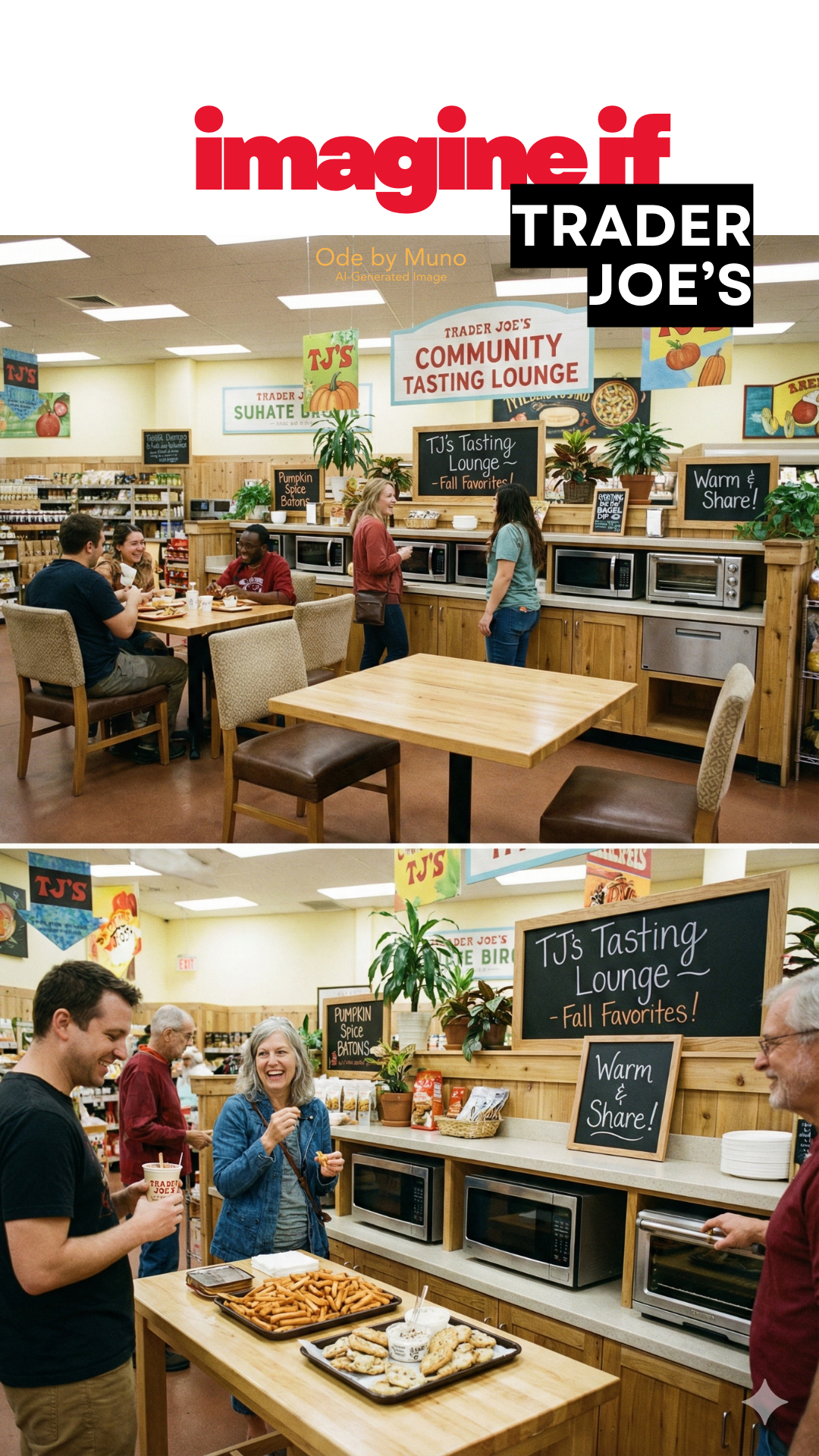
The idea: Most of the food is already there. Add tables, microwaves, small ovens, and seating.
Why it might work: Trader Joe's already has cult-like loyalty and a sample culture. The products are conversation starters ("have you tried the X?"). Adding furniture is the cheapest possible infrastructure investment for massive community return.
Why it might not: Square footage is precious in grocery. Seating takes space away from product. Adding a chill section may change the operational flow of the store.
Prompt used to generate image (Gemini Nano Banana Pro): A bright, cheerful Trader Joe's interior with a new "community tasting lounge" area. Wooden tables, cozy seating, microwaves and small ovens built into a counter, and sample trays featuring seasonal Trader Joe's snacks. Shoppers in their 20s–50s chatting casually, tasting food, warming up frozen items, sharing reactions. Soft warm lighting, colorful TJ's signage, plants, and handwritten chalkboard menus. A friendly, communal atmosphere that feels like a neighborhood gathering spot inside a grocery store. High-resolution, documentary-style photography. Portrait.
Whole Foods: TRY-AND-TALK SECTION
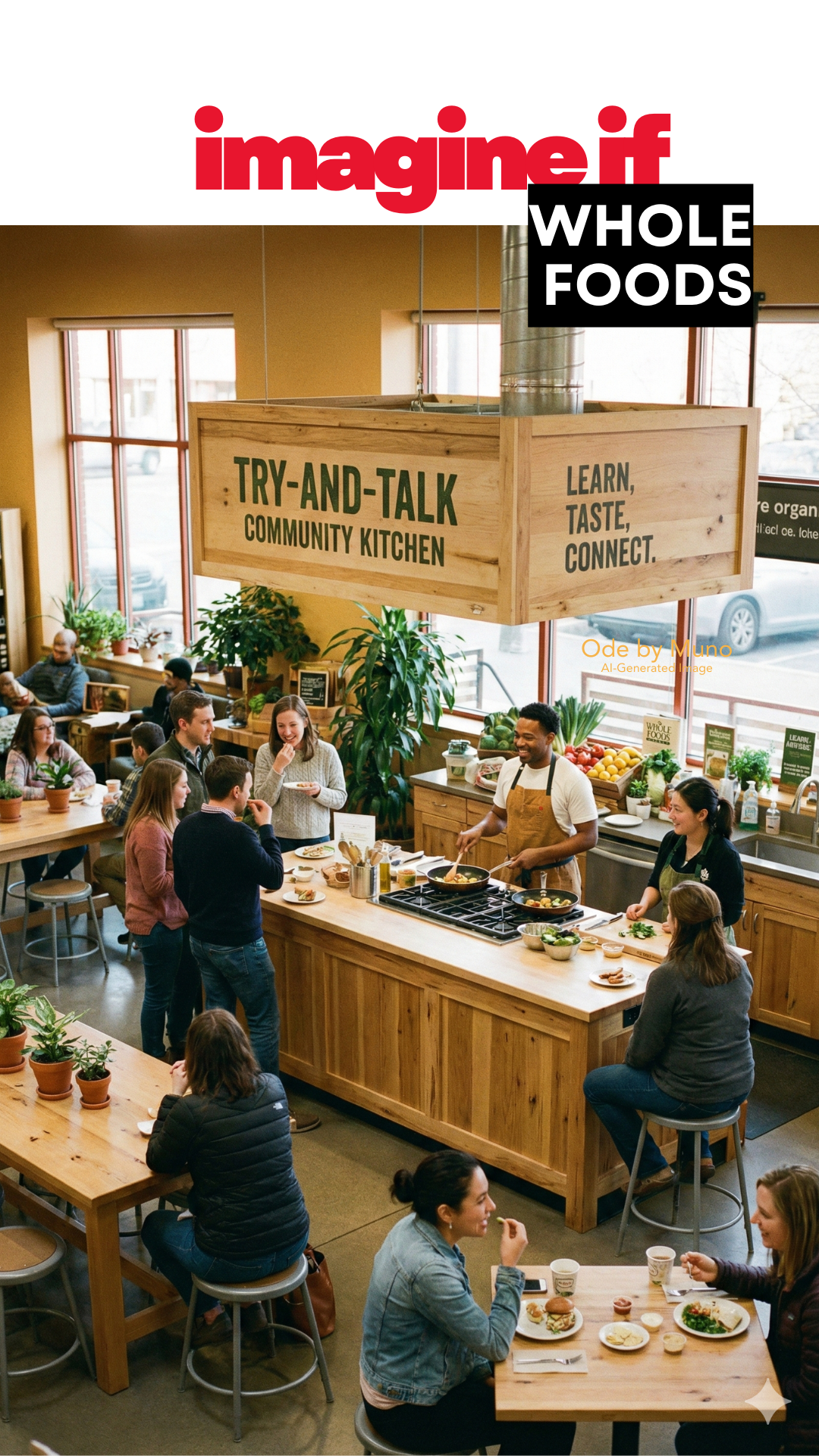
The idea: Open kitchens, mini cooking demos, shared plates. Grocery store as social hub again.
Why it might work: Whole Foods already has prepared food sections and seating areas. This just makes them intentional. The brand is built around food discovery and quality. Leaning into education and community fits the positioning.
Why it might not: Amazon owns Whole Foods now. The operational priority is efficiency, not lingering. Every square foot needs to justify itself in throughput.
Prompt used to generate image (Gemini Nano Banana Pro): A modern Whole Foods interior featuring a "try-and-talk" community section. A small open kitchen island hosting mini cooking demos with fresh ingredients, surrounded by wooden tables and casual seating. Shoppers in their 20s–50s tasting samples, chatting with each other, and interacting with a friendly staff member demonstrating simple dishes. Warm natural lighting, green plants, clean signage, and Whole Foods' signature organic aesthetic. The atmosphere feels approachable, social, and food-centered; a grocery store turning back into a community hub. High-resolution, documentary-style photograph. Portrait.
Hotels: CONTENT BAYS FOR TRAVELERS
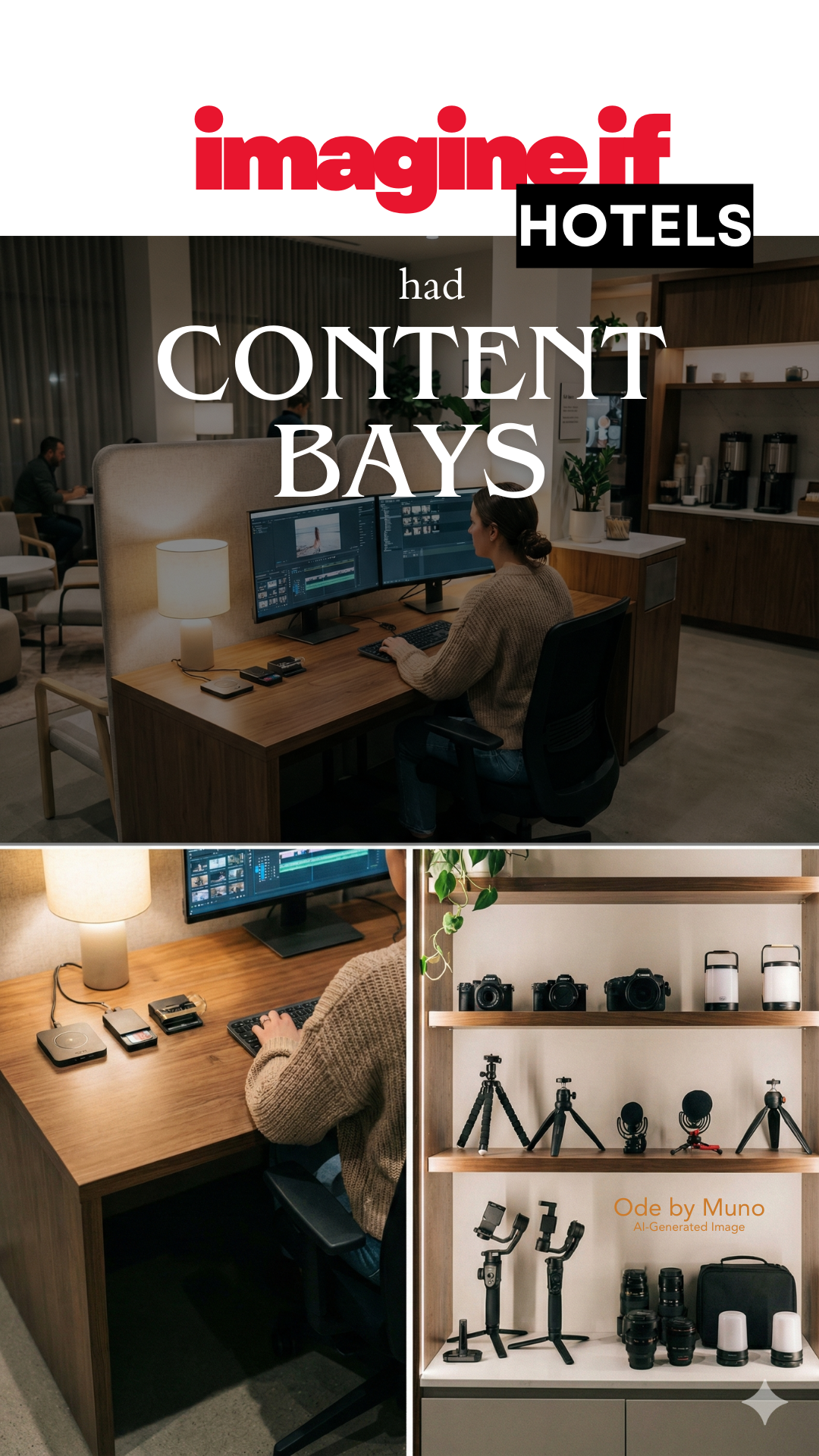
The idea: A small room with charging hubs, big monitors, comfortable chairs, and rentable creator gear: cameras, tripods, gimbals, microphones. For finishing a vlog or photo dump while traveling.
Why it might work: Business centers already exist in hotels. They're just designed for 2005. Travelers increasingly create content. Giving them a purpose-built space is a differentiation play that costs relatively little to build.
Why it might not: Most hotels optimize for room revenue, not amenity innovation. The guests who would use this are a niche within a niche.
Prompt used to generate image (Gemini Nano Banana Pro): A stylish modern hotel featuring a dedicated "creator edit bay" amenity in a public lounge area. A sleek workstation with soft warm lighting, large high-resolution monitors, charging hubs, USB-C ports, memory card readers, and comfortable ergonomic chairs. Nearby, a neatly organized shelf displays rentable creator gear: cameras, tripods, gimbals, microphones, portable lighting kits. A traveler in casual clothing edits photos or a vlog on the big screen. Minimalist décor, sound-dampening panels, and a small coffee station enhance the calm, productive, travel-friendly atmosphere. High-resolution, lifestyle editorial photography. Portrait.
Spotify: LISTENING LOUNGES
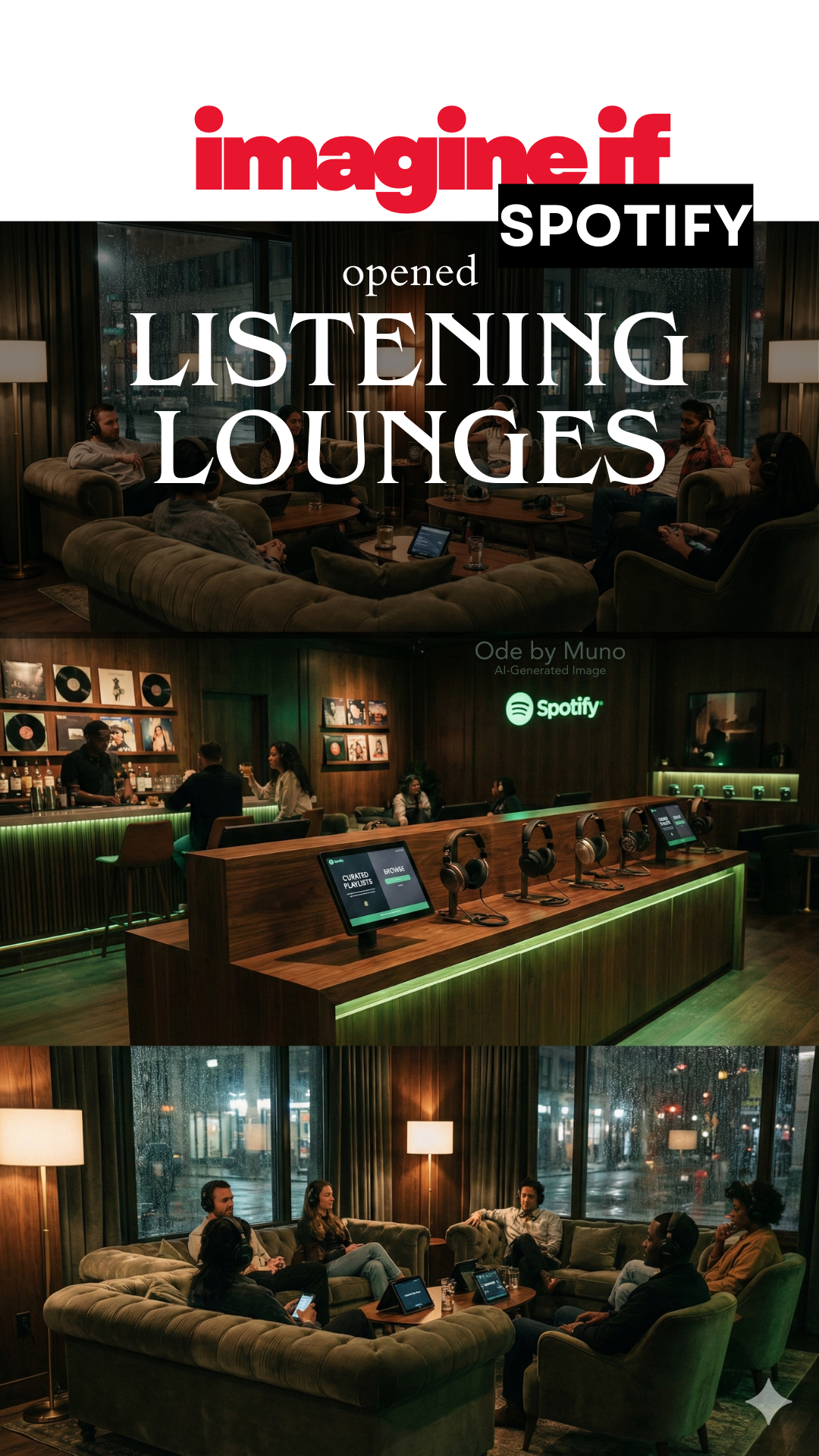
The idea: Headphone stations, vinyl corners, album release parties, curated playlists playing in zones. A bar. Big couches.
Why it might work: Spotify has the brand, the music relationships, and the cultural aspect. Listening to music alone is fine. Listening to music with other people who care about music is an experience. This is experiential marketing that actually provides value.
Why it might not: Spotify is a tech company with tech margins. Physical retail is a different business entirely. The licensing complexity of playing music in a commercial space adds layers of cost.
Prompt used to generate image (Gemini Nano Banana Pro): A modern Spotify "listening lounge" in a major city. Cozy oversized couches, soft dim lighting, and warm green accent lights inspired by Spotify's branding. A sleek headphone try-bar with multiple high-quality headphones on display, curated playlist stations, and touchscreens for browsing music. A small bar serving drinks, vinyl displayed on walls, and people in their 20s–40s relaxing, sampling music, chatting quietly. The space feels intimate, stylish, and sound-focused; a social listening room brought to life. High-resolution, moody editorial photography style. Portrait.
Gyms: COOLDOWN LOUNGES
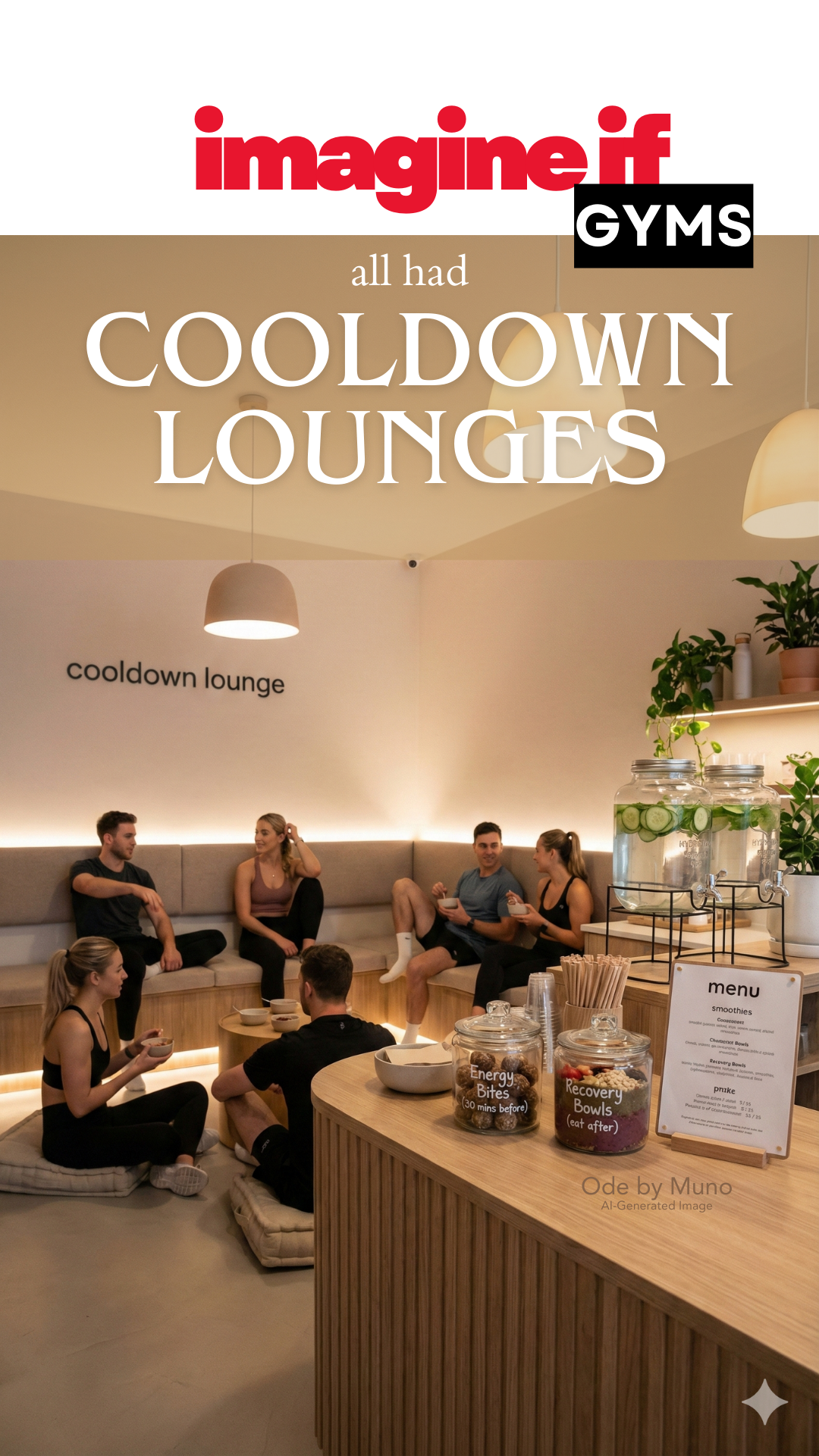
The idea: Not just stretching mats: couches, smoothies, a reason to stay after your workout. The exercise ends, but the community doesn't have to.
Why it might work: Every gym has that awkward moment after a workout where you're done but there's nowhere to be; a lounge fixes that by creating community, routine, and revenue. With simple additions like pre-workout fuel, post-class recovery bowls, conversation prompts, and occasional nutrition drop-ins, a gym can help people connect movement, food, and recovery in one place. The result is a gym that isn’t just where you exercise, but where you learn how to live better alongside people on the same journey.
Why it might not: Lounges may attract loiterers, which can change the vibe for people who actually came to exercise. And the moment you offer health advice, you're navigating liability, credentials, and the risk of saying something wrong. Most gyms will play it safe and stick to selling protein powder at the front desk.
Prompt used to generate image (Gemini Nano Banana Pro): A contemporary fitness studio featuring a dedicated "cooldown lounge" amenity. Soft warm lighting, cushioned benches, and comfortable seating for light stretching and post-class conversations. A smoothie and light protein snack station sits at the center, offering pre-class energy bites (marked "30 minutes before") and post-workout recovery bowls ("eat after") with a small wellness menu encouraging routine-building. A calm hydration area with infused water, plants, and neutral tones completes the space. People in athletic wear relax, chat, stretch, and refuel together. The vibe feels social, restorative, and wellness-centered; a gym designed for connection, not just workouts. High-resolution, lifestyle editorial photography. Portrait.
Best Buy: THE TECH THIRD PLACE
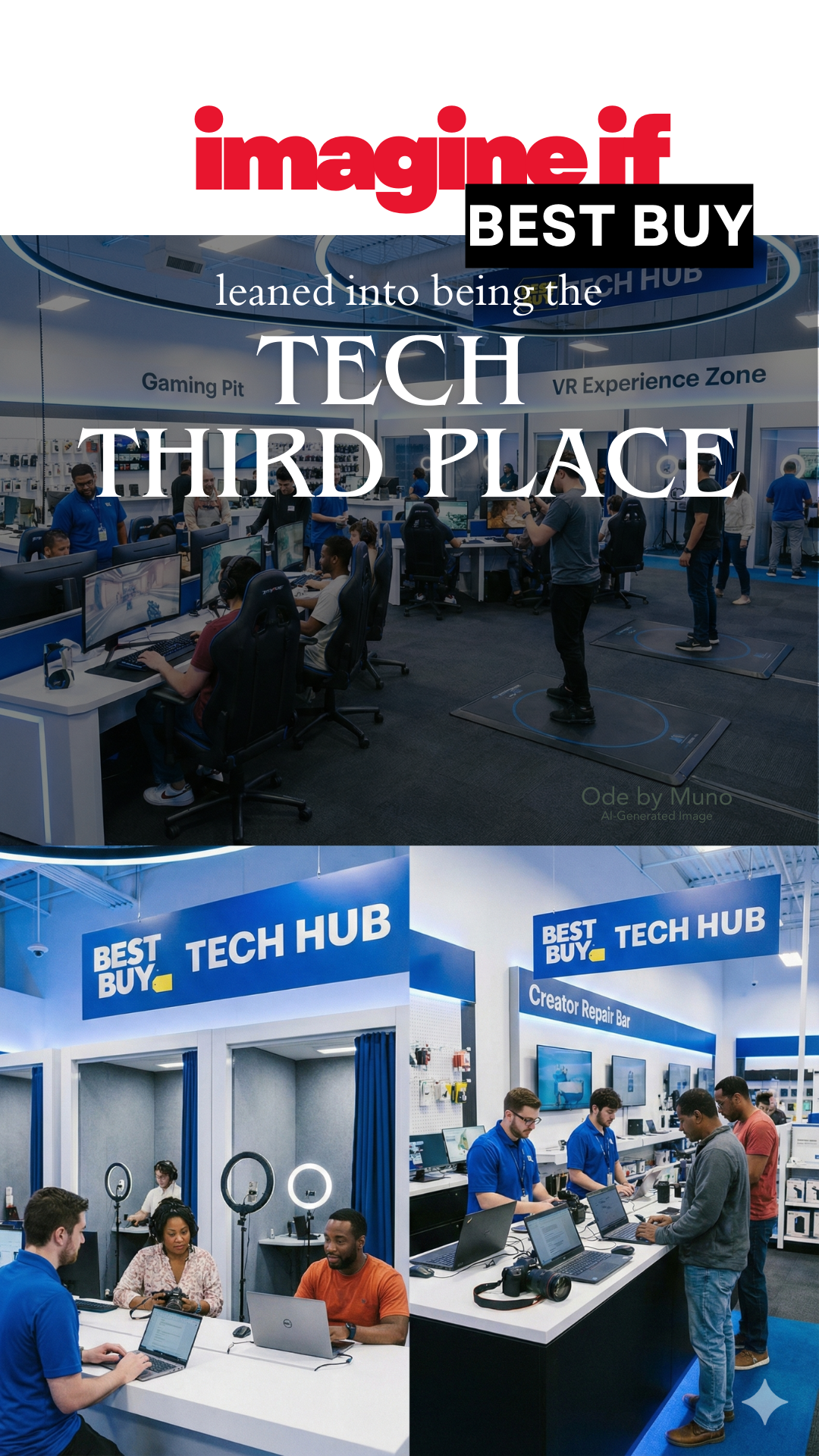
The idea: Gaming pits with comfortable chairs, VR tryout areas, small soundproof livestream booths, and a "creator repair bar" where staff help with gear setup.
Why it might work: Best Buy already has the inventory and the space. People already linger at demo stations. Leaning into that behavior rather than fighting it creates differentiation from Amazon that the website can never replicate.
Why it might not: Retail is measured in sales per square foot. Lounging doesn't convert directly to purchases.
Prompt used to generate image (Gemini Nano Banana Pro): A modern Best Buy store redesigned as a community "tech third place." Bright clean lighting, blue accent branding, and open demo zones. A gaming pit with comfortable chairs and large curved monitors; a VR tryout area with headsets and motion-safe flooring; small soundproof livestream booths with ring lights and mics; and a "creator repair bar" where staff help with gear setup, cameras, laptops, and audio equipment. People in their 20s–40s testing devices, recording content, and chatting casually. The space feels futuristic, hands-on, and social; a tech playground instead of a retail store. High-resolution, editorial lifestyle photography. Portrait.
IKEA: DESIGN CAFÉS
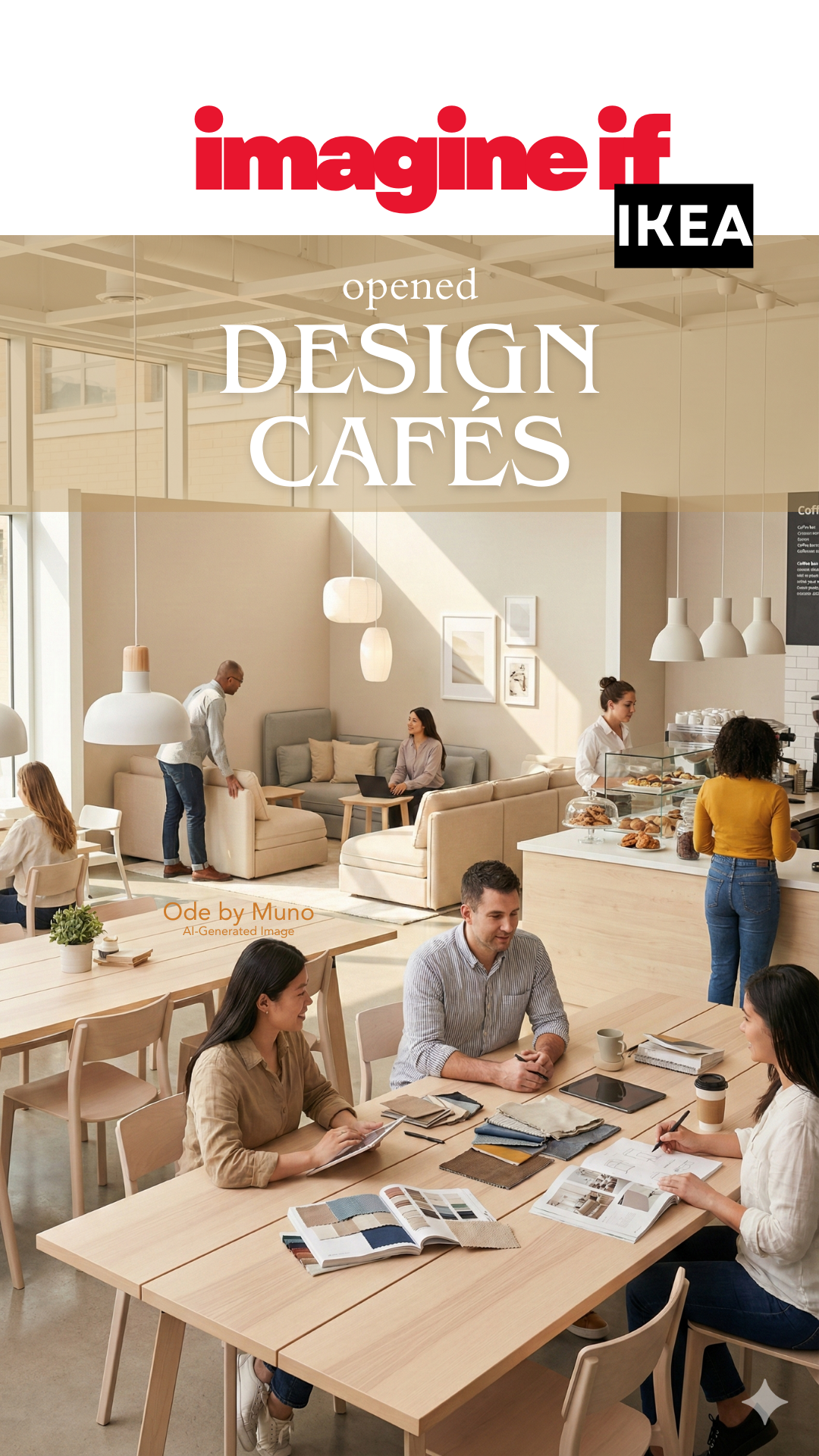
The idea: Grab drink/snack, rearrange sample room furniture, build moodboards with strangers, learn interior design concepts. Turn the showroom into a collaborative design studio.
Why it might work: People already spend hours at IKEA. The store is designed for wandering. Adding intentional creative spaces just formalizes what's already happening; people imagining their lives in these rooms.
Why it might not: IKEA's model is high volume, low margin. The cafeteria exists to keep you in the store longer so you buy more.
Prompt used to generate image (Gemini Nano Banana Pro): A bright, modern IKEA "design café" inside a showroom. Scandinavian décor with light wood tables, cozy seating, and soft pendant lighting. A coffee bar serving drinks and pastries. Customers rearranging modular sample room furniture, testing layouts, and building moodboards on large tables with fabric swatches, catalogs, and tablets. Small groups of people chatting, sketching, and experimenting with interior ideas. Playful, creative, community-focused energy. Clean architectural lines, neutral tones, warm light. High-resolution, editorial lifestyle photography. Portrait.
Notion: WORKSPACE CAFÉS
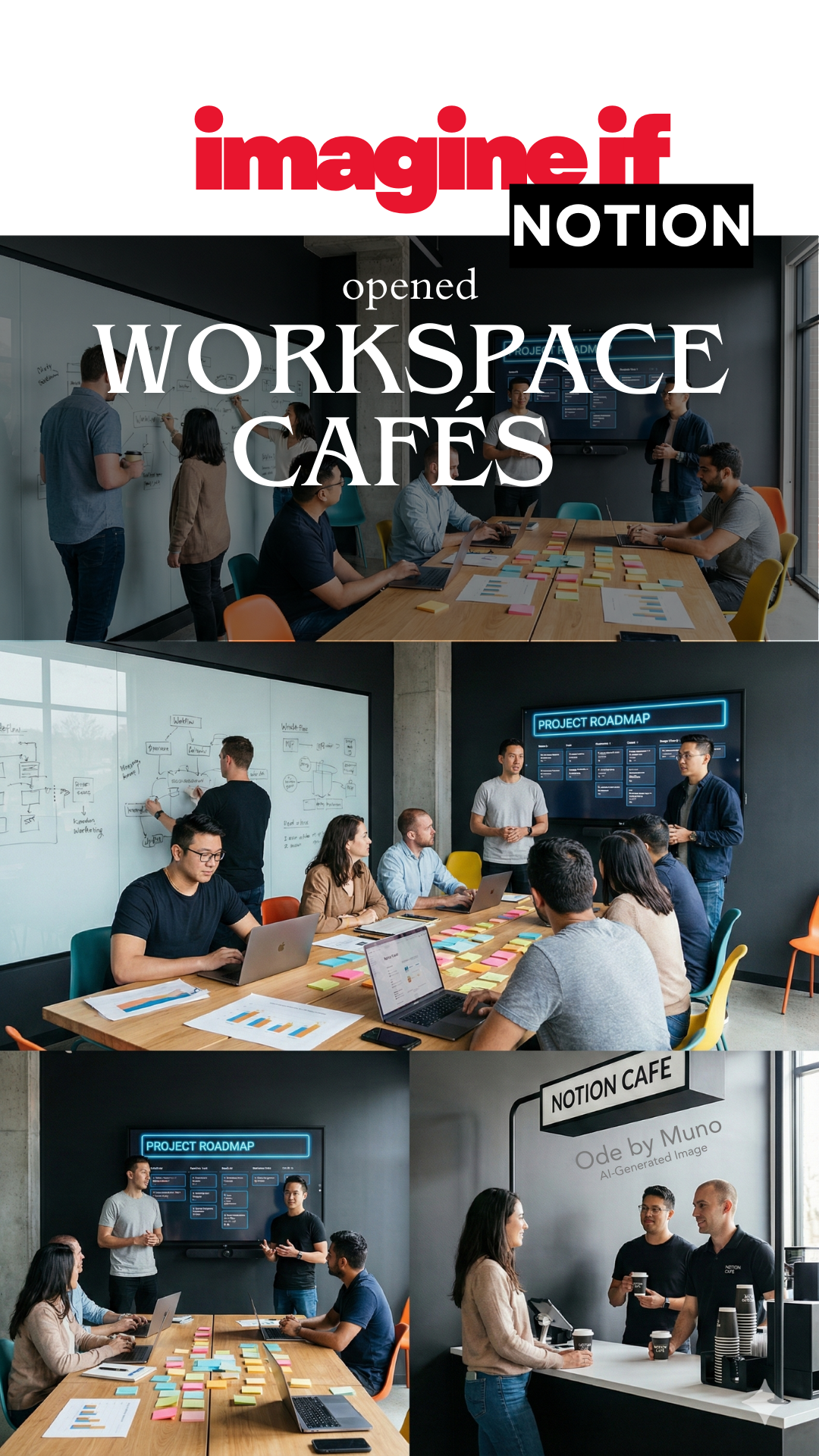
The idea: Take what people already do in Notion (planning trips, building startups, tracking habits, organizing projects) and bring it into a shared physical space.
Why it might work: Notion's brand is built around helping people organize their work and lives. A physical space extends that into the real world. The community already exists online with early teams, solo founders, student projects, hobbyists; a physical space gives those communities a neutral ground to plan, prototype, and learn from one another. Also, people who normally work alone could drop into an environment designed to help them make progress without the pressure of “co-working culture.”
Why it might not: Notion is a software company. Running cafés is not their competency. And the productivity aesthetic can be cringe if it feels too branded or performative.
Prompt used to generate image (Gemini Nano Banana Pro): A modern "Notion Workspace Café" designed for calm productivity and collaboration. Minimalist interior with warm neutral tones, light wood tables, soft lighting, and clean architectural lines. Large wall displays featuring Notion-style templates, workflow boards, and aesthetic productivity layouts. A communal table where diverse people in their 20s–40s work quietly, build projects, sketch ideas, and collaborate with strangers. Laptops open, notebooks out, subtle creative energy. A small café counter offering coffee, tea, and pastries. The atmosphere feels focused, friendly, and pretension-free; a working café where everyone is building something. High-resolution, editorial lifestyle photography. Portrait.
OpenAI: PROMPT CAFÉS
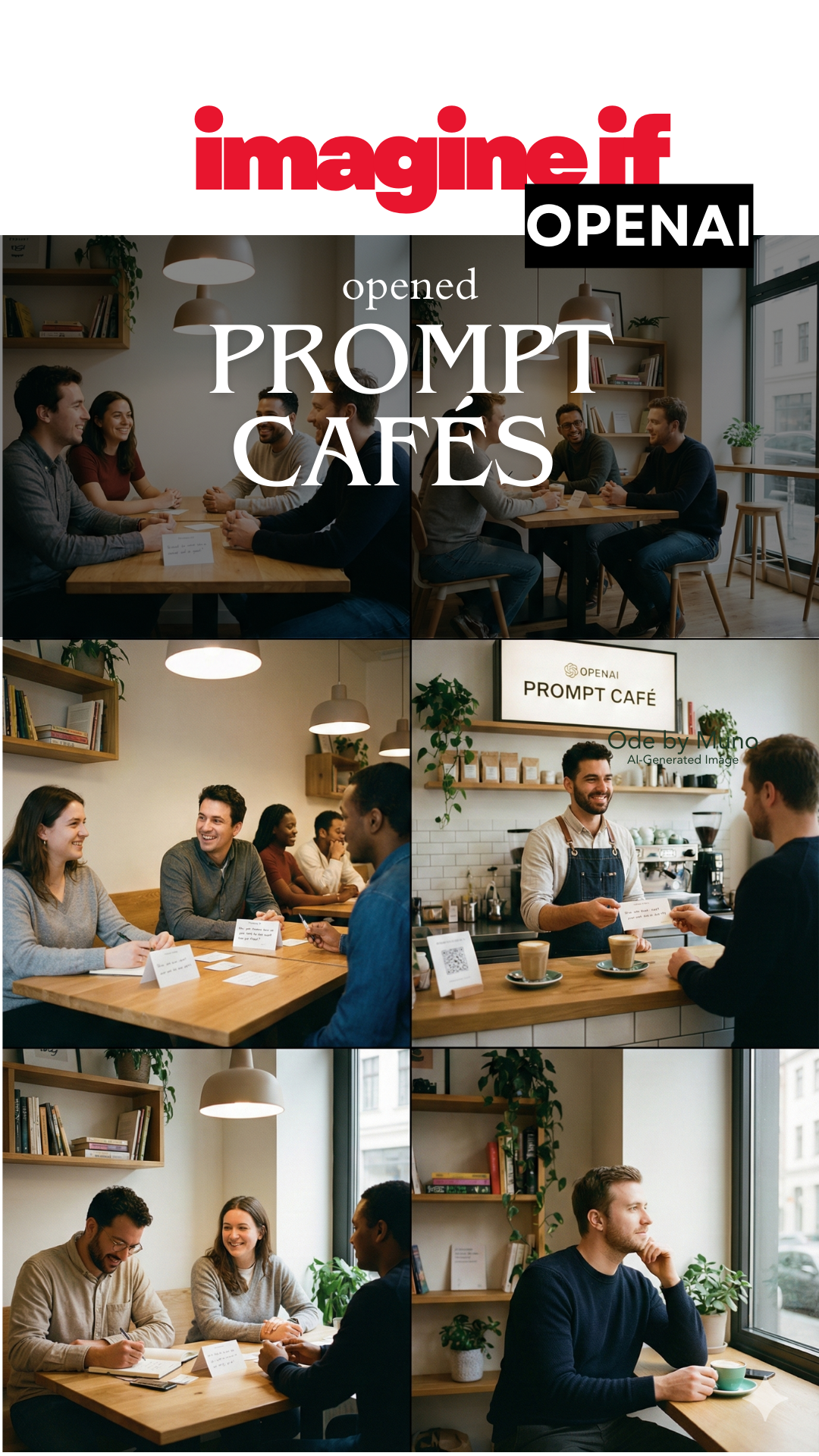
The idea: You order a drink and a prompt: something small, playful, or philosophical to think through with the person sitting next to you.
Why it might work: OpenAI is already associated with curiosity and conversation. A physical space that encourages human-to-human dialogue (sparked by AI-generated prompts) is a beautiful inversion. It's not about the technology. It's about what the technology can spark between people.
Why it might not: OpenAI is scaling AI infrastructure. The brand risk of a poorly executed physical space is high. And "prompt café" sounds like it could be either brilliant or tough, with no middle ground.
Prompt used to generate image (Gemini Nano Banana Pro): A cozy, modern café by OpenAI called "Prompt Café," designed for conversation and curiosity. Warm ambient lighting, wooden tables, soft seating, plants, and minimalist décor. At the counter, a barista hands customers both drinks and small prompt cards with playful or philosophical questions. People in their 20s–40s sit together discussing the prompts, sketching ideas, or writing in notebooks. Some are thinking quietly; others are talking to strangers. Calm, reflective atmosphere, a café built for imagination and dialogue. High-resolution, documentary-style photography. Portrait.
Anthropic: CLAUDE AFTER DARK LOUNGE
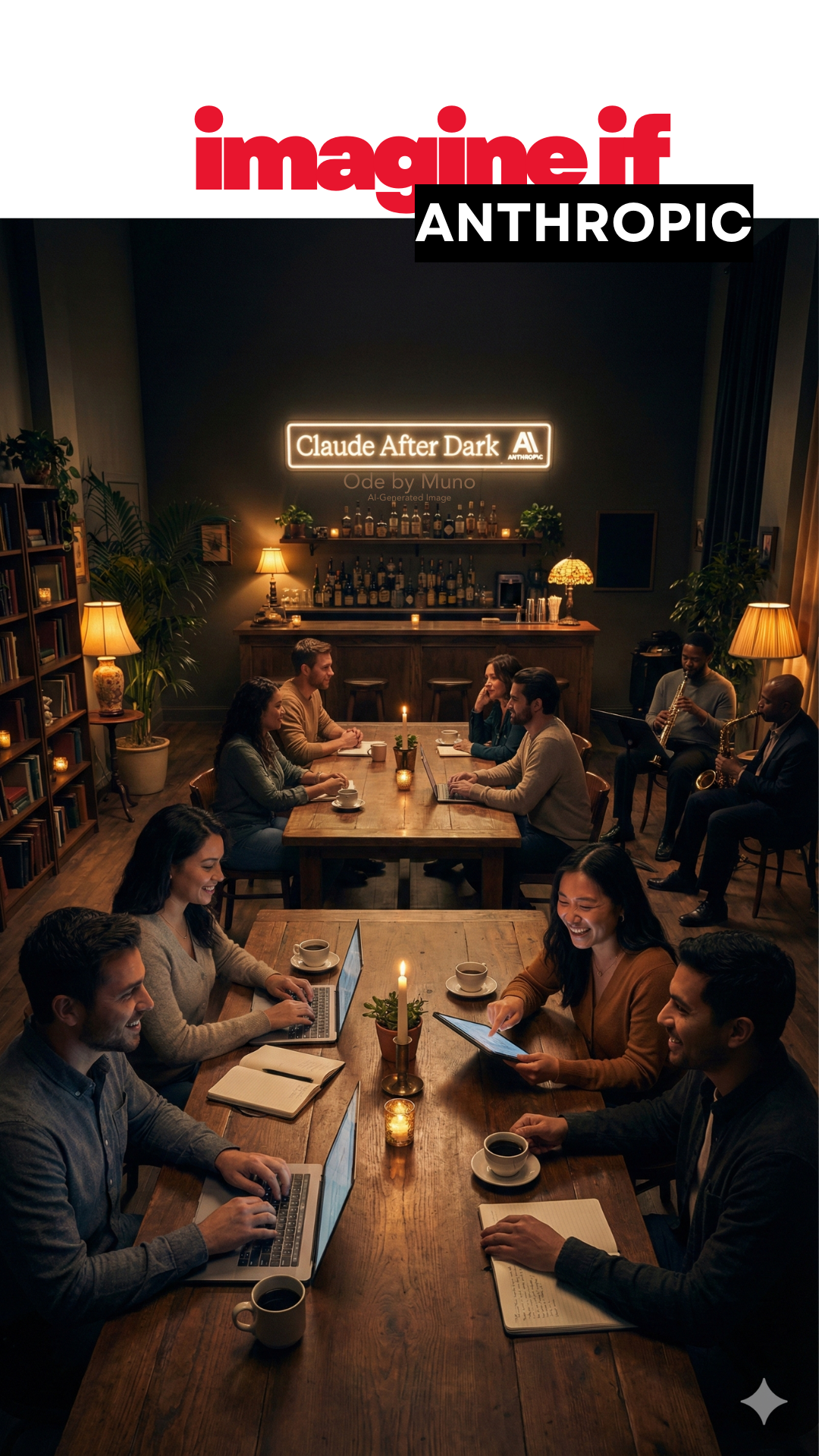
The idea: Soft music, warm lighting, big tables, people jotting thoughts, testing prompts, sharing rabbit holes they fell into that week. A late-night space for deep thinkers.
Why it might work: Anthropic's brand is thoughtful, careful, intellectually curious. A lounge that embodies those values (slower, quieter, more reflective). It's a vibe that attracts the kind of people who care about AI safety and long-term thinking.
Why it might not: Same as OpenAI… AI companies aren't hospitality companies. Also the “after dark” name could have different interpretations.
Prompt used to generate image (Gemini Nano Banana Pro): A dimly lit, cozy late-night lounge called "Claude After Dark." Warm amber lighting, large communal wooden tables, soft jazz or ambient music playing. People in their 20s–40s sit with laptops, notebooks, and tablets, quietly jotting thoughts, testing creative prompts, or sharing interesting rabbit holes with each other. Candles, plants, and minimalist décor create a serene, reflective atmosphere. The space feels like a mix between a nighttime study hall and an intimate café for deep thinkers. High-resolution, moody editorial photography. Portrait.
Discord: LOCAL SERVERS IRL
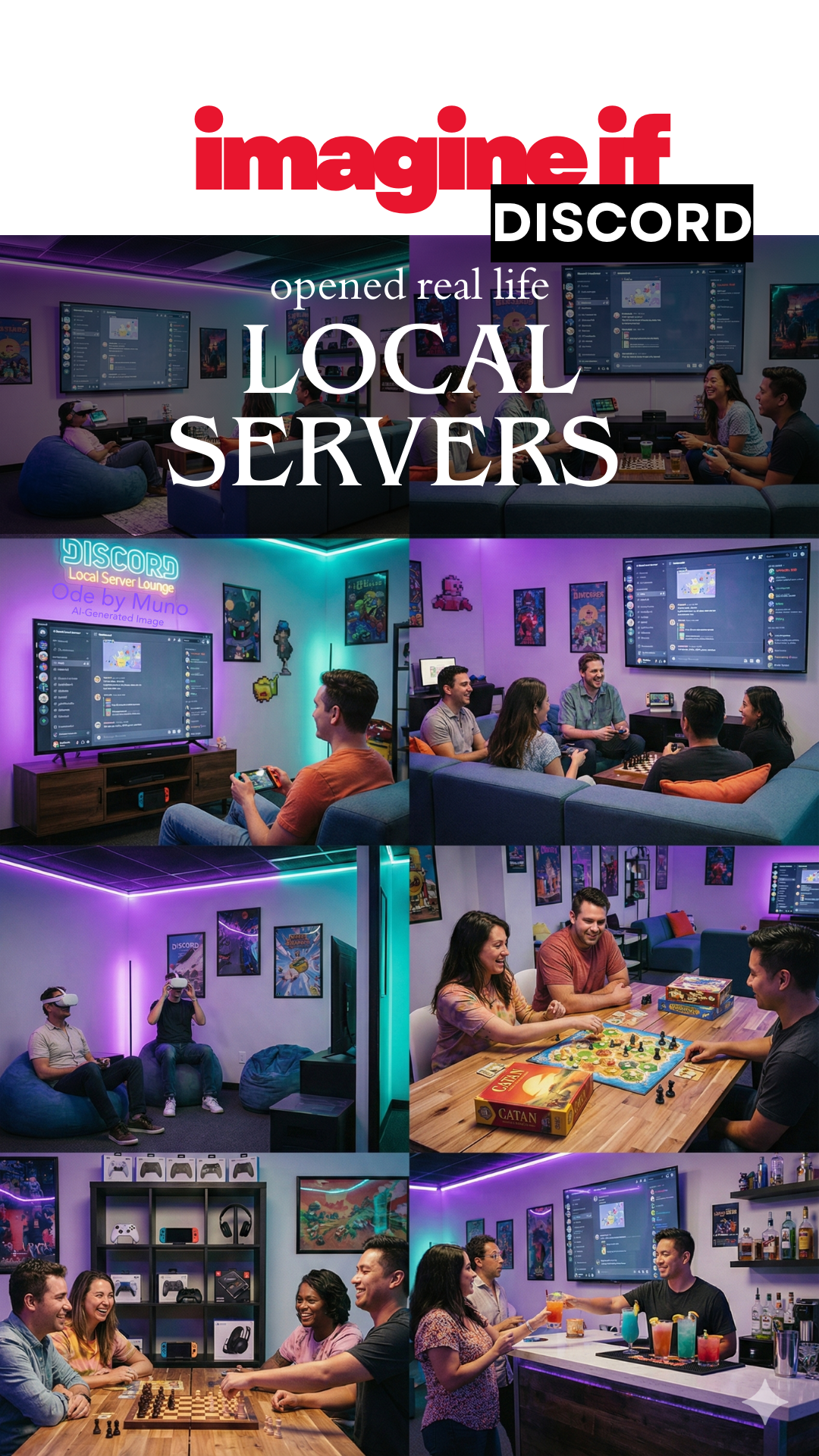
The idea: Physical spaces for digital communities to finally meet the voices they've known for years. Gaming setups, board game corners, tv/projection for presentations, VR stations, rental gear, and a bar.
Why it might work: Discord communities are tight. People form genuine friendships with people they've never met in person. Giving them a space to finally be together (with the classes, games and activities that brought them together) could be emotionally powerful.
Why it might not: Discord's value is that it's everywhere and nowhere. A physical location is the opposite of that. And the communities are so niche that a general "Discord space" might not resonate with any specific group.
Prompt used to generate image (Gemini Nano Banana Pro): A vibrant "Discord Local Server Lounge" designed purely for fun and IRL community. Soft neon lighting in Discord's purple and teal, cozy modular couches, and playful gaming-inspired décor. Screens on the walls display server avatars, channel names, and scrolling chat animations. Groups of people in their 20s–40s hang out, laugh, and play together, multiplayer video games, VR, Switch battles, and casual tabletop games. A dedicated corner features chess boards, card games, and shelves of board games that people borrow freely. A rental shelf offers gaming gear like controllers, VR headsets, microphones, handheld consoles. A small bar serves colorful drinks and snacks. No one is working; people are playing, chatting, and meeting longtime online friends in person. The vibe is warm, social, and energetic; digital community turned physical. High-resolution, editorial lifestyle photography. Portrait.
The Thread That Connects Them
Every one of these ideas starts from the same observation: the places we already go are almost third places. They have the real estate. They have the foot traffic. They have the brand affinity. What they're missing is staying longer.
But there's something deeper happening here.
People aren't just looking for places to go. They're looking for places that mean something. The data on loneliness, on declining social connection, on the erosion of community is not just about square footage or operating hours. It's about value & meaning.
The old third places worked because they told stories. The barbershop knew your name. The bowling alley held your league trophy. The diner remembered your order. They were relationships encoded in space.
What we've built since then is efficient, optimized, and frictionless. They're designed for throughput, not for staying.
The businesses that figure this out & that design for lingering, for conversation, for community, will build something no competitor can easily copy. Because you can replicate a product, lower a price, match a feature set. But you can't replicate a place where people feel like they belong. You can't copy the story someone tells about where they met their best friend, had their first date, finished their first project, or finally felt seen.
That's what people are actually searching for when they leave the house without a plan.
A story worth being part of.
Data referenced in this piece draws from the National Neighborhood Data Archive (NaNDA), tracking U.S. establishment counts from 1990–2021.
This piece is part of Ode by Muno, where I explore the invisible systems shaping how we sense, think, and create.
I’m curious: which of these spaces would you actually use? What’s missing in your city right now? Where do you feel most disconnected, and where do you feel most alive? What brands or places in your own routine could easily become third places if they cared a little more about lingering, community, or comfort? And the bigger question: what kind of space do you wish existed?
The quote at the intro is from the book, Systems Intelligence.
In my next post, I want to share some thoughts on future spaces; not just the physical ones we talked about here, but the digital ones too. Because just like some cities make daily life harder, some places now have uneven access to the technology people rely on, especially AI. We’re entering a new kind of digital divide: not about who has a device, but who has the tools, bandwidth, and support to use modern technology well. Digital inequality is slowly becoming spatial inequality, and most people don’t realize it’s happening yet.