Savory gourmands & the next big fragrance trends
If you've spent any time on PerfumeTok in the past two years, you know the drill: pistachio gelato, strawberry milk, buttery croissant, vanilla everything. Gourmand fragrances are those decadent, edible, sweet scents. I’m a huge fan (but not for overly sweet scents).
Arnaud Guggenbuhl, global head of fine fragrance marketing at Givaudan, said: "I'm not even calling it a trend anymore. I'm calling it a wave." (Bloomberg)
Of all fragrances introduced globally in 2024, 22% were classified as gourmand—up from 19% in 2023 and just 15% in 2022 (Mintel Group Ltd.). Search queries for "gourmand fragrance" grew 186% on TikTok and 82% on Google between July 2024 and July 2025 according to Spate, an artificial-intelligence-powered consumer trend forecaster. Future Market Insights projects the category will reach $55 billion by 2033, growing at a compound annual rate of 3.8%.
But the sugar rush of 2024 is giving way to something more complex, more vegetal, more savory. And if you understand why, and where the shift is coming from, you'll be ahead of the curve.
Why we crave edible scents
To understand where gourmands are going, we first need to understand why they exploded.
Starting with the neuroscience. The olfactory nerve connects directly to the limbic system, the part of the brain that governs memory and emotion. As neuroscientist Dr. Tara Swart explains: "Every smell actively moulds your life and is a way of connecting experiences to you, so just by using the power of scent you can re-feel the feels." (SpaceNK)
Dr. Rachel Herz, a neuroscientist specializing in scent and memory, takes it further: "The most guaranteed positive fragrance will be something like vanilla, because pretty much everybody will have had a prior positive experience with sweetness." (Elle) Food-based notes tap into our earliest, most uncomplicated positive experiences. That neurological shortcut to comfort is irresistible.
The #perfumetok effect
The scent industry boomed during the pandemic.
The explosion of "PerfumeTok" supercharged the category in a specific way: it made gourmands searchable.
As fragrance expert Archer explains: "It's easier to 'blind-buy' based on someone saying, 'this smells like raspberries and caramel,' than it is based on, 'this smells like vetiver and cypress.'" (Elle)
When you're learning about perfume through a screen, before you've ever smelled the actual product, gourmand notes translate. Cherry, vanilla, chocolate: you know what that means. Birch tar, ambroxan, iso e super: you don't.
So gourmand content consistently outperforms other fragrance content on TikTok.
The commercial impact is wild. Dubai-based Lattafa brought in more than $33 million on TikTok Shop from January to September 2025, driven largely by gourmand scents like Eclaire (Bloomberg/Charm.io). Even niche houses that built their reputations on earthy 2010s aesthetics have pivoted: D.S. & Durga's Pistachio, at $300 for 100ml, was one of their most successful launches.
Are people smelling what they can’t eat?
In July 2025, TikTok creator Amy Ebell (@AmyNoseScents) suggested a link between the rise of gourmand perfumes and the spread of GLP-1 medications like Ozempic and Mounjaro. Her idea was that when appetite is suppressed, people still crave sweetness just through scent instead of food. The video went viral, with many GLP-1 users agreeing they’d turned to dessert-like fragrances. "I'm on that medication and YES, I joke that a spray of my fave foodie fragrance is my breakfast," one co
Researchers say the science is still emerging. Some GLP-1 users report changes in smell, and experts note that scent is tightly linked to memory, reward, and pleasure. When eating no longer delivers satisfaction, fragrance can step in as a substitute. Gourmands were growing before GLP-1s but the cultural pattern is familiar. When pleasure is restricted in one area, people look for it somewhere else.
Perfumer Yosh Han synthesizes the cultural dimension: "Maybe you're not able to eat a croissant, but you can still enjoy the smell of a croissant." (Forbes)
What you eat predicts what you’ll scent
Here's my thesis: food trends predict fragrance trends.
Pistachio dominated both categories simultaneously: viral recipes, trending desserts, fragrances like Kayali's Yum Pistachio Gelato. Strawberry milk, mochi, matcha: each crossed from food culture to fragrance within months. As perfumer Yosh Han states: "You can't separate scent from culture." (Forbes)
So what's happening in food now? Savory. Fermented foods, miso, charred vegetables, brown butter. There’s a very natural/earthy element to the taste profiles. Sourdough, not brioche. Caramelized onion, not caramelized sugar.
The fragrance translation is already beginning. Industry insiders are tracking what they call "scents of the garden": vegetal gourmands featuring rhubarb, cucumber, basil, beetroot. (Elle) The B Futurist report says: "Instead of purely sugary scents, the new gourmand is about sophisticated, nostalgic, and comforting 'foodie' notes. It's less about candy and more about the entire sensory experience of a cherished food or drink."
The gourmand sub-categories to watch (boozy, dry spice, vegetal, etc.)
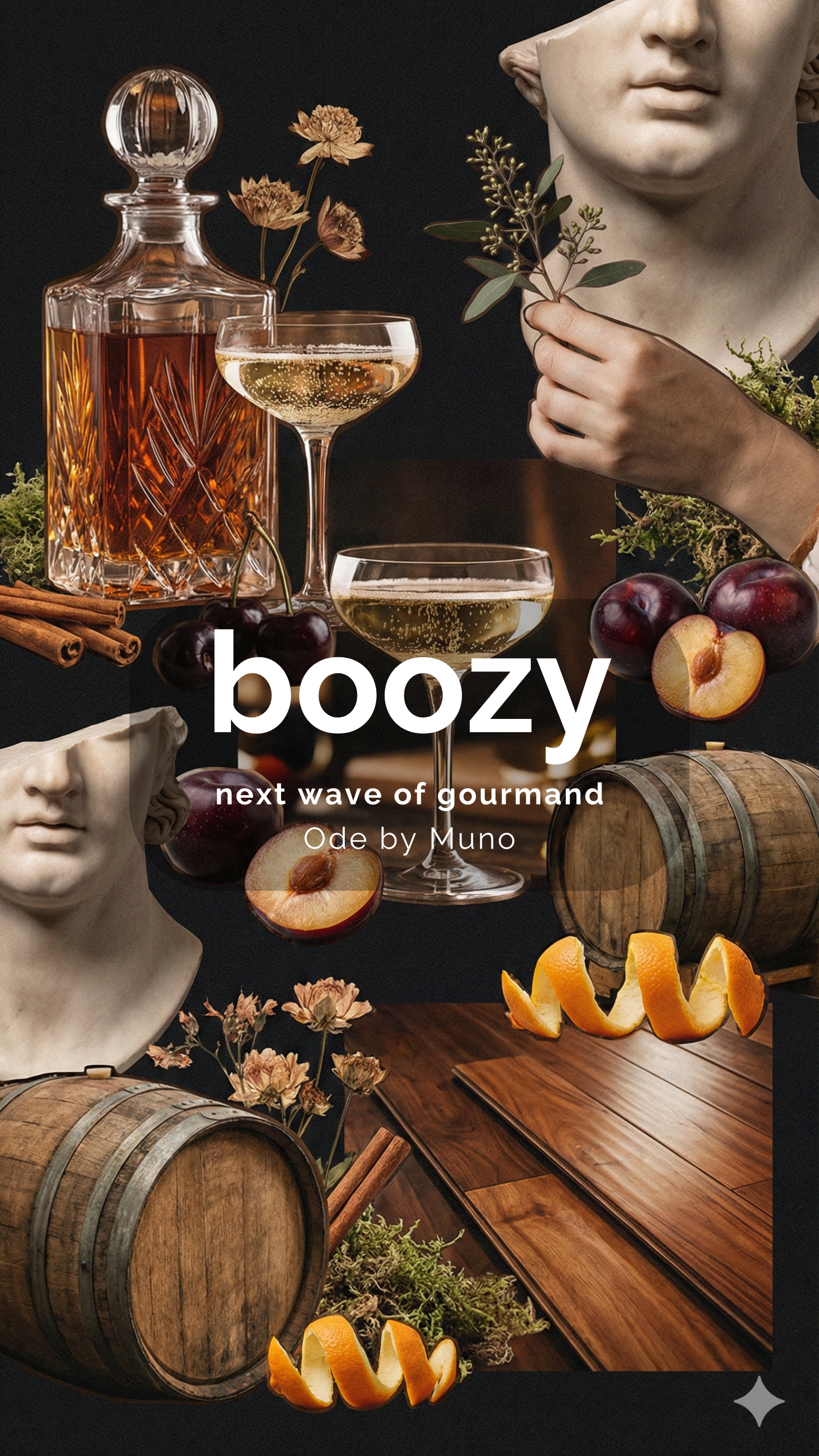
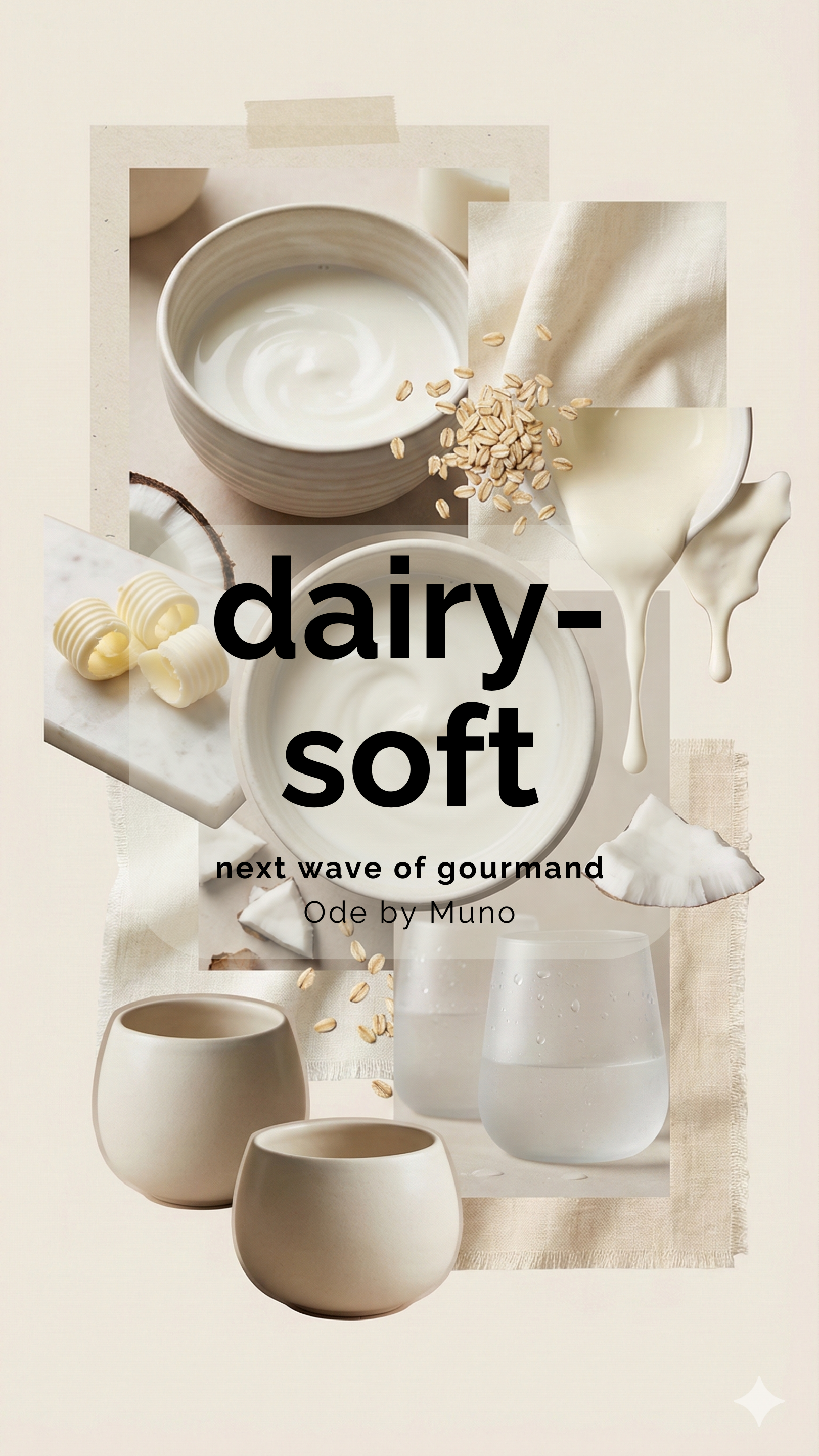
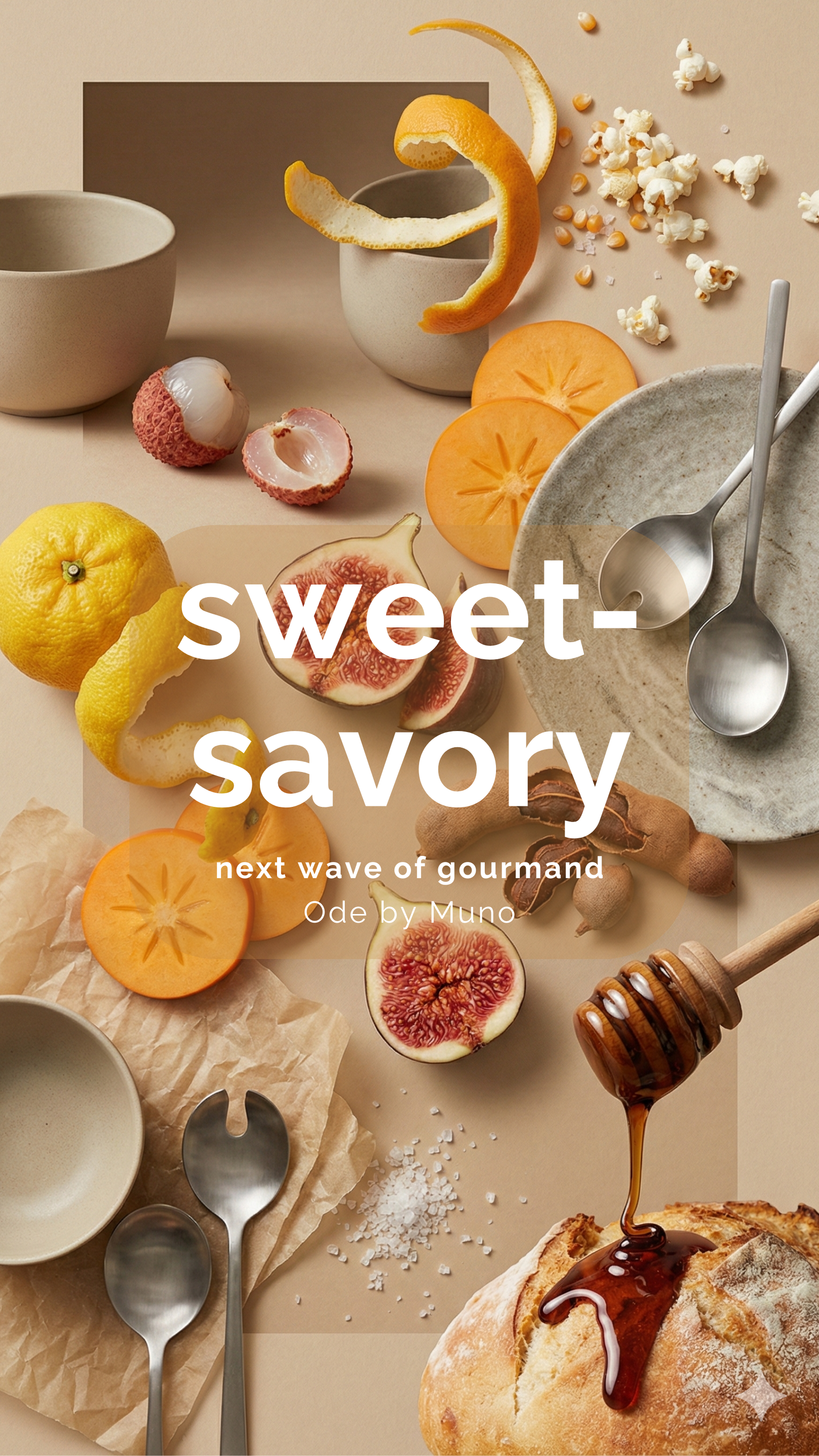
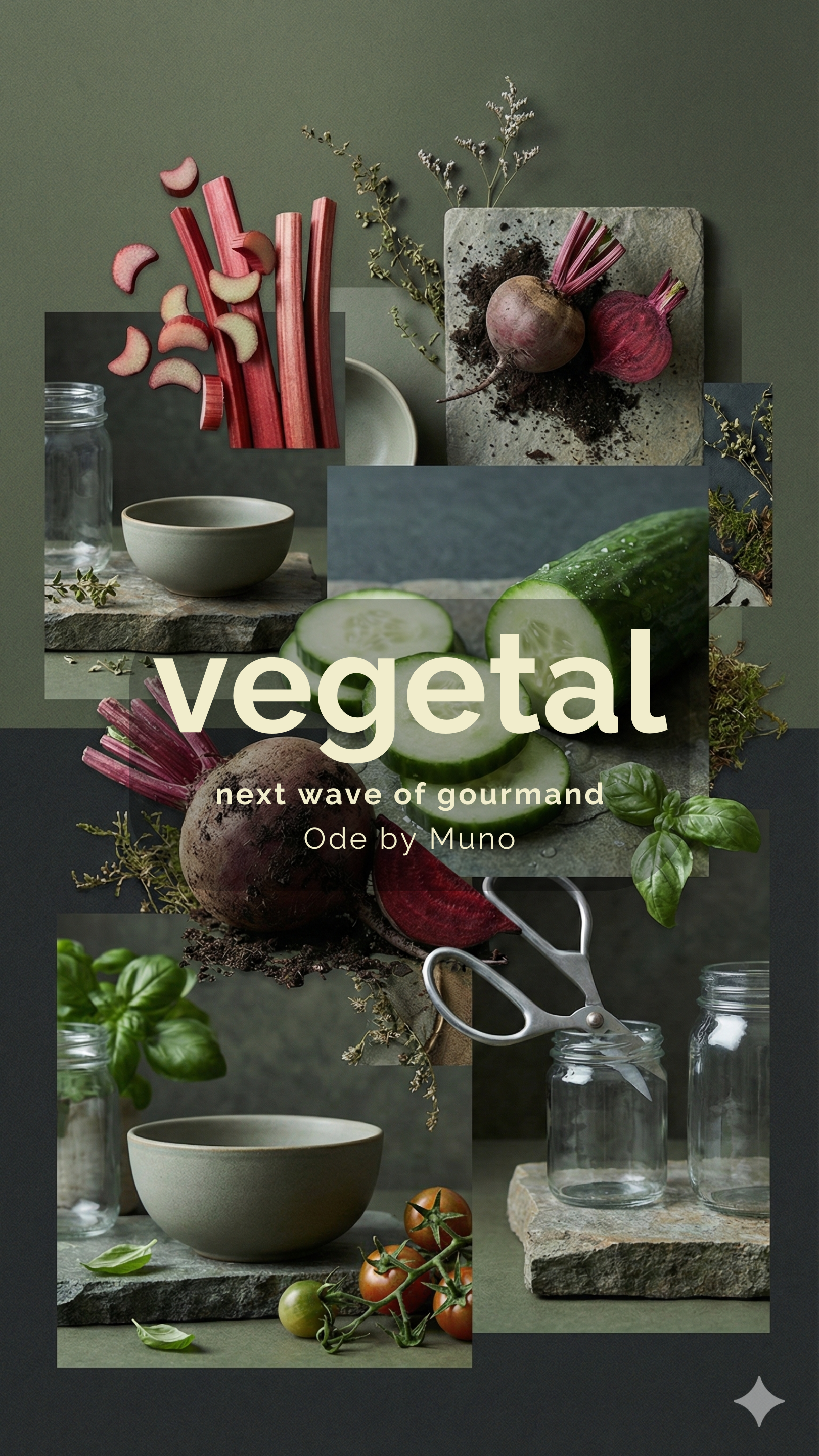
These are the notes I would love to see & think you should watch:
1. Boozy
What it is: Gourmand fragrances built around alcohol accords
Why it matters: Younger consumers are drinking less but still drawn through scent
Key notes: Rum, cognac, bourbon, whiskey, brandy, wine, champagne
2. Dairy-Soft
What it is: Creamy, fatty, low-sweetness gourmands
Why it matters: Evolves milk and vanilla trends into something more mature
Key notes: Milk, oat milk, coconut milk, butter, brown butter, yogurt
3. Sweet–Savory
What it is: Familiar sweetness, but restrained
Why it matters: Eases consumers away from bakery gourmands without losing comfort
Key notes: Fig, yuzu, pomelo, lychee, persimmon, tamarind, dark honey, popcorn, bread
4. Vegetal
What it is: Edible, green, savory-leaning gourmands
Why it matters: Replaces sugary dessert scents with freshness and balance
Key notes: Rhubarb, beetroot, cucumber, basil, tomato leaf
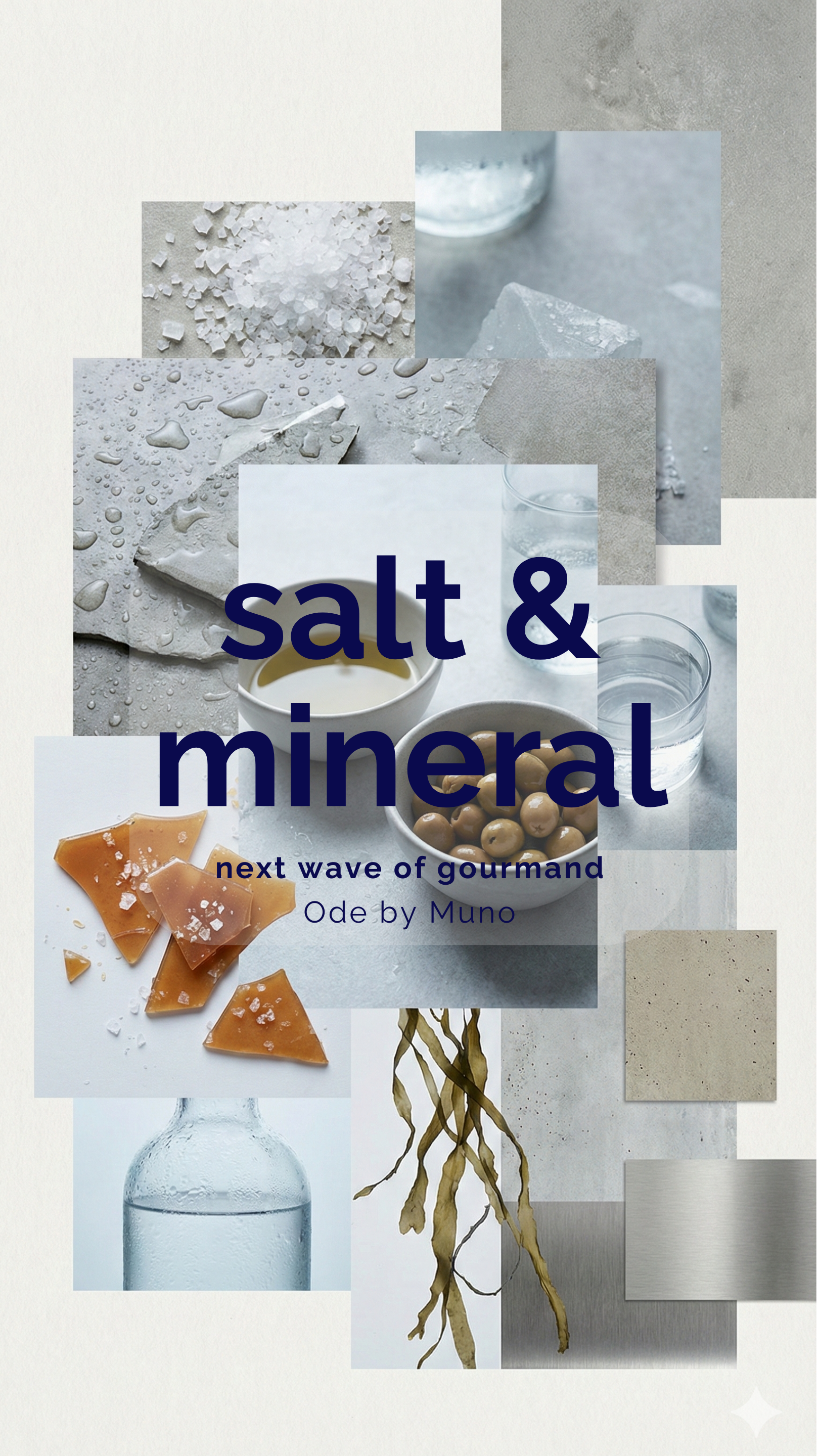
5. Salt & Mineral
What it is: Edible scents grounded by salt, minerals, and savory contrast
Why it matters: Enhances sweetness without sugar; adds realism and restraint
Key notes: Sea salt, mineral accord, salted caramel (low sweetness), olive brine, seaweed (light)
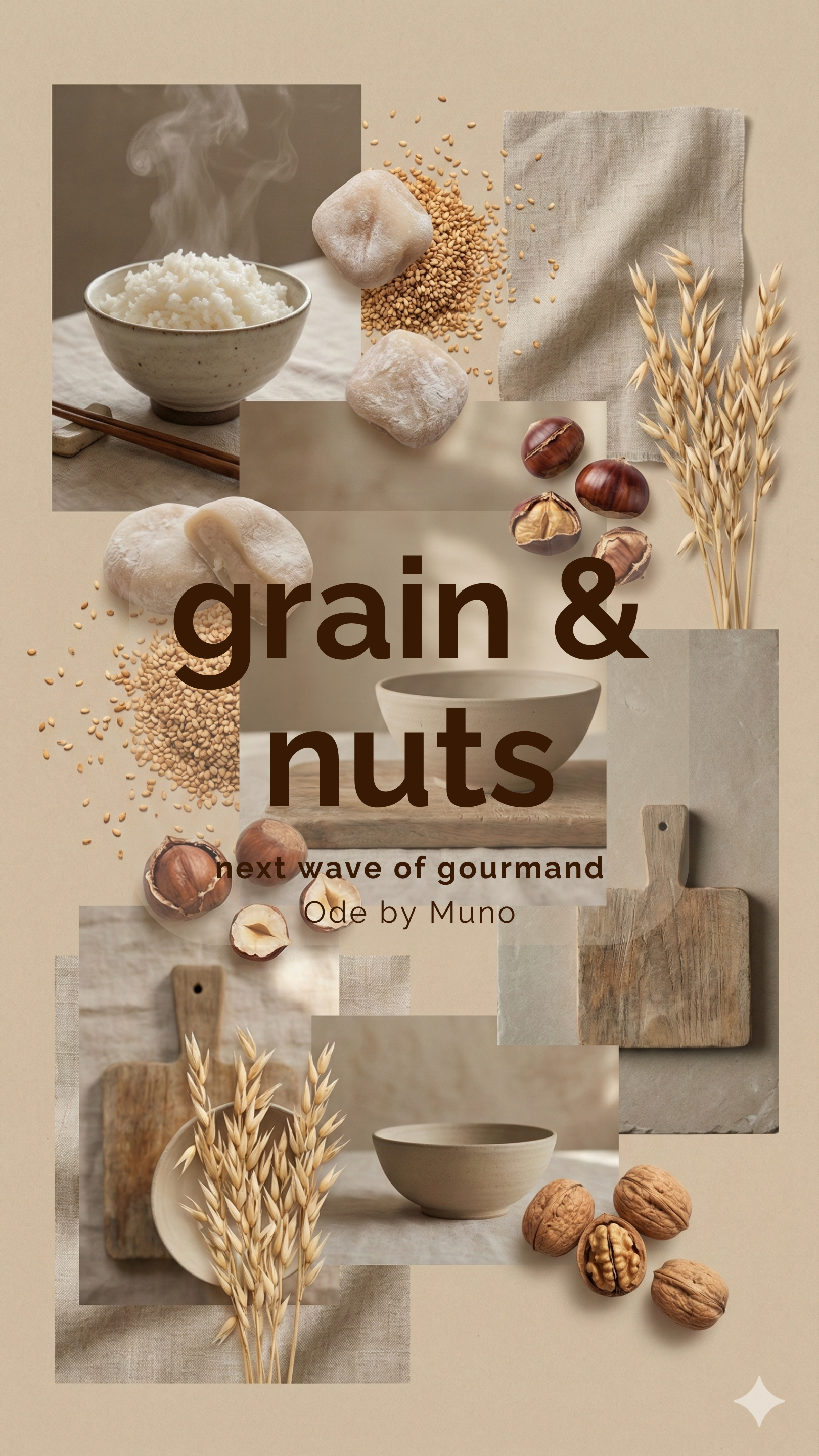
6. Grain & Nuts
What it is: Warm, nutty, filling, grounding scents
Why it matters: Delivers comfort without sugar; strong wellness overlap
Key notes: Rice, mochi, toasted sesame, oats, chestnut, hazelnut, walnut
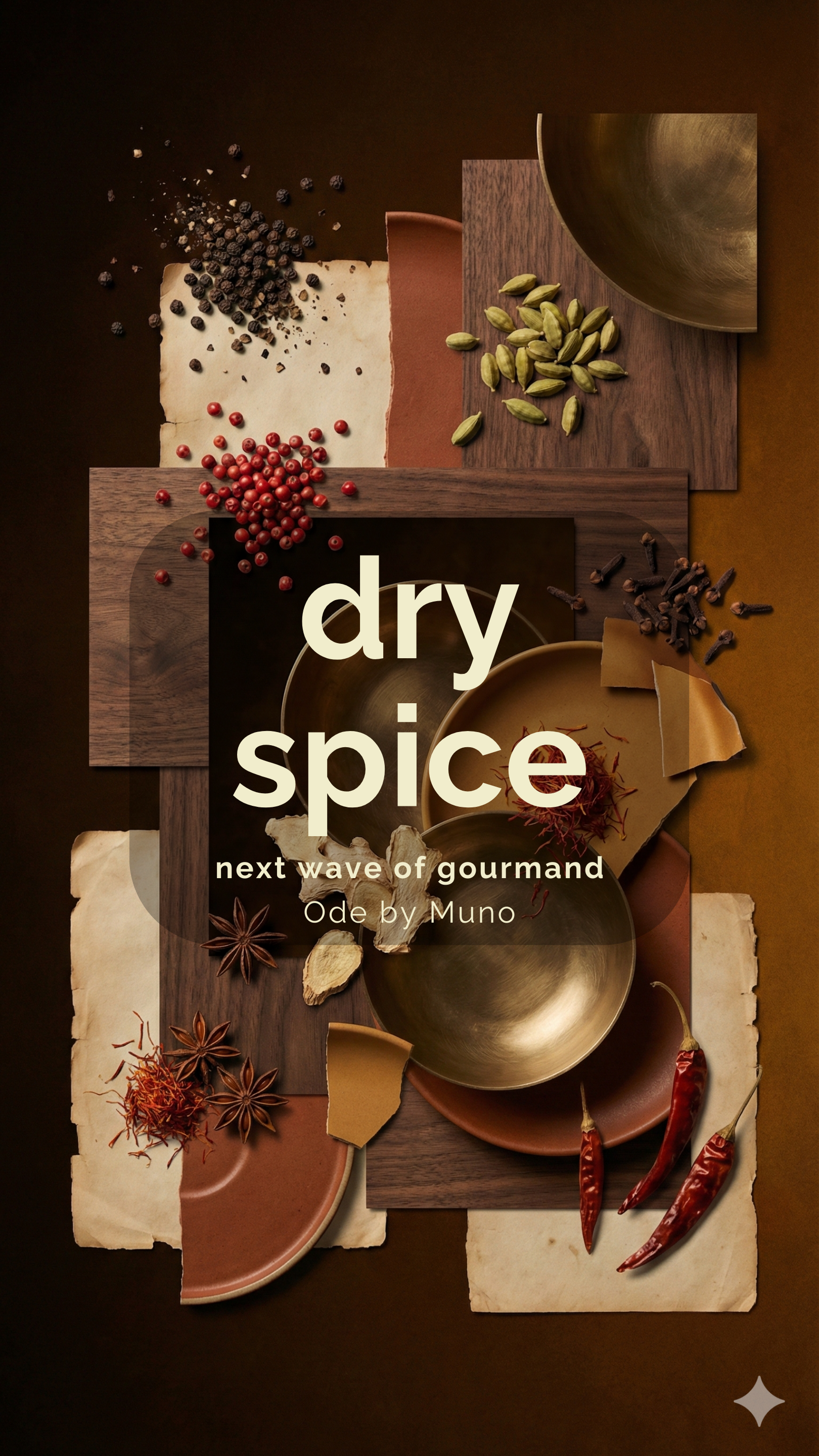
7. Dry Spice
What it is: Warmth and structure without sweetness
Why it matters: Adds depth to sugar-forward scents
Key notes: Black pepper, pink pepper, cardamom, clove, star anise, saffron, ginger, chili
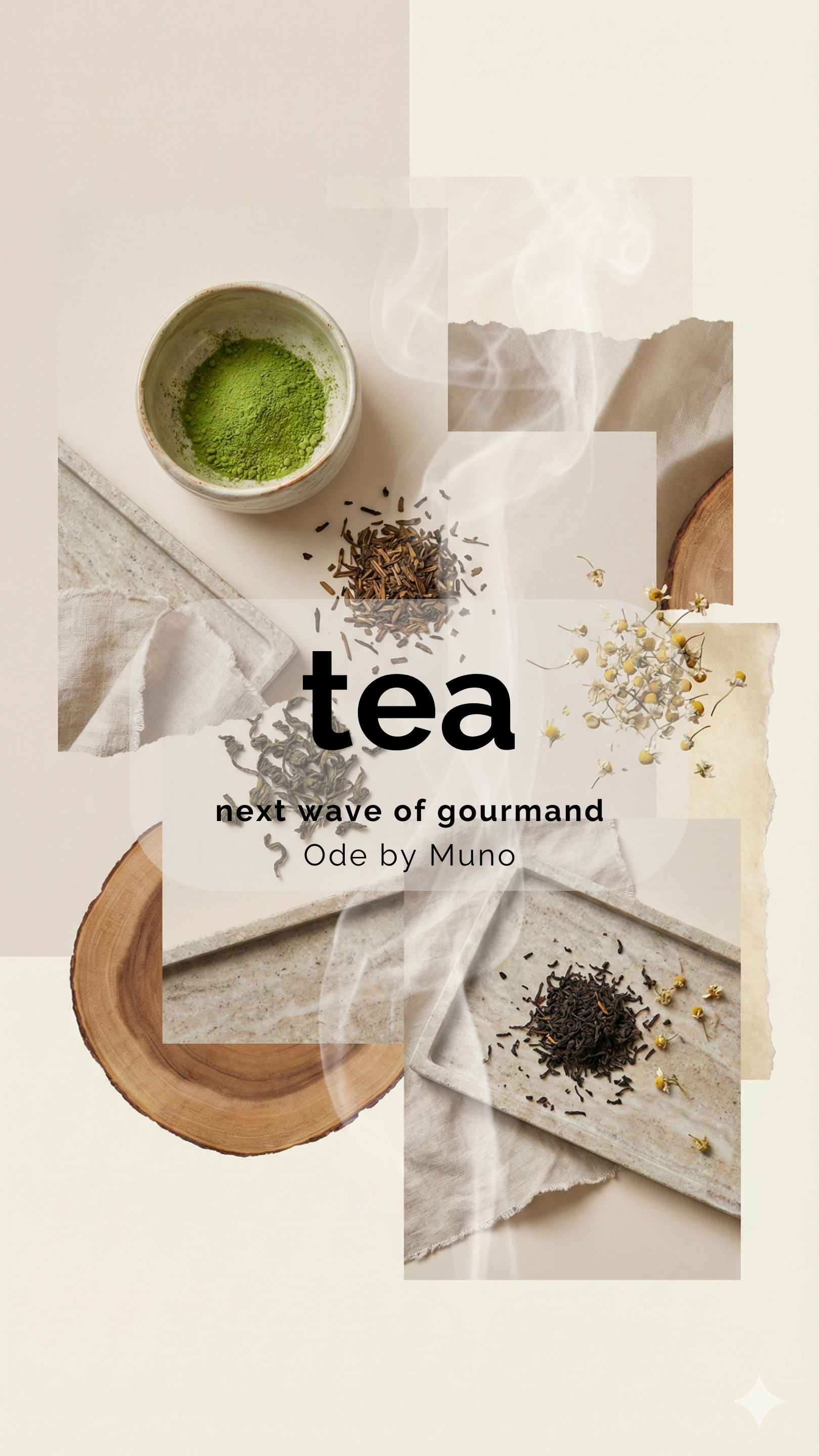
8. Tea
What it is: Bitter-green, roasted, calming notes tied to relaxation
Why it matters: Meets demand for mindfulness and everyday wear
Key notes: Matcha, hojicha, oolong, black tea, chamomile
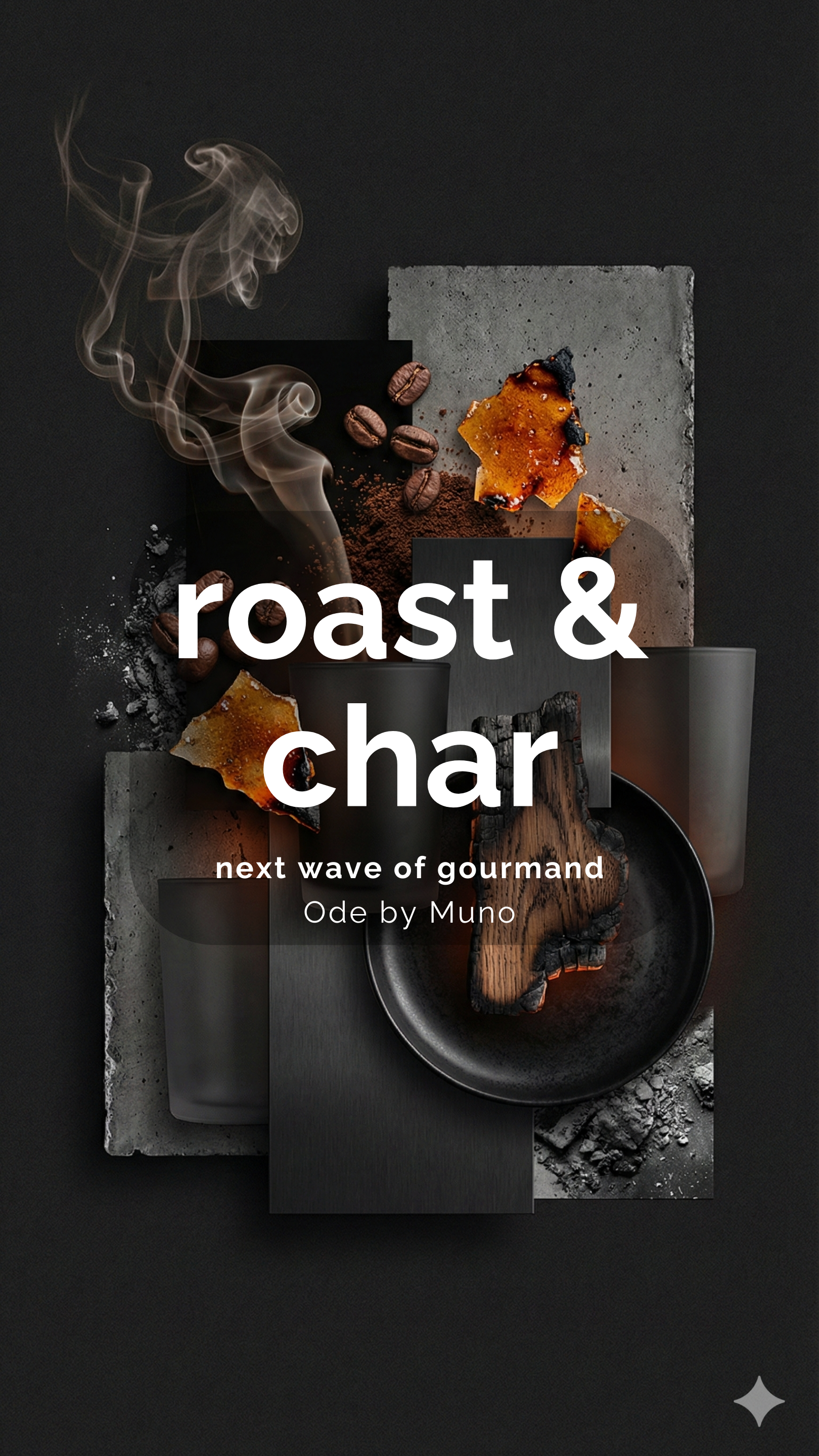
9. Roast & Char
What it is: Controlled bitterness, smoke, and heat
Why it matters: Delivers intensity without sweetness
Key notes: Woodsmoke, roasted coffee, burnt sugar
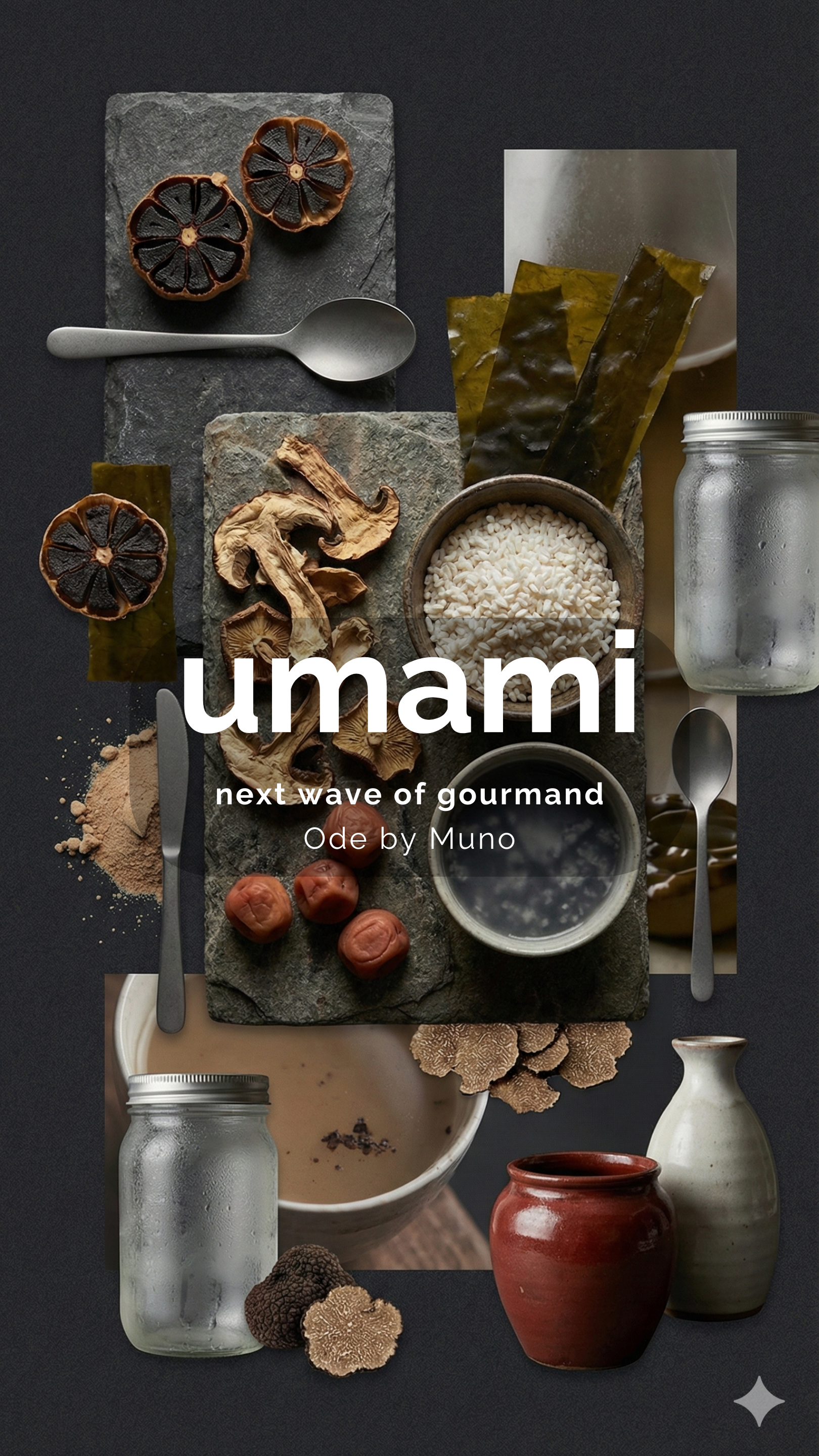
10. Umami
What it is: Savory, complex, fermentation-driven profiles
Why it matters: Early signal of the next innovation wave
Key notes: Koji, sake, wine lees, truffle, mushroom, seaweed, umeboshi, black garlic
Smell like a cuisine, not a dessert
These are some savory gourmand perfumes I found that read like they’re edible, comforting, but not sugary.
Vietnamese
• d’Annam (Pho Breakfast)
• d’Annam (White Rice)
Thai cuisine
• Strangers Parfumerie (Salted Green Mango)
• Parfum Prissana (Tom Yum)
Spanish cuisine
• Loewe (Tomato Leaves Bath Set)
• Carner Barcelona (Sal y Limón)
Italian cuisine
• Santa Maria Novella (Bizzarria)
• Profumum Roma (Acqua di Sale)
Middle Eastern
• Lattafa (Atheeri)
• Arabian Oud (Saffron Oud)
French
• Maison Crivelli (Safran Secret)
• Atelier Materi (Vanille Carbone)
Indian
• Isak (Vanilla on Fire)
• Bombay Perfumery (Chai Musk)
Chinese
• To Summer (Triple Tea)
• Document Season (Tan)
Japanese
• Parfum Satori (Nobiyaka)
• J-Scent (Ramune Soda)
Korean
• Concreted (Sesame Shower)
• Tamburins (Bottari)
What this means for brands & consumers
For brands
The message is simple: expand what “gourmand” means. Sweet, candy-like gourmands are crowded. The real opportunity is in scents that still feel edible and comforting, but add complexity like savory notes, cultural specificity, or unexpected pairings.
Cross-cultural notes matter. Different flavor profiles offer real differentiation in a saturated market. Brands with travel-driven storytelling are especially well positioned.
For consumers
If you love gourmands but feel stuck, start layering. Most people now use more than one scent depending on mood, and mixing fragrances is already common. Pair something sweet with something green or spicy like vanilla with vetiver, fruit with black pepper. That balance is where the category is headed.
Also, watch food culture. What shows up on menus and in recipes today often appears in fragrance a year later.
Rice, rhubarb, black tea, mushroom: when you smell these notes, remember Ode by Muno.
Thank you for thinking with me. This piece is part of Ode by Muno, where I explore the invisible systems shaping how we sense, think, and create.
I’m curious: how do you choose what you wear on your skin? Is it about sweetness, warmth, freshness, or familiarity? Do you notice any connection between what you crave to eat and the scents you love? When you think about the perfumes you’ve finished versus the ones that sit untouched, what’s the difference?
The quote at the intro is from the book, Systems Intelligence.