Sound, taste, time, or space: which comes first in a listening room?
“One cue to Systems Intelligence (SI) is to become more sensitive on the channels of input. The senses form an interface with the outer world and if a person wishes to succeed in the context of complex systems and involving interaction and feedback, she needs to be acute on what her senses tell of the world.”
I’ve spent some $$$ on craft cocktails in dimly lit rooms filled with vintage speakers and rare records, yet I’m far from a "vinyl head." In these listening bars, there is often a unique, quiet tension… a feeling that you need to be an expert just to exist in the space. The name suggest that the experience leads with sound, but what if the music is actually secondary to the overall system?
This is an exploration of how sound, taste, and space work together to shape our mood. Do you really need a degree in jazz theory to "get it," or is the room itself teaching you a new way to slow down and pay attention? Maybe the point of a listening bar isn’t the record playing but the version of yourself you become when you tune in.
The literacy gap
There is a specific anxiety that comes with walking into a serious listening bar. It feels like walking into a library where everyone has read the books but you.
This is the Literacy Gap. We often mistake appreciation for expertise. But the best listening rooms aren't tests of your knowledge; they are frameworks for Perceptual Readiness. They are designed to "tune" you, physically and mentally, so that you can receive the experience without needing to be an expert.
Different rooms achieve this tuning in different ways. Some demand submission to the volume; others entice you with flavor; some freeze time; others embrace you with architecture.
Here are some global examples of listening rooms that lead with different senses to close that gap.
Listening Rooms leading with SOUND
1. Lion (aka Silent Cafe Shibuya, Tokyo) | est. 1926
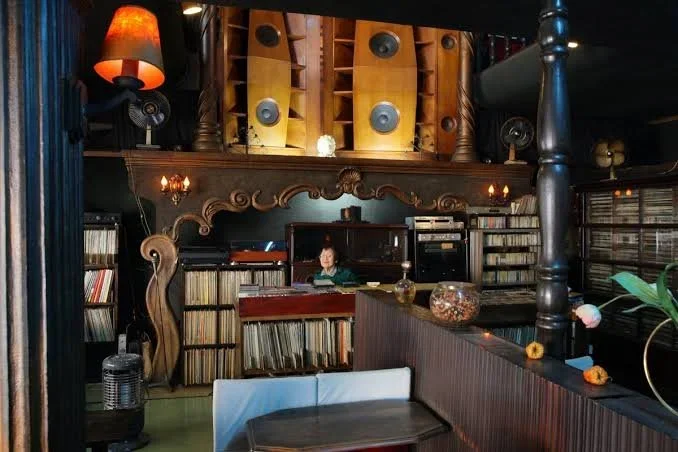
Relevance: If you want to understand the "Sound First" philosophy, you go to the source. Built in 1926, burned down in the war, and rebuilt in the 50s, Lion is a space where conversation is strictly forbidden. It exists for one purpose: listening to a high-quality, large-scale audio system. This place established the grammar of listening rooms.
The Design: All the seats (resembling wooden church pews) face one direction: toward the massive, custom-built 3-meter tall speakers. The architecture is ecclesiastical. Every material choice, every angle, every surface is calibrated for acoustic clarity. You sit where you're told. You face what you're meant to hear.
The Experience: There is no socializing here. You do not come to "hang out." The "Literacy Gap" here is bridged by silence: you don't need to know the track because you aren't allowed to talk about it anyway. The room forces you into a meditative state where sound becomes the only reality.
2. Silence Please (New York, USA) | est. 2025
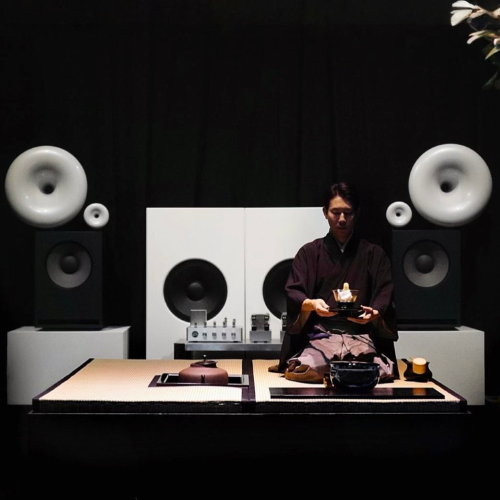
Relevance: A showroom for the brand's own bespoke, brutalist speakers. They play entire albums start-to-finish. Silence Please makes the audiophile space dual-purpose: retail and ritual. You're not just buying speakers, you're experiencing what they make possible. The room functions as proof of concept. This is what you're paying for: the ability to hear everything.
The Design: The design language is brutalist: raw materials, visible structure, no softening. The aesthetic matches the sonic philosophy. Just sound, delivered with precision and force. The room itself is minimal, almost monastic, so the speakers can do what they're built to do.
The Experience: Alcohol-free during the day, focusing on tea and deep listening. You come here to pay attention. The tea ceremony slows you down. The album-length format holds you in place. By the end, you've spent an hour doing nothing but listening.
3. Hidden Grooves (London, UK) | est. 2025
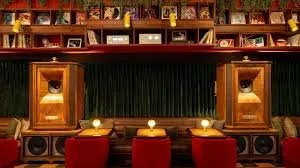
Relevance: Opened at Virgin Hotels London-Shoreditch in 2025, Hidden Grooves is a 38-seat, vinyl-focused listening bar designed to celebrate Virgin's music roots with their original Virgin Records label and the now-extinct Virgin Megastores, where you could listen to an album before buying it. Quite nostalgic for some people.
The Design: Inspired by Japanese listening bars but filtered through British hospitality sensibilities. You're encouraged to browse, select, request vinyls. The design language is warm with wood, dim lighting, analog textures. Cocktails are themed around iconic albums, turning the drink menu into another layer of curation.
The Experience: You walk in, order a drink named after a record you may or may not know, and settle into a seat designed for listening. The high-fidelity system does the work. Albums play in full. No skipping, no shuffling. The experience recreates something that used to be mundane: listening to music you're curious about in a space built for that exact purpose.
4. Bar Shiru (Oakland, USA) | est. 2019
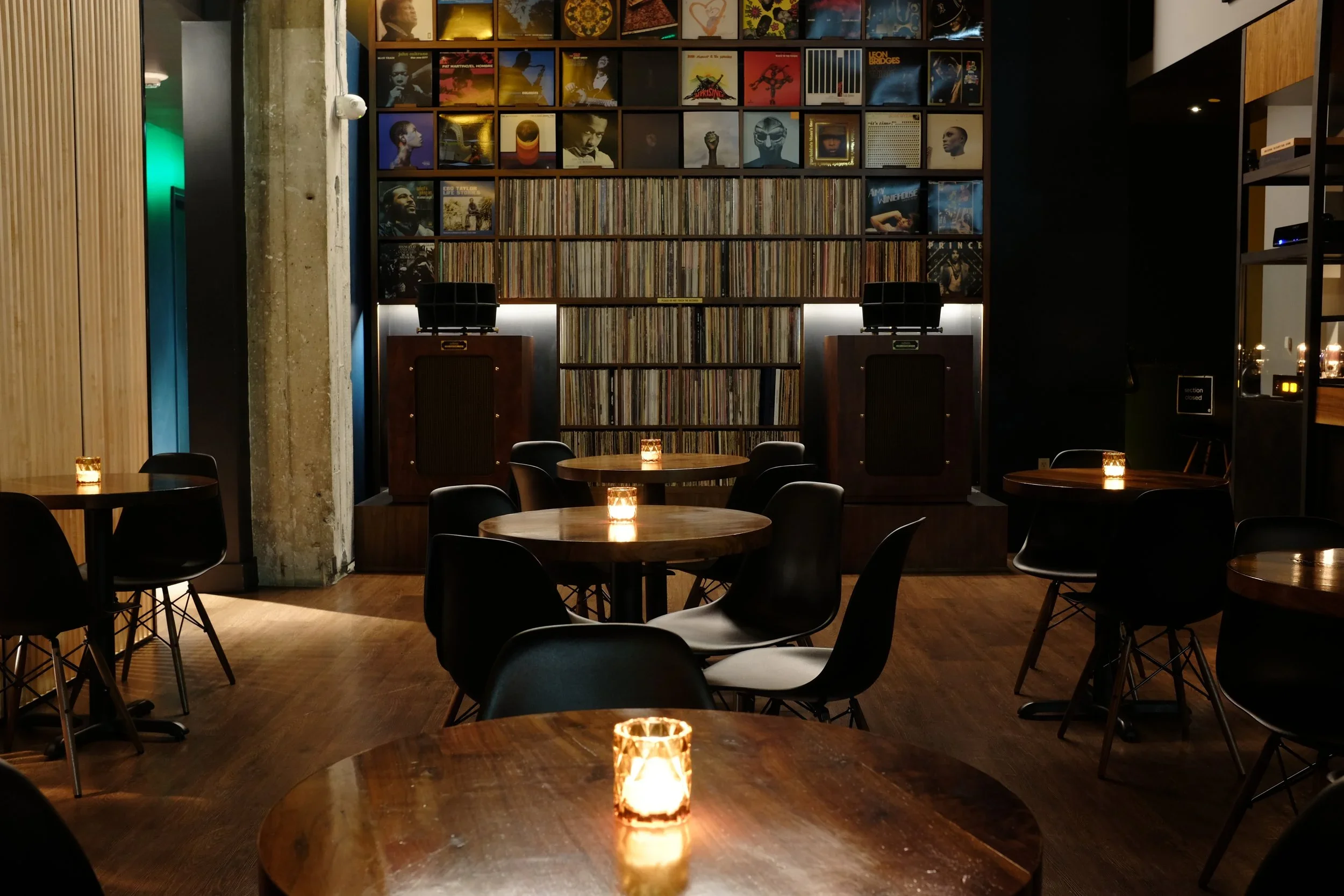
Relevance: The Bay Area's first hi-fi vinyl listening bar. Inspired by Japanese kissas but adapted for American social habits, Bar Shiru translates the "quiet revolution" into a context where silence isn't culturally automatic. It prioritizes "slow listening" in a tech-heavy city that moves fast.
The Design: The room features 75+ acoustic panels and screens. It's not just about the speakers; the walls are the instrument. Every surface is treated, tuned, sculpted to shape how sound moves through space. Acoustic architecture as invisible infrastructure.
The Experience: “We play mostly jazz, soul, and international grooves on vinyl, and we play albums in their entirety.” You're here to listen to a record the way it was sequenced, the way the artist intended. The experience teaches patience. It also recalibrates your relationship with time and attention.
Pro tip: To spot a real listening bar, look at the ceiling: Is it treated? Real listening bars use cork, foam, or baffles on the ceiling to stop sound reflection. If it's bare concrete/drywall, it’s just a loud bar.
Listening Rooms leading with TASTE
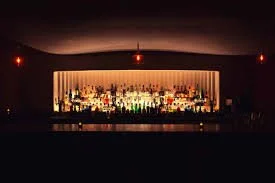
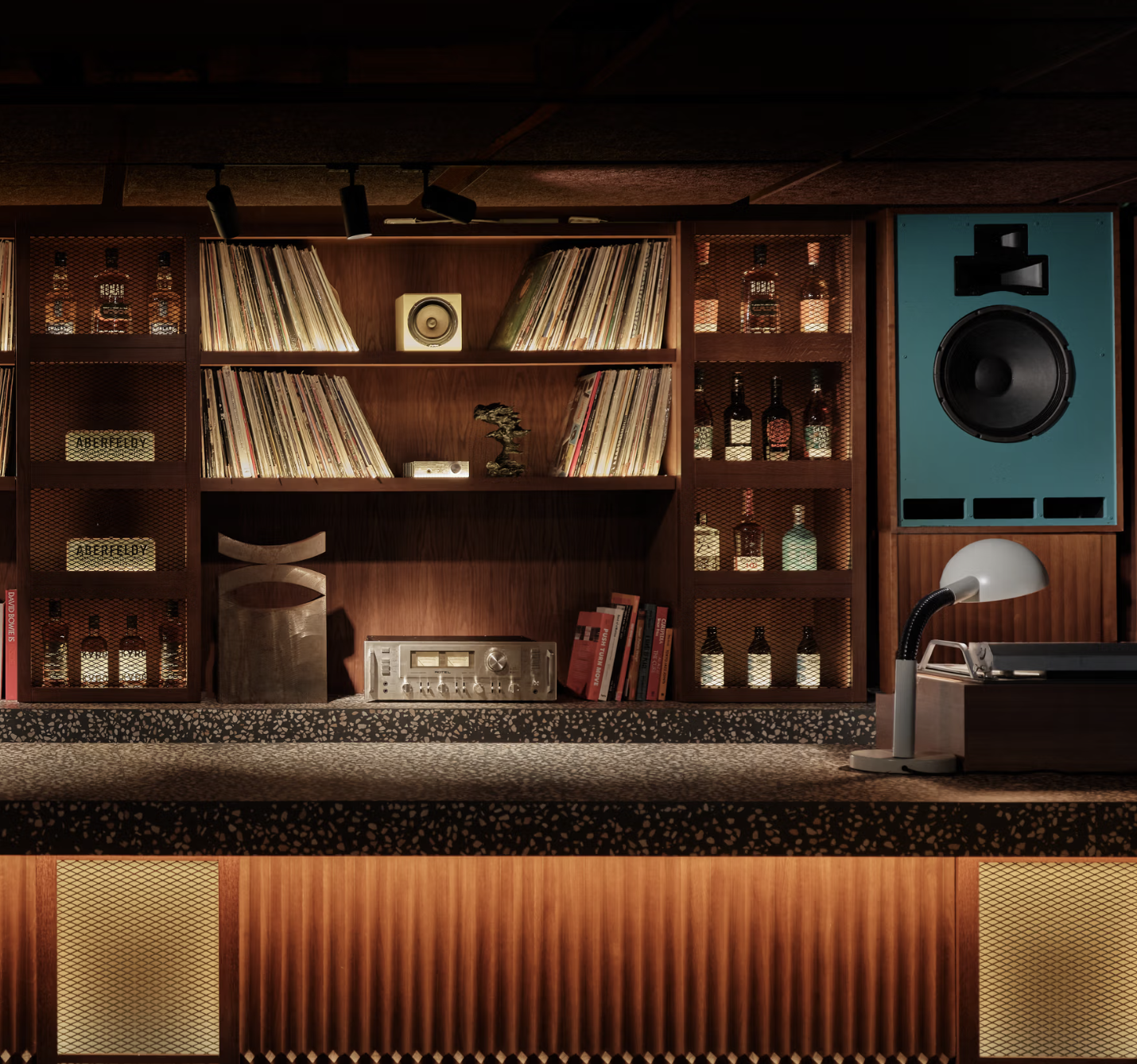
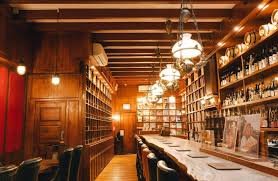
1. Mr Melo (New York , USA) | est. 2023
Relevance: A sustainability-first cocktail program that repurposes kitchen waste into high-end cordials and infusions. The "Compost" ethos mirrors vinyl's analog philosophy: gritty, resourceful, focused on texture over polish. Both sound and taste prioritize what's real over what's refined.
The Design: Lo-fi rawness extends from the drinks to the room. Ingredients are visibly imperfect; the space doesn't hide its process. Music plays at conversational volume, present but not dominating, so you can hear the clink of ice, the pour, the fizz.
The Experience: You taste fermentation, oxidation, transformation: flavors that require time. The sound system supports this slowness. Vinyl spins while you sip cocktails that evolved from scraps. Both demand patience. Both reward attention.
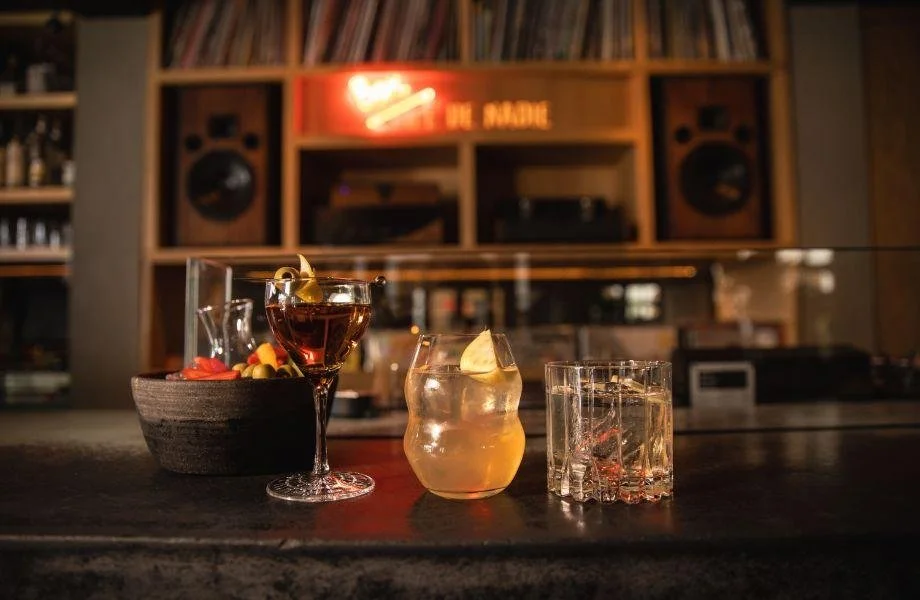
2. Café de Nadie (CDMX, Mexico) | est. 2021
Relevance: Founded by Pujol veterans using rare, local Mexican ingredients sourced from the country's top farmers. Each cocktail is inspired by a song. They prioritize analog over digital, patience over immediacy, cooperation over competition.
The Design: Walls lined with vinyl. The menu reads like a playlist. The room is decorated with records that double as menu inspiration: sound and taste share the same source material.
The Experience: You order a drink named after a song. The mezcal tastes like the region; the cumbia sounds like it. Terroir becomes multisensory.
3. The Kissaten (Lisbon, Portugal) | est. 2025
Relevance: A love letter to the golden era of Japanese jazz cafés, where vinyl is king, cocktails are symphonic, and the atmosphere is cinematic. Come for the artful drinks, stay for the all-encompassing sound.
The Design: Meticulously curated. Low lighting, warm wood, records lining the walls.
The Experience: Open for tasting sessions, album playbacks, lectures, and requests. You're holding a cocktail that took four minutes to build while a record spins that deserves your full attention.
4. RPM by D.Bespoke (Singapore) | est. 2019
Relevance: Run by Daiki Kanetaka, a obsessive audiophile who personally tunes the room. Vintage JBL S2600 speakers, tube amplifiers, 4,000+ Jazz, Soul, and Funk vinyls. This is a Ginza-style bar.
The Design: Shochu-forward. They specialize in Shochu Highballs and barrel-aged cocktails that require slow sipping. Hand-carved ice. Precision carbonation.
The Experience: You order the Vintage Highball and watch them carve the ice by hand. The music plays at the exact volume where you can still hear that fizz. You're tasting and listening at the same time, and neither one gets in the way of the other.
Pro tip: To spot a real listening bar, look at the shaking of the drinks: serious places often minimize shaken cocktails (or shake them in a separate back room) because the noise of ice hitting metal is 90 decibels: louder than the music.
Listening Rooms leading with TIME
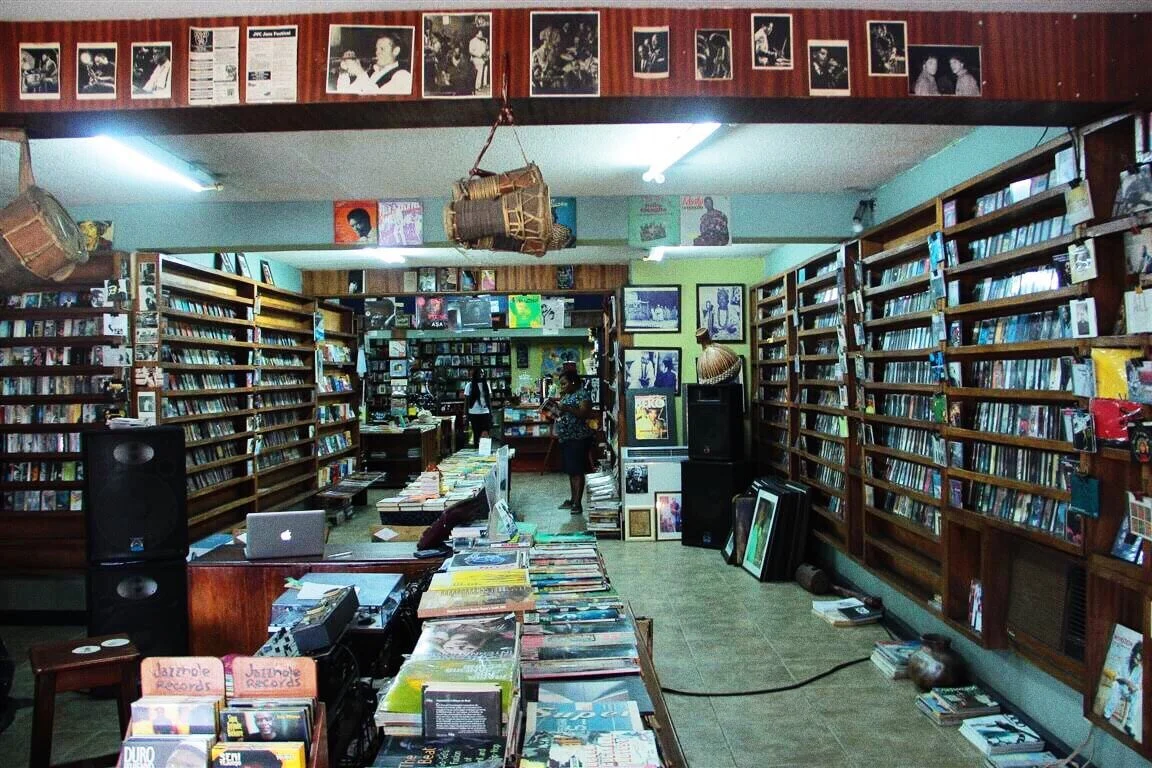
1. Jazzhole (Lagos, Nigeria) | est. 1991
Relevance: A record store, bookstore, and café wrapped in one, holding the deepest archive of Afrobeat and Highlife vinyl in the country. In a city of chaos, this is the one place where you can sit for 4 hours with a Fela Kuti LP and nobody will rush you.
The Design: The Living Archive. Specializing in Black music spanning African and Afro-diasporic genres, Jazzhole is committed to celebrating local talent and preserving Nigeria's musical legacy. The aesthetic of accumulated time.
The Experience: You walk in with no plans and leave four hours later. The sound moves slow, long Afrobeat tracks that unfold over ten, fifteen minutes.
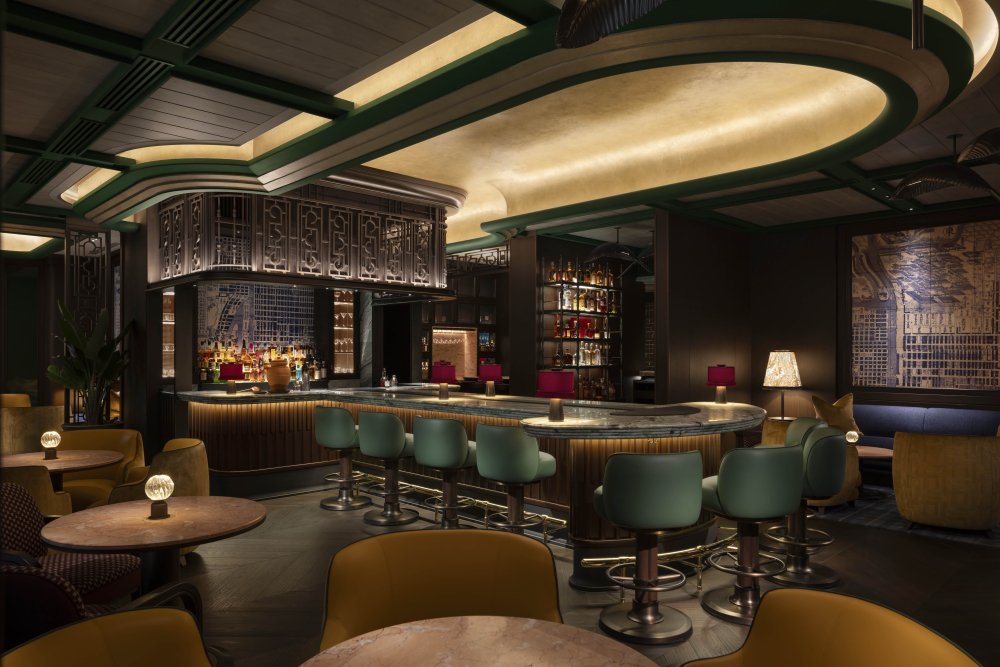
2. Canes & Tales (Osaka, Japan) | est. 2025
Relevance: A glamorous speakeasy inside the Waldorf Astoria Hilton, inspired by Tales of the Jazz Age by F. Scott Fitzgerald. A celebration of the Jazz Age with just 42 intimate seats, guests gather at the marble bar for mixology and canapés.
The Design: Impeccable vintage style. Handmade tiles, silk-screened vintage maps of Osaka, an al fresco terrace overlooking the city skyline. The design pulls you backward in time: 1920s glamour filtered through Japanese style.
The Experience: You step in and it feels like you've entered a different decade. The saxophone plays live, glasses clink, laughter pirouettes through the air. Time moves like it did before smartphones, before streaming, when a night out lasted all night because there was nowhere else worth being.
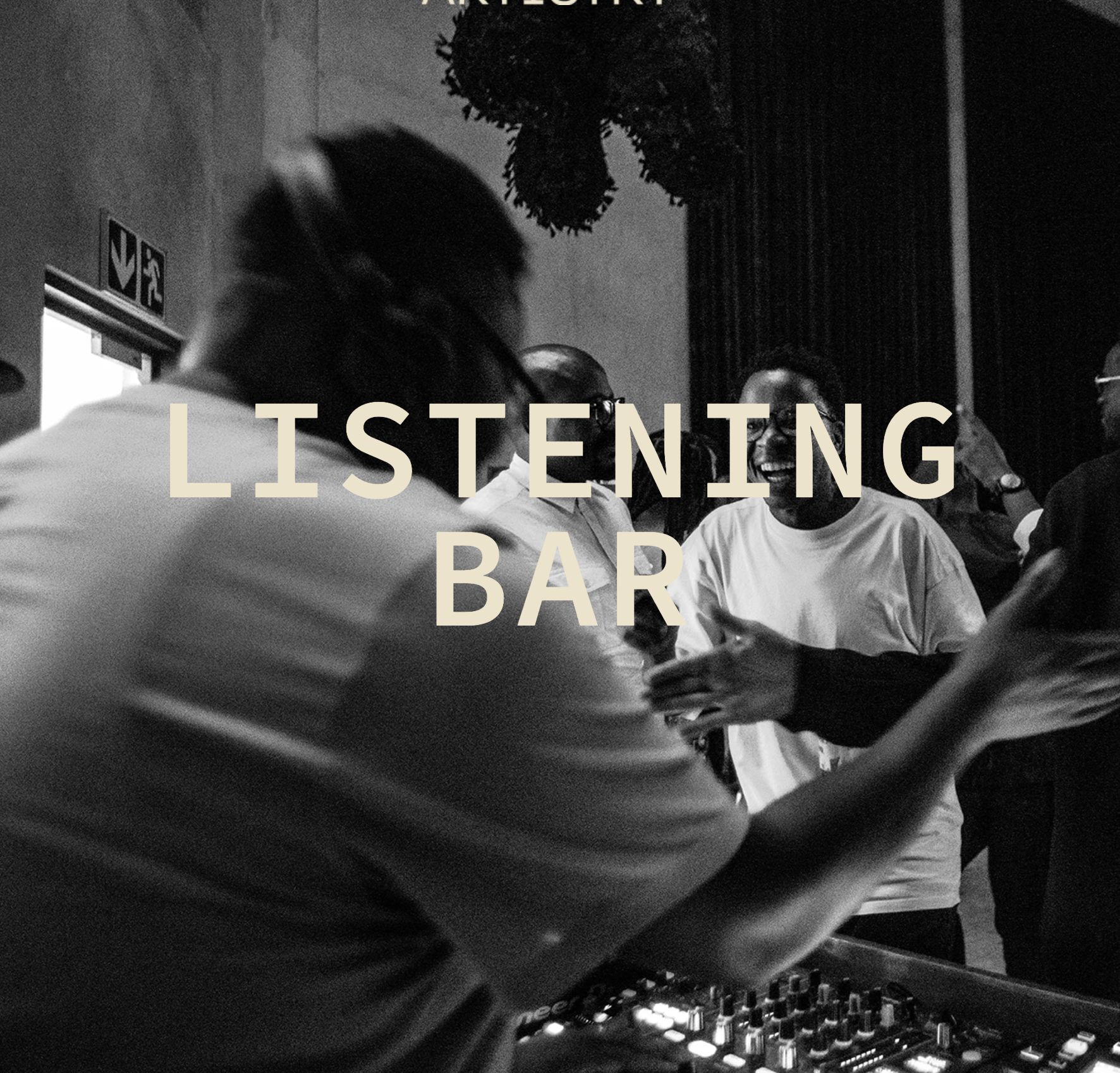
3. Artistry (Johannsesburg, South Africa) | est. 2023
Relevance: A massive 3-story cultural venue. The ground floor is a dedicated "Listening Bar" designed for post-show decompression. You come here to spend time. In Joburg, silence doesn't sell, this bar adapts the listening concept for a city that loves to socialize.
The Design: Since the venue hosts live theatre and music upstairs, the drinks are theatrical and showy, designed to keep the energy up. High-fidelity sound, but for dancing and talking, not meditation.
The Experience: You've just watched a show upstairs. Now you're downstairs, still buzzing. The music plays loud enough to feel, quiet enough to talk over. You're not here to sit in silence, you're here to replay the performance, argue about the setlist, laugh with strangers who saw the same thing you did. The sound holds the night together.
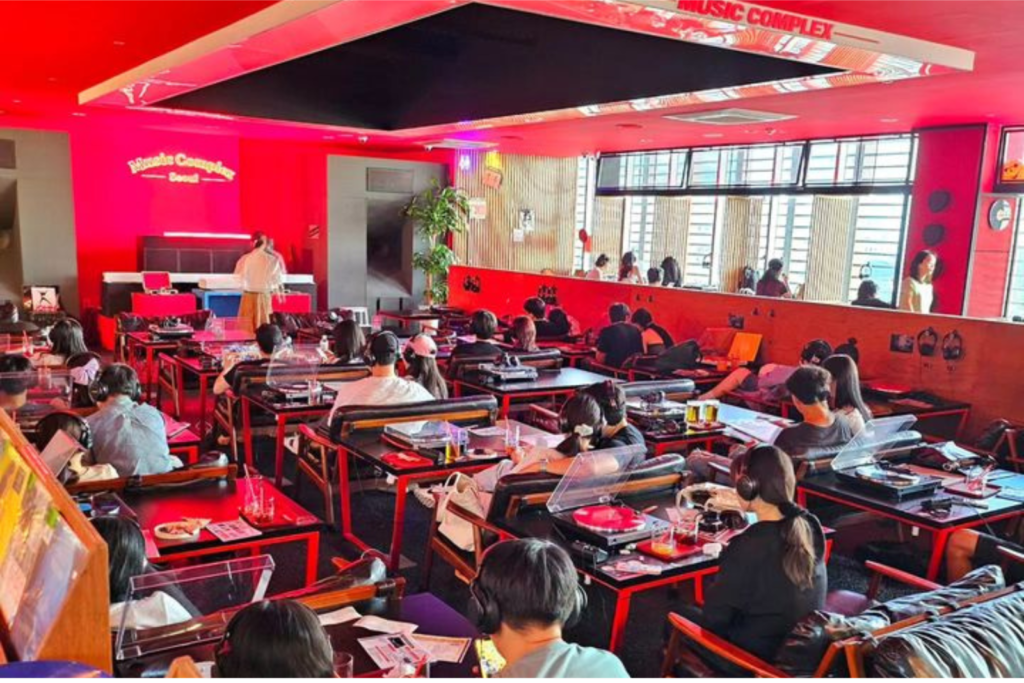
4. Music Complex (Seoul, South Korea) | est. 2023
Relevance: Over 20,000 vinyl records from various genres and eras. More than 50 seats, each with turntables and headphones. A café during the day, a bar in the evening. Vinyl listening cafés and record centers are increasingly part of Seoul's cultural landscape.
The Design: You select your own record, sit at your own station, control your own sonic journey. Guests are required to order a drink so time has a price, but it's low. The design is modular, personal, self-directed.
The Experience: You walk in at 2 p.m. and pick a record you've never heard. You put on the headphones. You're alone in a room full of people doing the exact same thing. An hour passes. You pick another record. The café turns into a bar. You order a drink. You keep listening. Time becomes elastic: you can spend 30 minutes or 5 hours.
Listening Rooms leading with SPACE
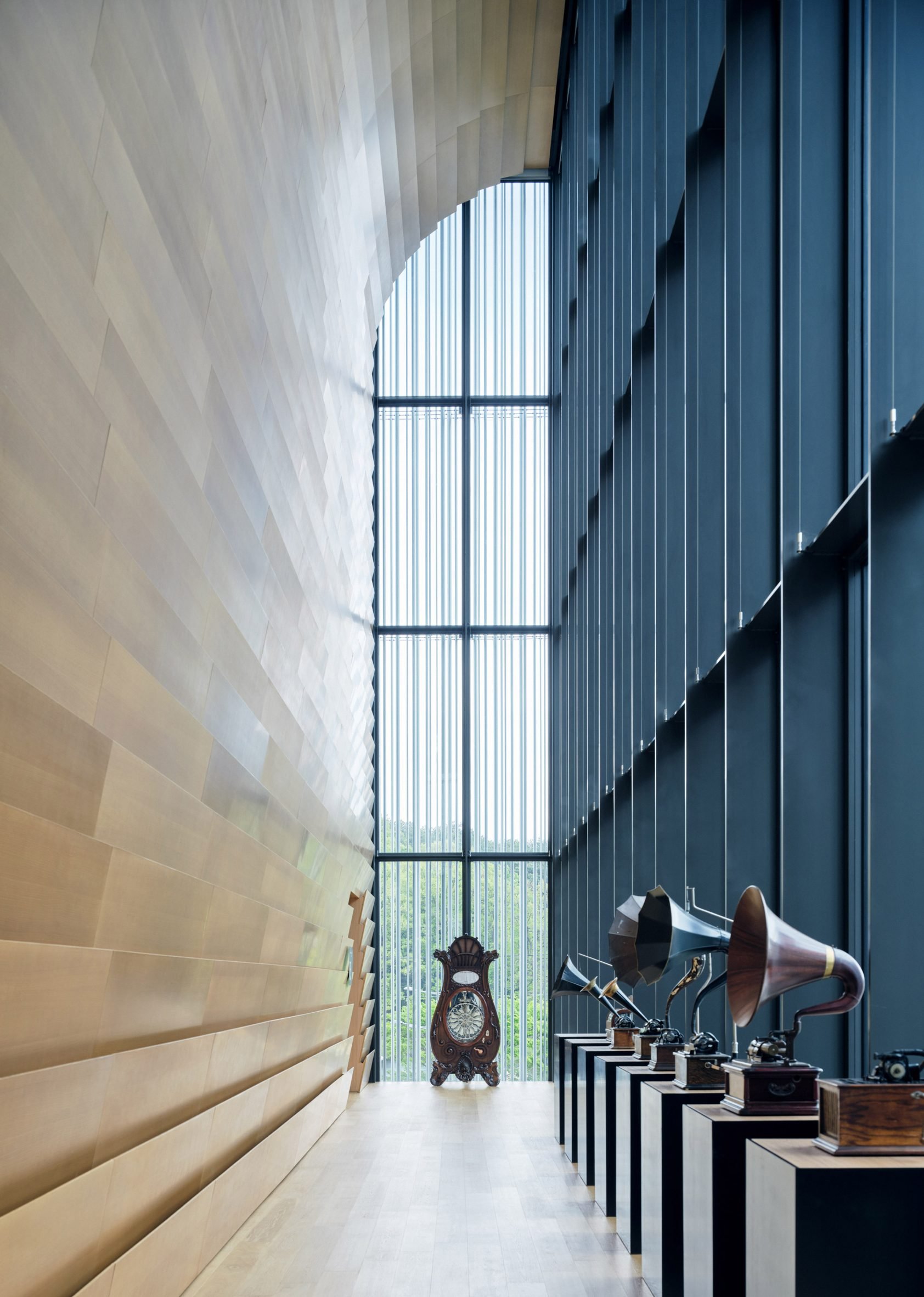
1. Audeum Museum (Seoul, South Korea) | est. 2024
Relevance: The world's first audio museum. Seven stories, 224,246 square meters of exhibition space, a collection of ~120,000 vinyl records, and audio machines across decades.
The Design: A series of acoustically engineered spaces designed to engage through listening and sensory awareness. You experience not only visual elements but also sound, light, wind, and fragrance: all five senses activated across multiple floors. Each room is tuned differently. The architecture is the instrument.
The Experience: The space teaches you how architecture shapes what you hear. A vintage speaker in one room, a modern system in another. You realize the room is as important as the record.
2. L'Atelier Sonore by Valentino and Terraforma (New York, USA) | est. 2025
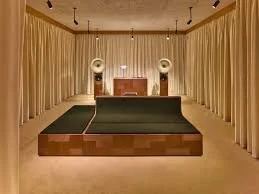
Relevance: A soundproof listening room inside Valentino's Madison Avenue flagship. Luxury brands are experimenting with hospitality and sensory concepts (champagne bars, listening salons) as ways to deepen time spent in the store and differentiate.
The Design: Conceived with architect Francesco Lupia, the space unfolds around three sculptural elements: a bespoke sound system tuned to intimacy, a handcrafted listening console evoking traditional cabinet-making, and modular velvet seating that invites stillness.
The Experience: You're invited to the store's mezzanine floor to sit with vintage vinyl selections, or simply do nothing at all. Visitors disconnect their phones, slow down, and experience curated music in a calming space where silence, resonance, and presence converge.
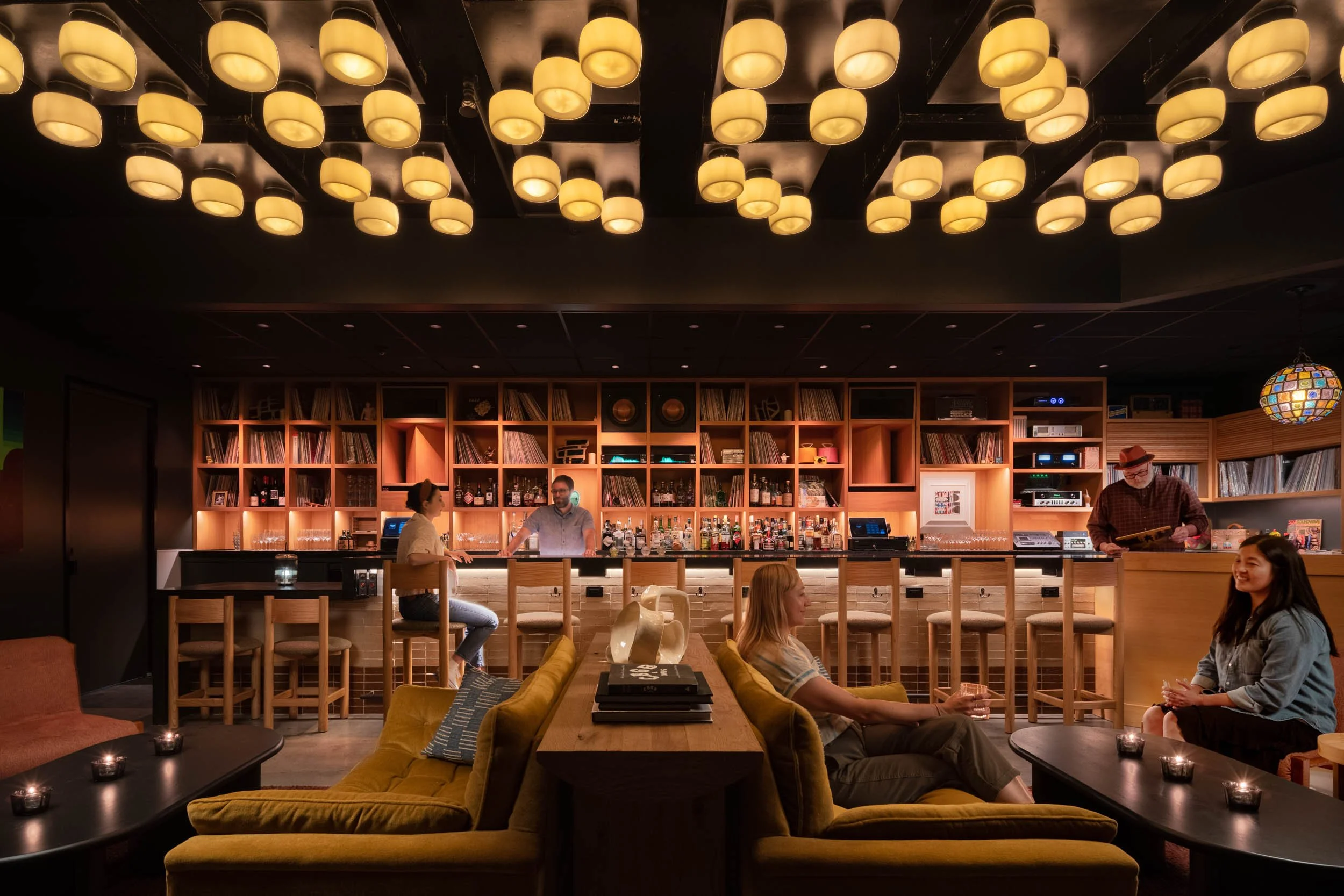
3. Equipment Room (Austin, Texas USA) | est. 2023
Relevance: A sound-isolated basement beneath a hotel, featuring custom Klipsch La Scala Heritage speakers and McIntosh C22 tube amps. They use reel-to-reel tape decks (Nakamichi) and vinyl. The room exists underground, literally carved out for sound.
The Design: The menu is split into "A-Sides" (Classics) and "B-Sides" (Modern Riffs). The space is tight, intentional, gear-obsessed.
The Experience: You walk down the stairs and the city disappears. No street noise. No phone signal. Just you, the speakers, and a drink designed to taste like the sound system feels.
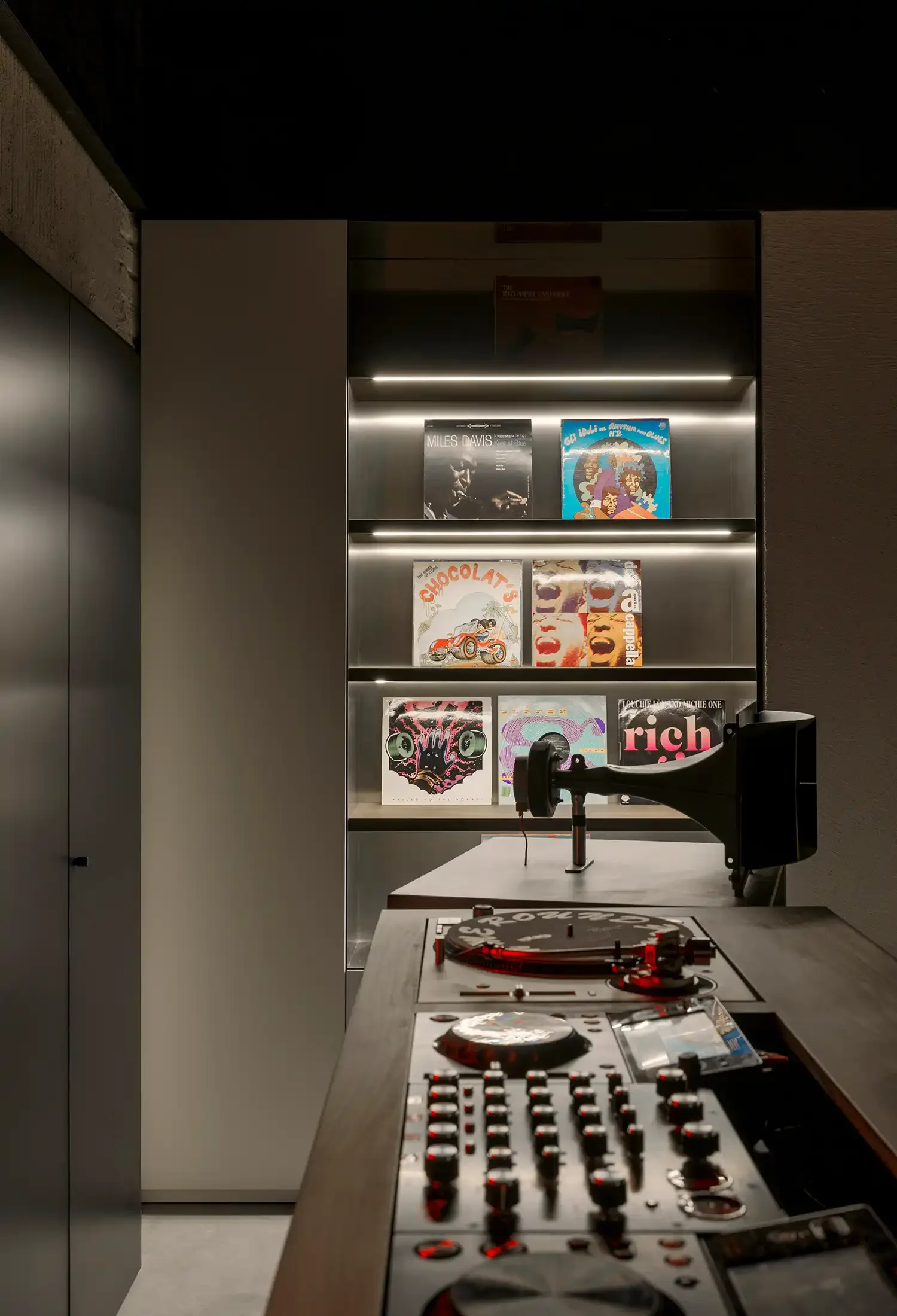
4. Onda (Milan, Italy) | est. 2025*
Relevance: A refined cocktail bar with music and Japanese-inspired design. In Milan, the look of the room is as important as the sound. Listening as a form of interior design appreciation.
The Design: Designed by Solum Studio, it features stainless steel counters and warm wood paneling. The aesthetic is sleek, minimal, intentional. Every surface is chosen for how it looks and how it reflects sound. The room is a design showroom where the audio is part of the furniture.
The Experience: You sit at the steel counter, order something obscure, and the DJ drops a track that makes the whole room feel different. The sound bounces off the metal, softens in the wood. The space is reactive. You hear the room as much as the music.
* Not clear from media
Thank you for thinking with me. This piece is part of Ode by Muno, where I explore the invisible systems shaping how we sense, think, and create.
The quote at the intro is from the book, Systems Intelligence.