The color theory I keep coming back to
“To become more sensitive to sensory experience can be started from first exposing oneself to what are called submodalities. One of which is visual (color, brightness)”


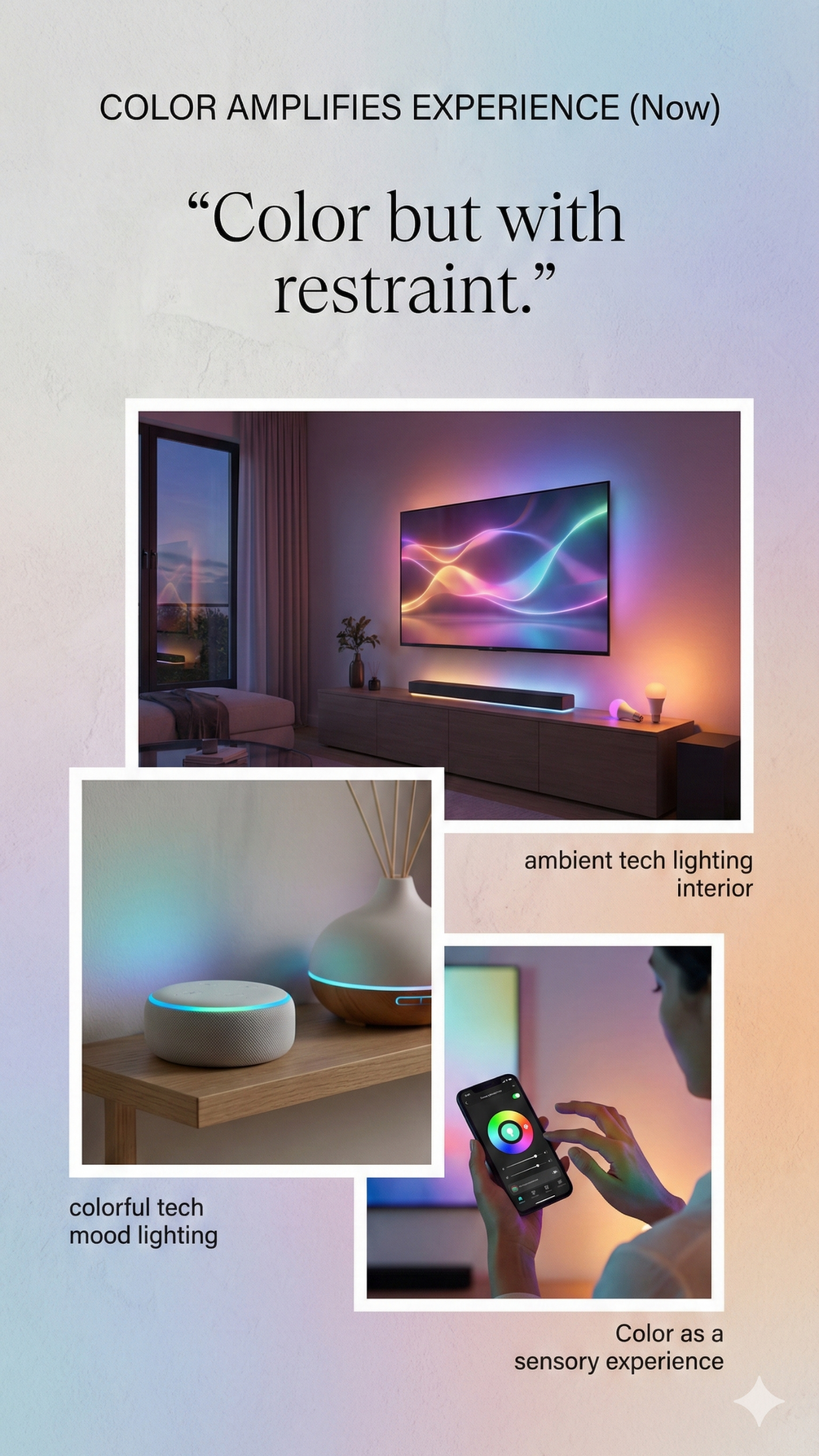
This is one of those things I keep thinking about randomly, like mid-scroll or while watching TV, and I don’t even know why it sticks, but it does.
Back in the 40s and 50s, color in tech wasn’t about looking nice at all. It was instruction. Red meant stop. Green meant go. Color was there so people and machines didn’t mess each other up. Safety stuff. Coordination. Vision was purely functional.
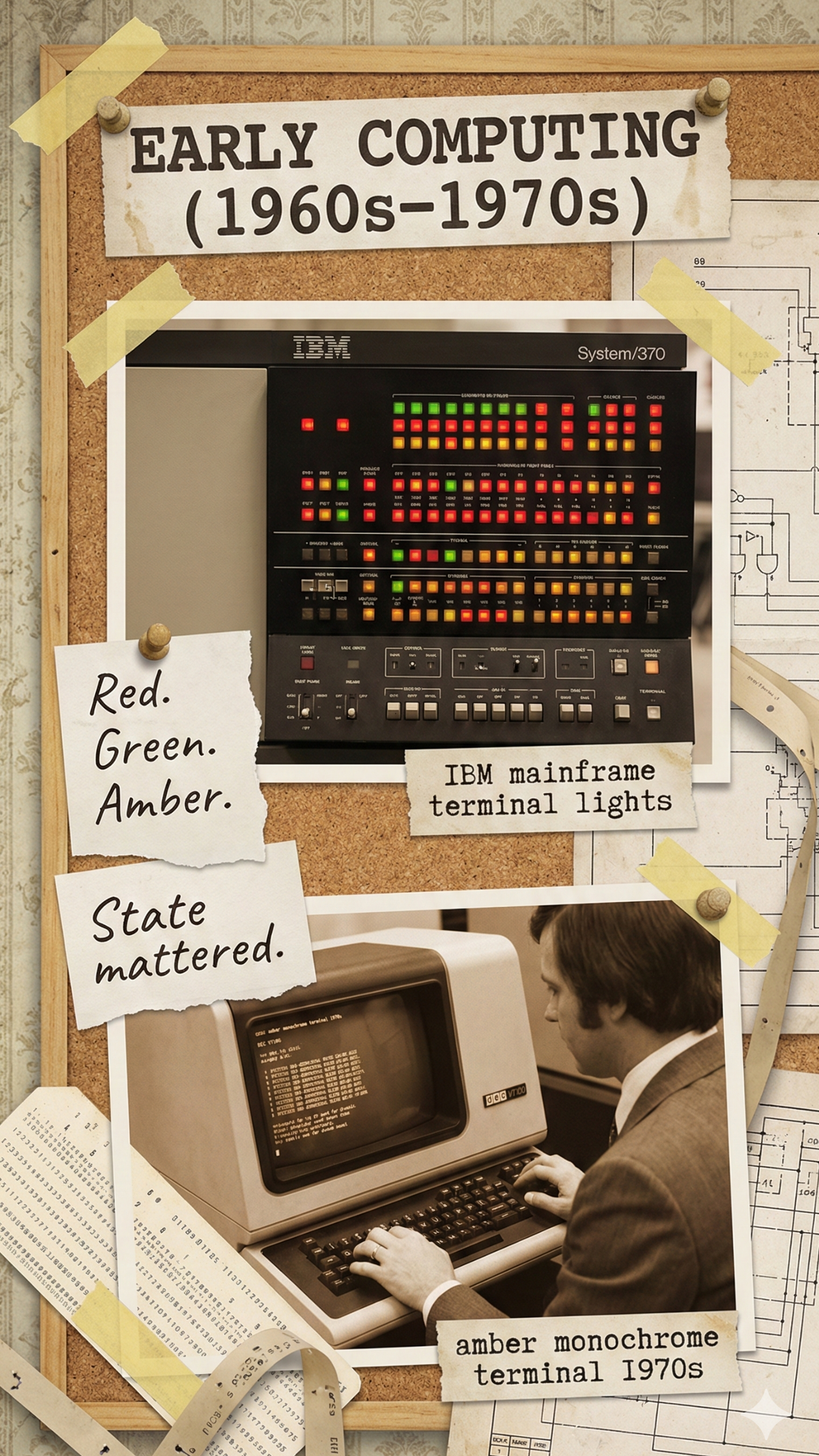
Then by the 60s and 70s, machines started doing things you couldn’t actually see anymore. So color kind of stepped in as a translator. Red, green, amber. On, off. Something’s wrong, something’s fine. It was how you felt what the system was doing without understanding the system itself.
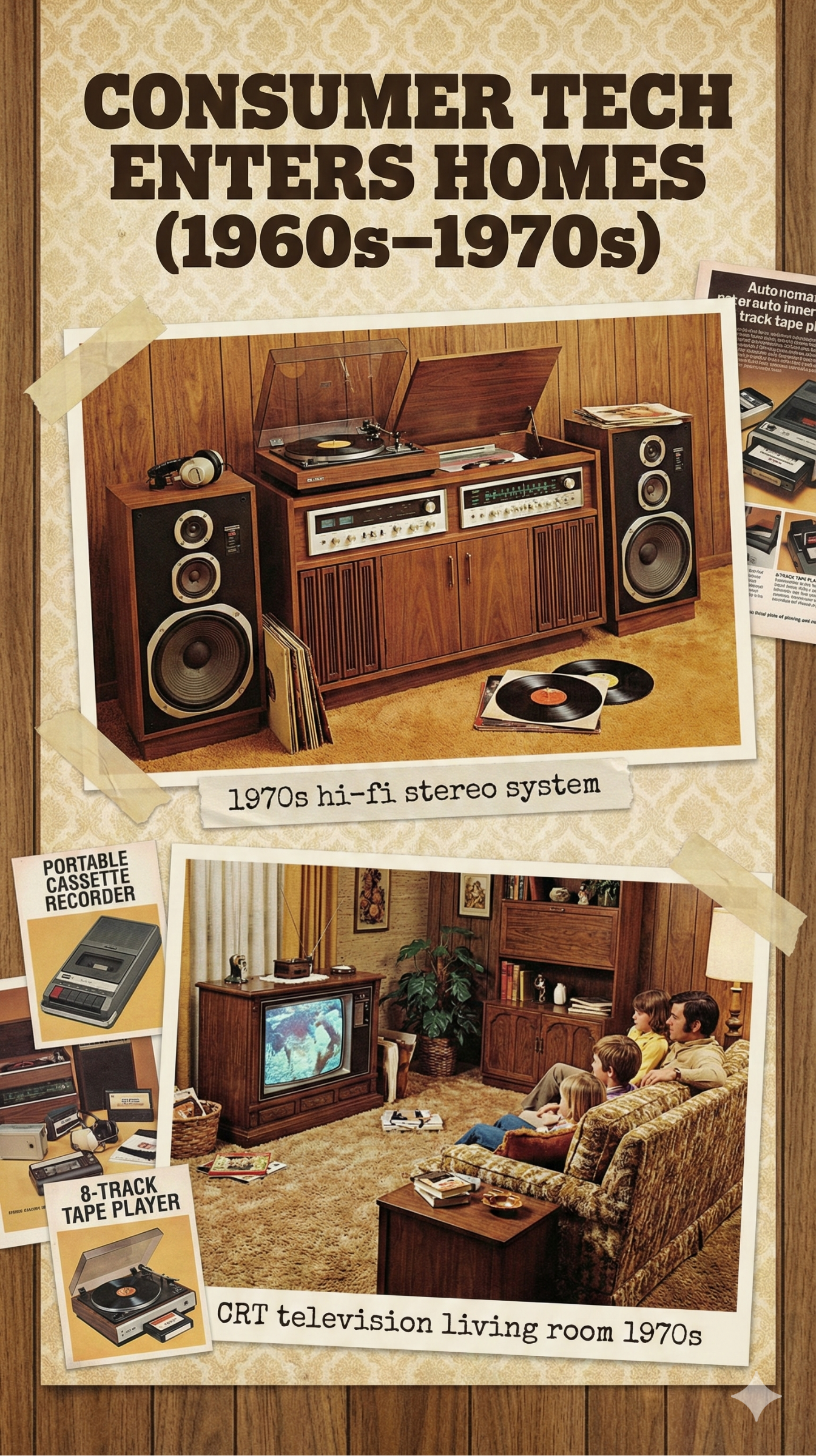
And then tech moved into people’s homes, which changed everything. Suddenly it wasn’t just engineers dealing with it. You had TVs next to couches, radios next to family photos. Things had to soften. Color warmed up. Machines had to learn how to live with people, not the other way around.
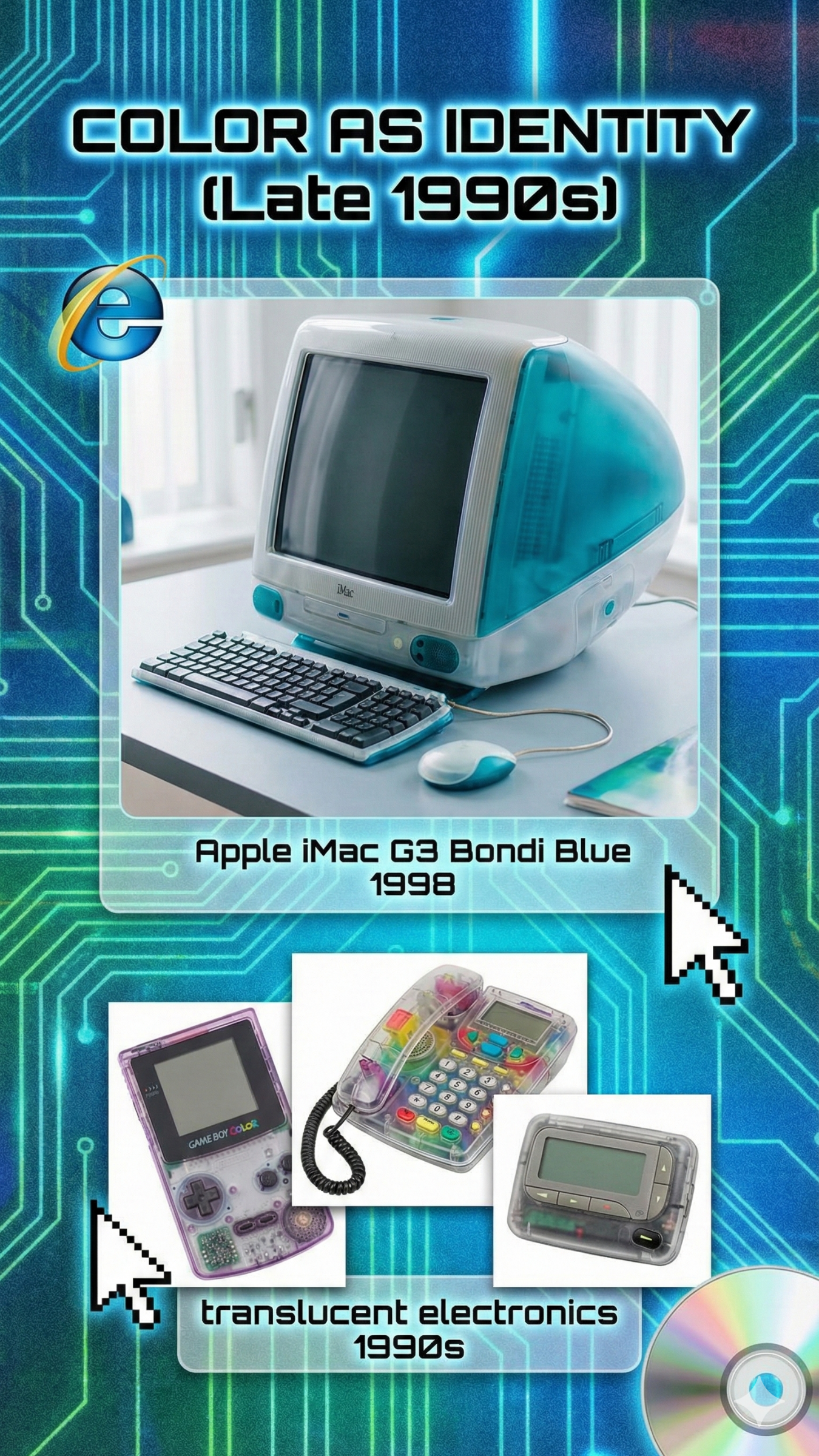
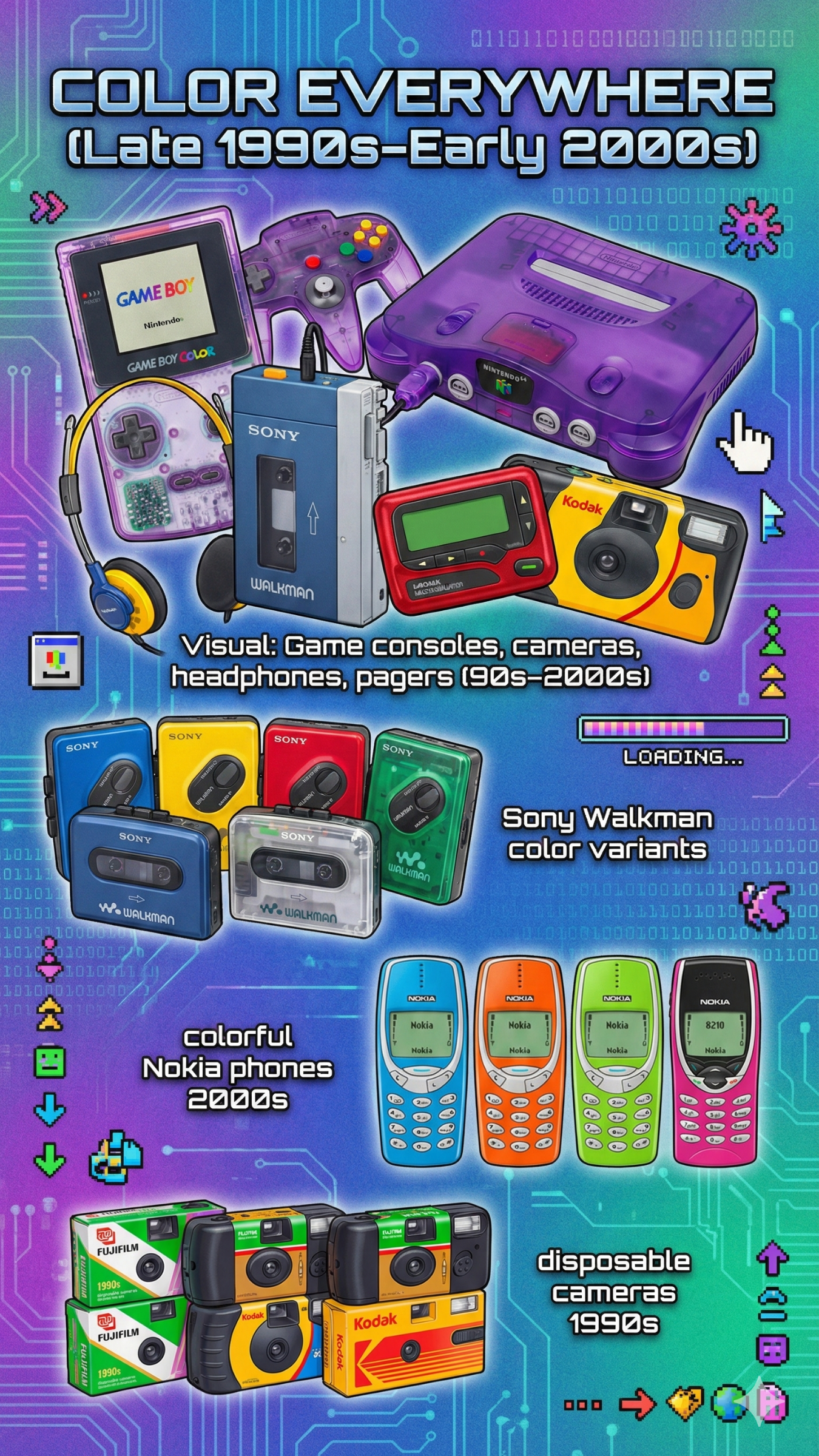
The late 90s were really the turning point though. That’s when color stopped being about function and became about identity. Translucent plastics. Bondi Blue. Devices weren’t just tools anymore, they were saying something about you. Color exploded because tech got personal.
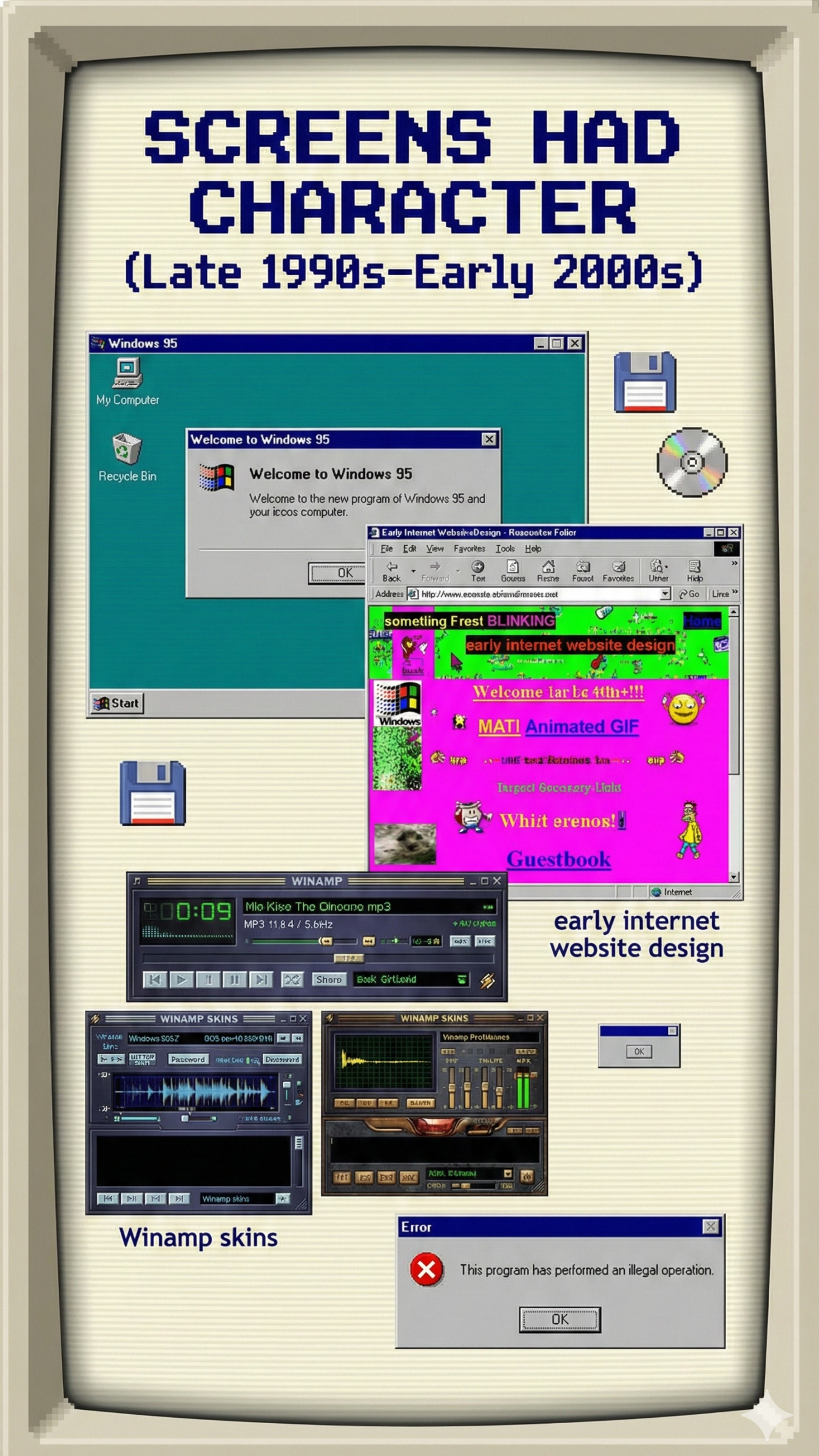
That energy spilled into the early 2000s too, especially on screens. Websites were messy. Interfaces had personality. You could customize things. The digital world kind of looked the way life actually felt, imperfect and expressive and unfinished.
And then… we got serious.
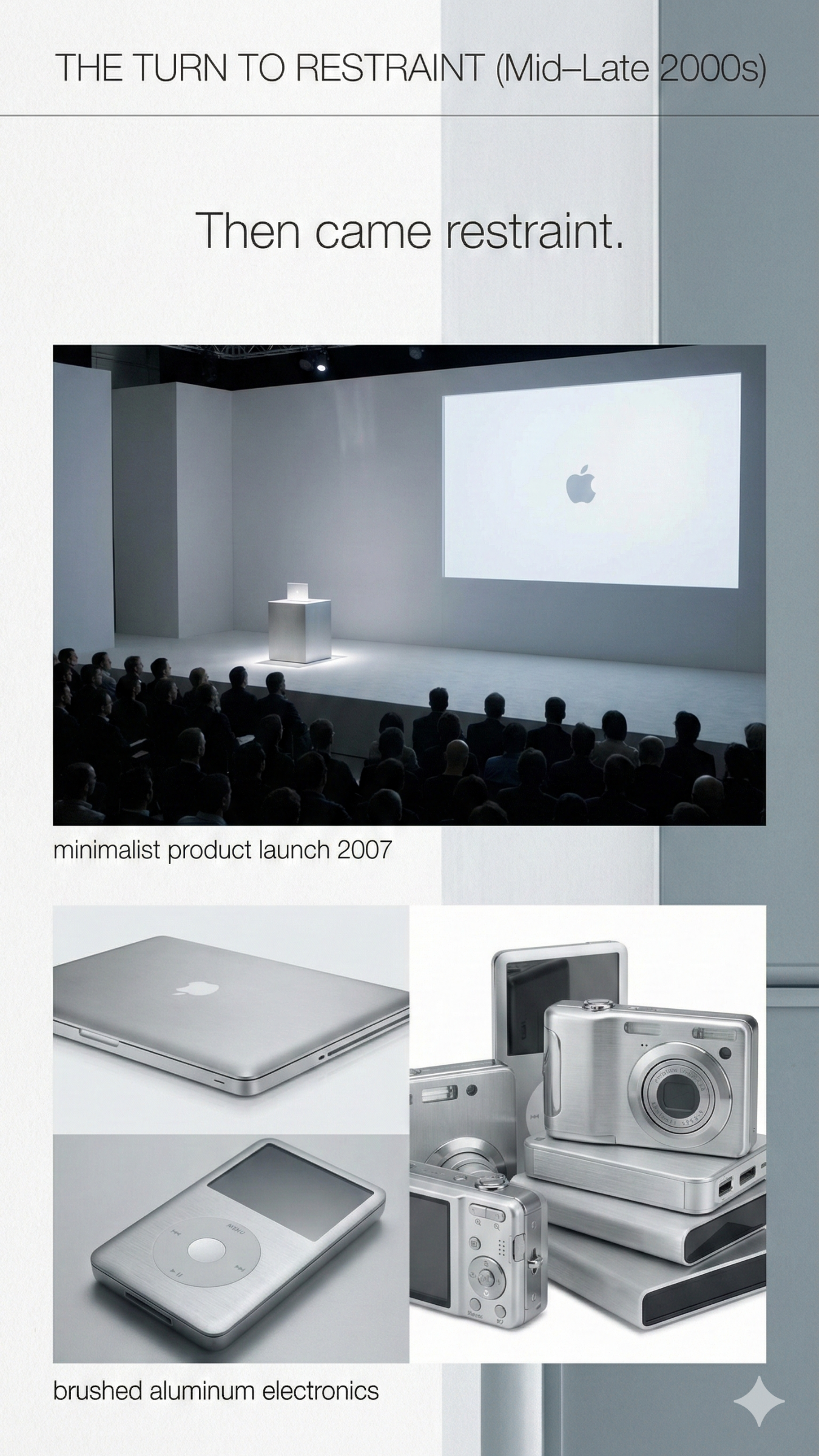
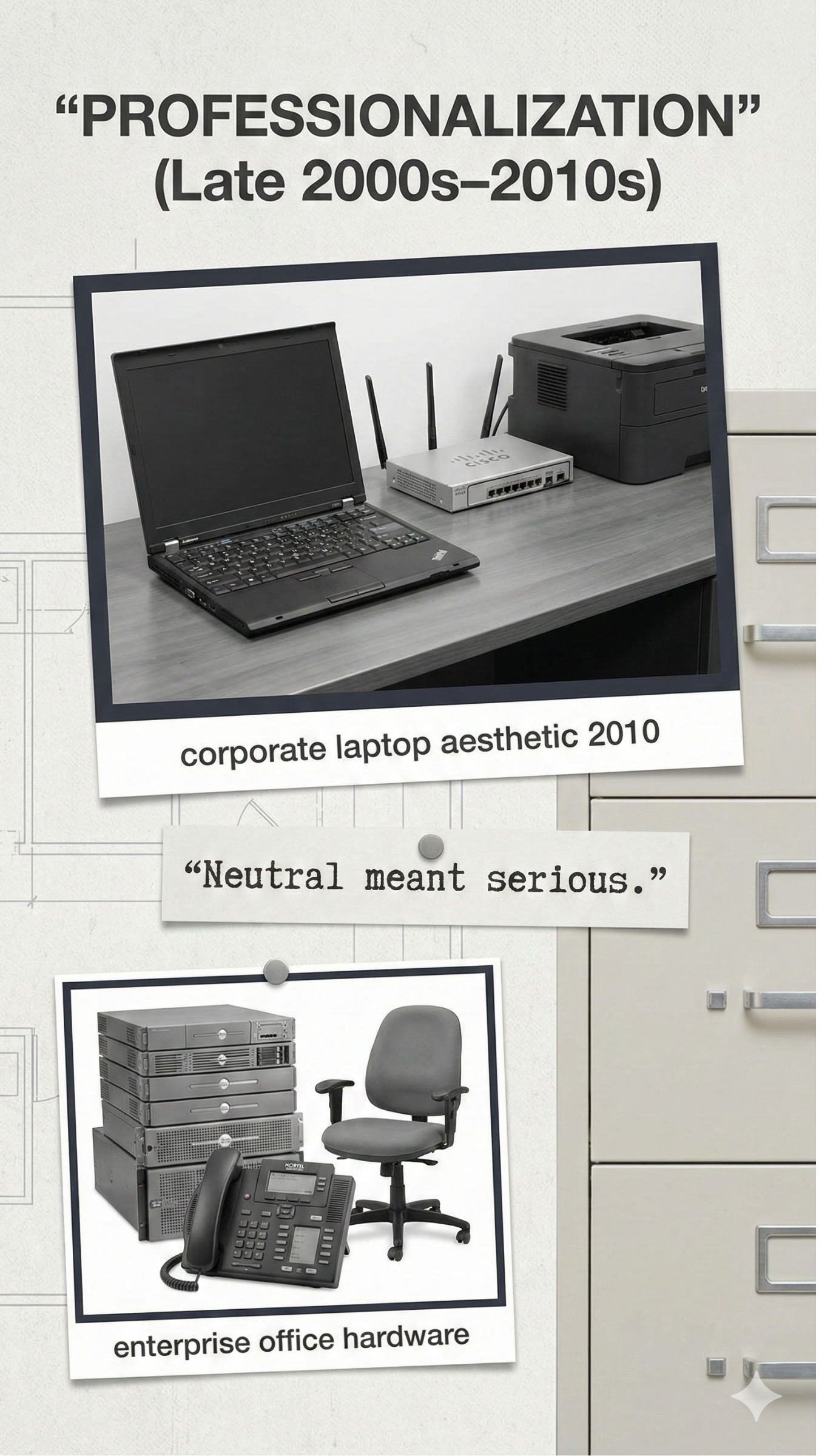
Mid-2000s onward, everything pulled back. Neutral meant professional. Color started feeling risky. Suddenly everything was silver, black, gray. Interfaces got quiet. Tech wanted authority. It wanted to disappear into the background.
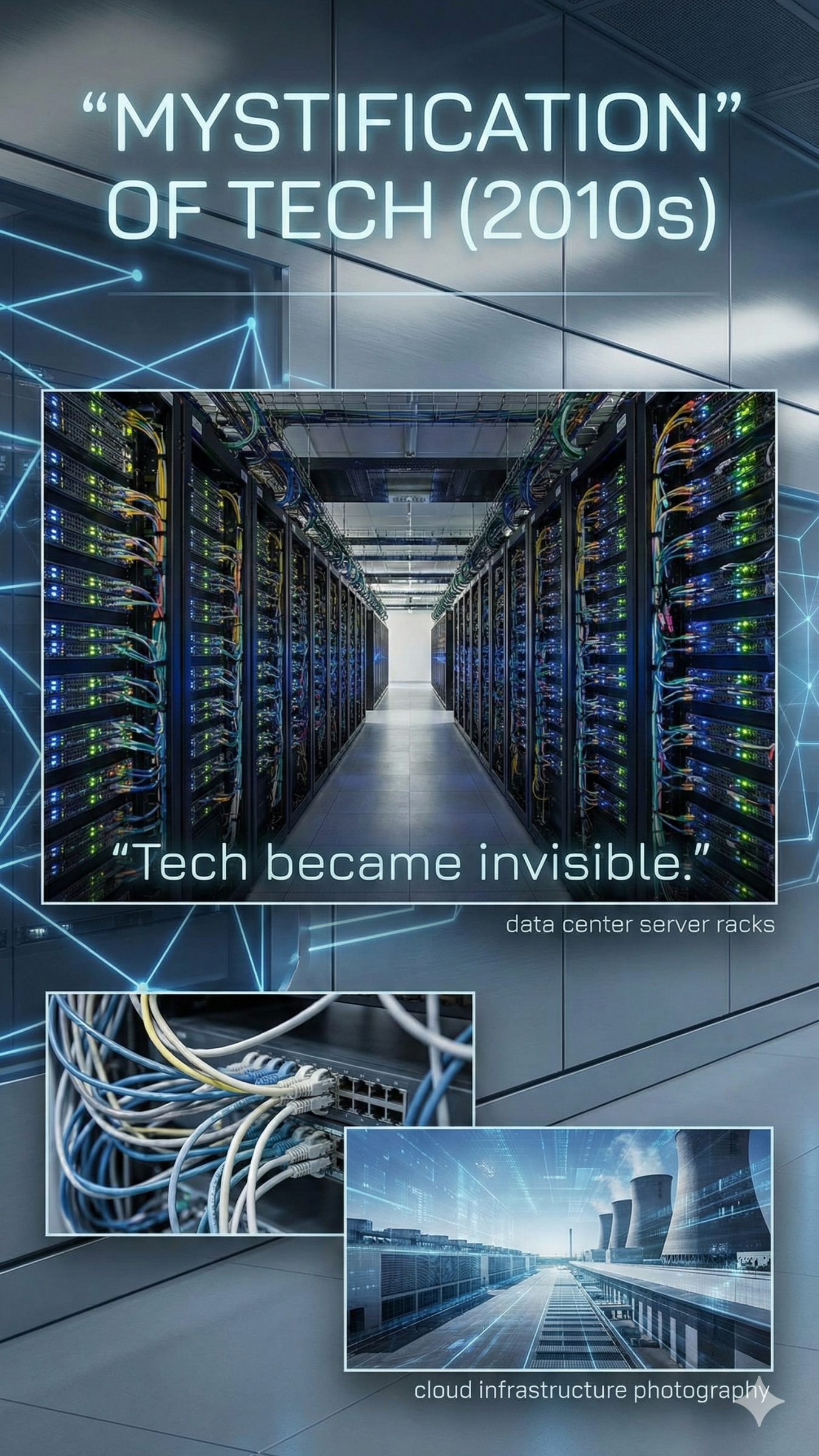
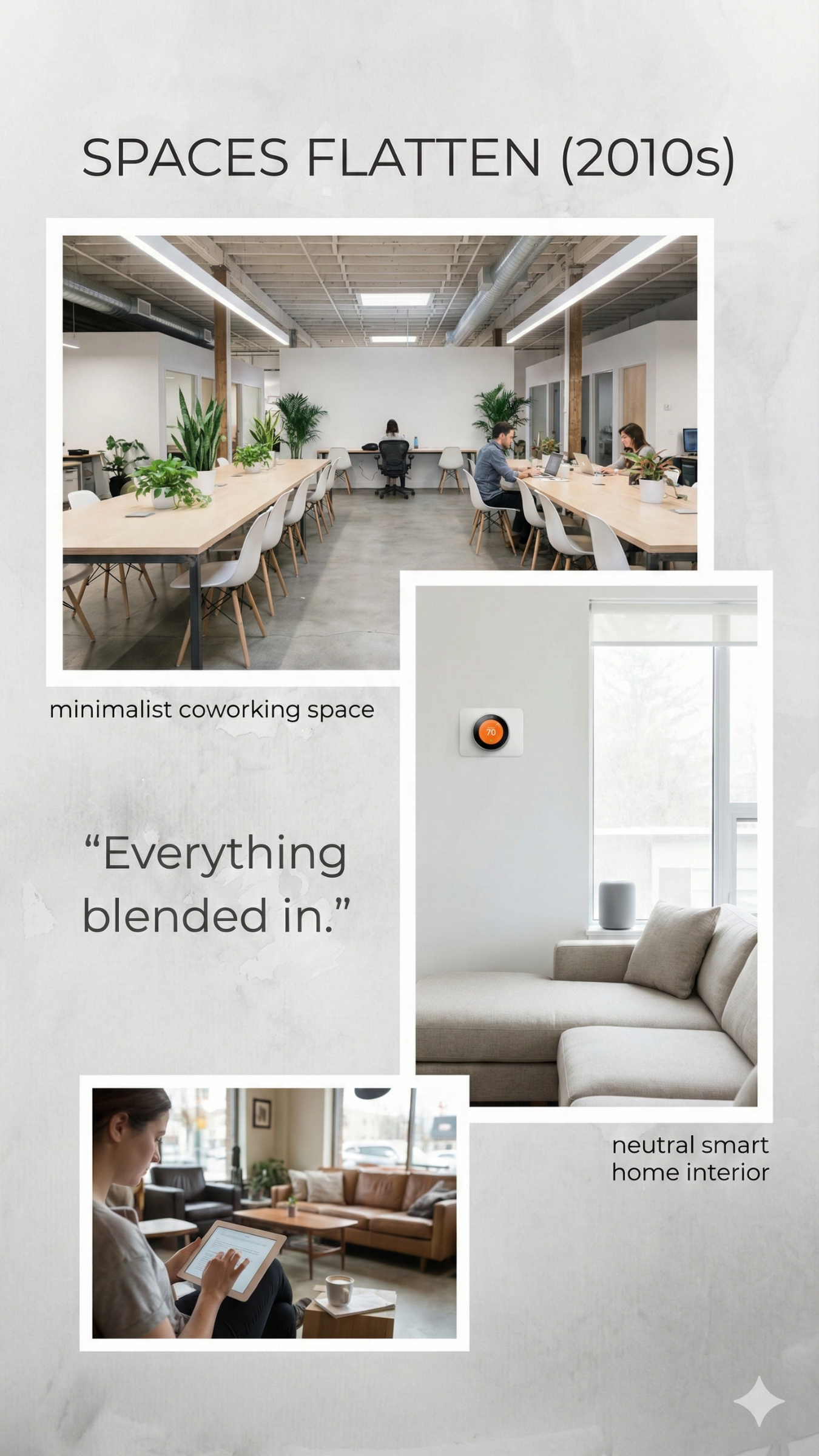
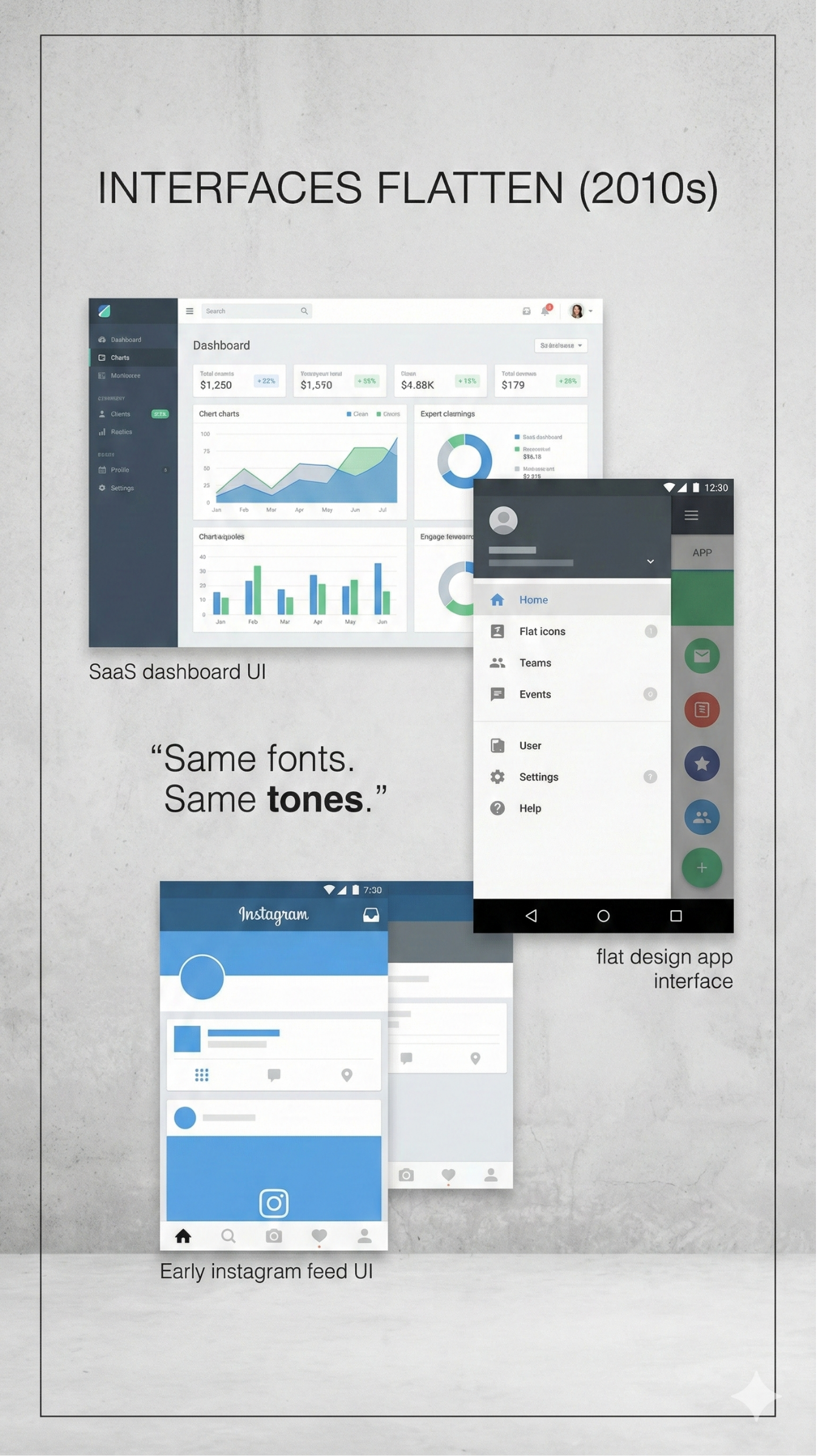
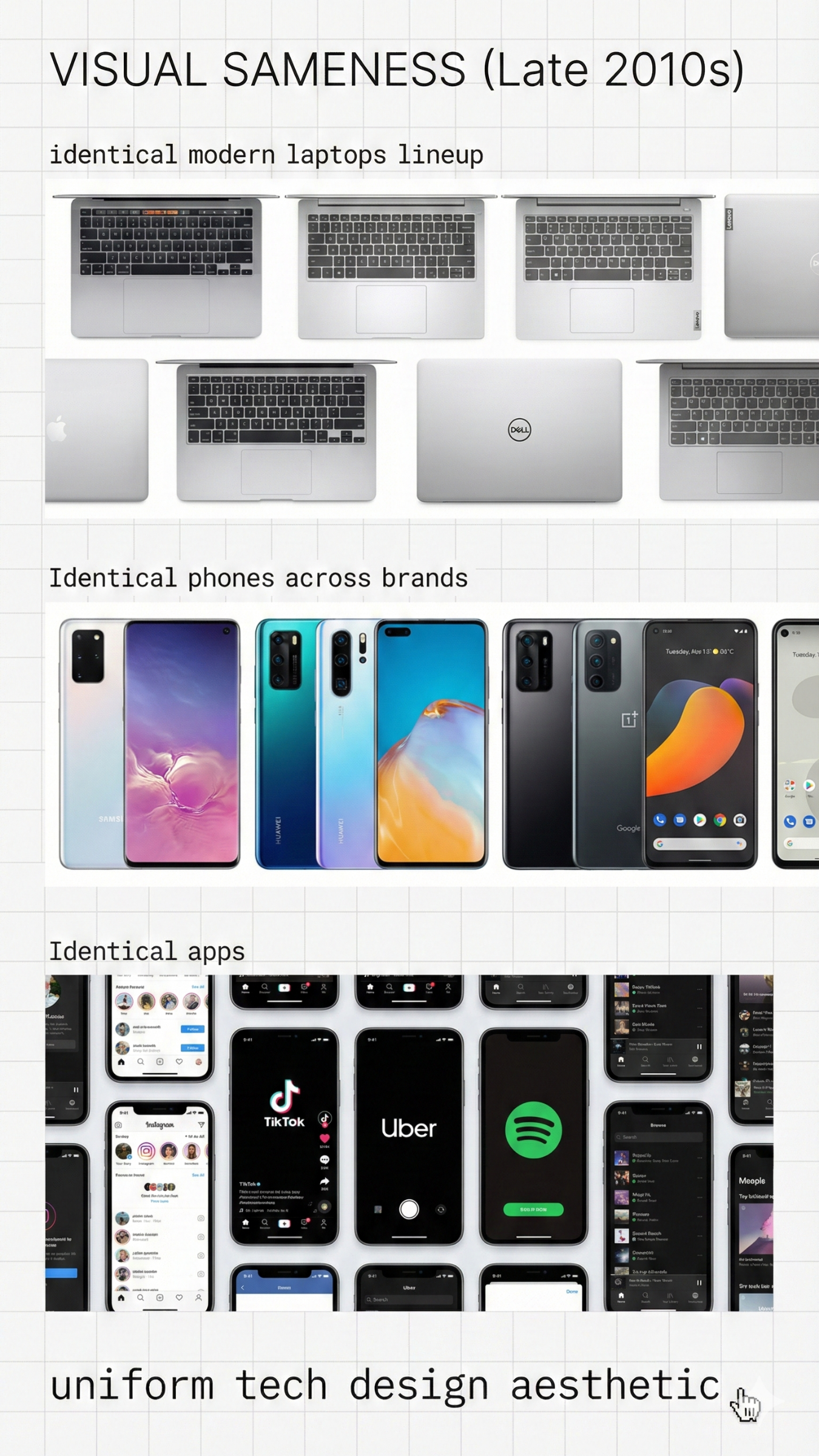
By the 2010s, systems got insanely powerful but also basically invisible. Data centers instead of machines you could see. The cloud instead of hardware. Our spaces followed. Beige offices. Minimal homes. Neutral everything. Even interfaces flattened out. Same fonts. Same tones. Same layouts.
At some point, everything just started looking the same. Not because it had to, but because sameness was efficient.
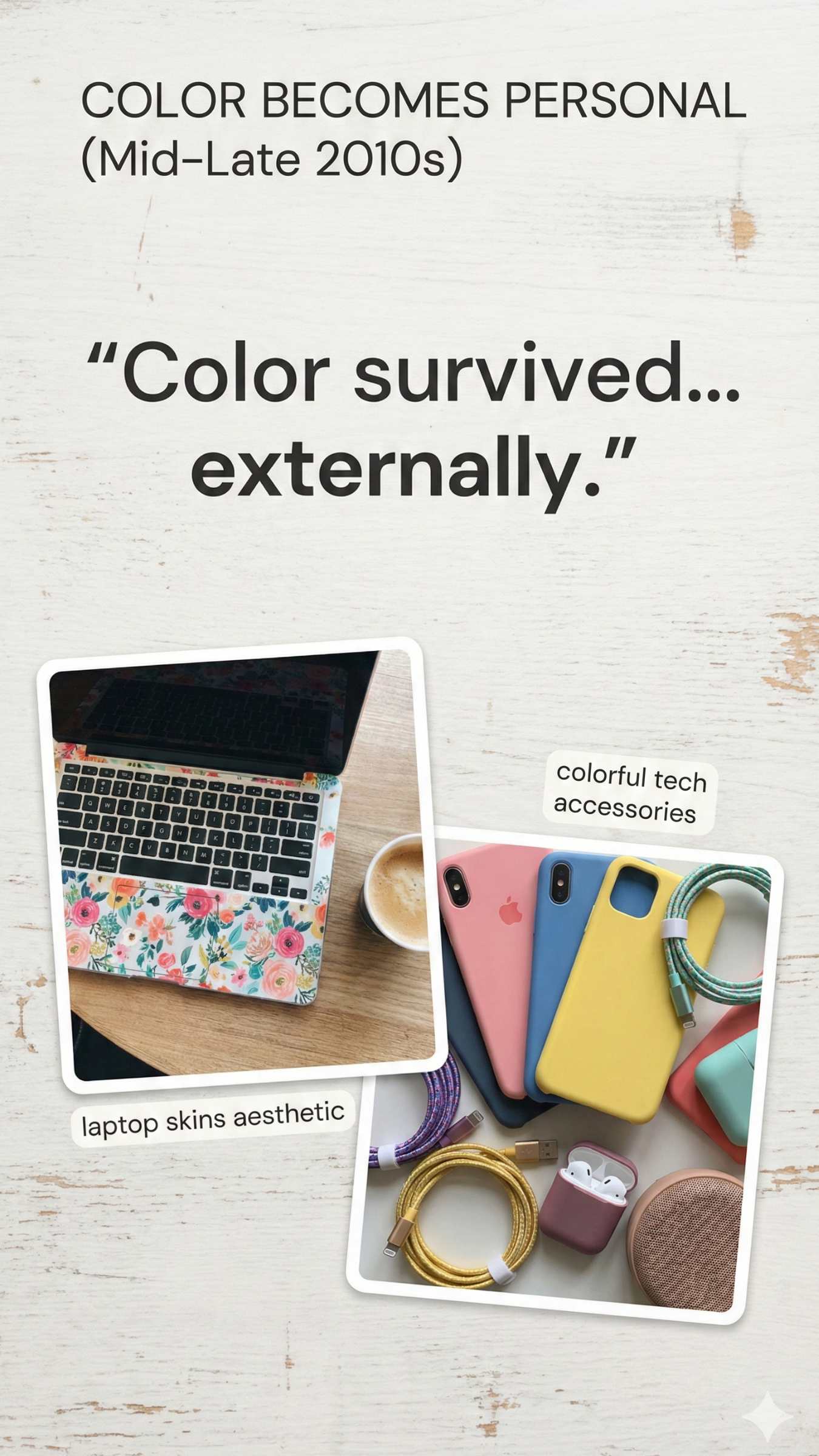
Color didn’t actually go away though. It just got pushed to the edges. Cases. Skins. Accessories. Expression survived, just not on the object itself.
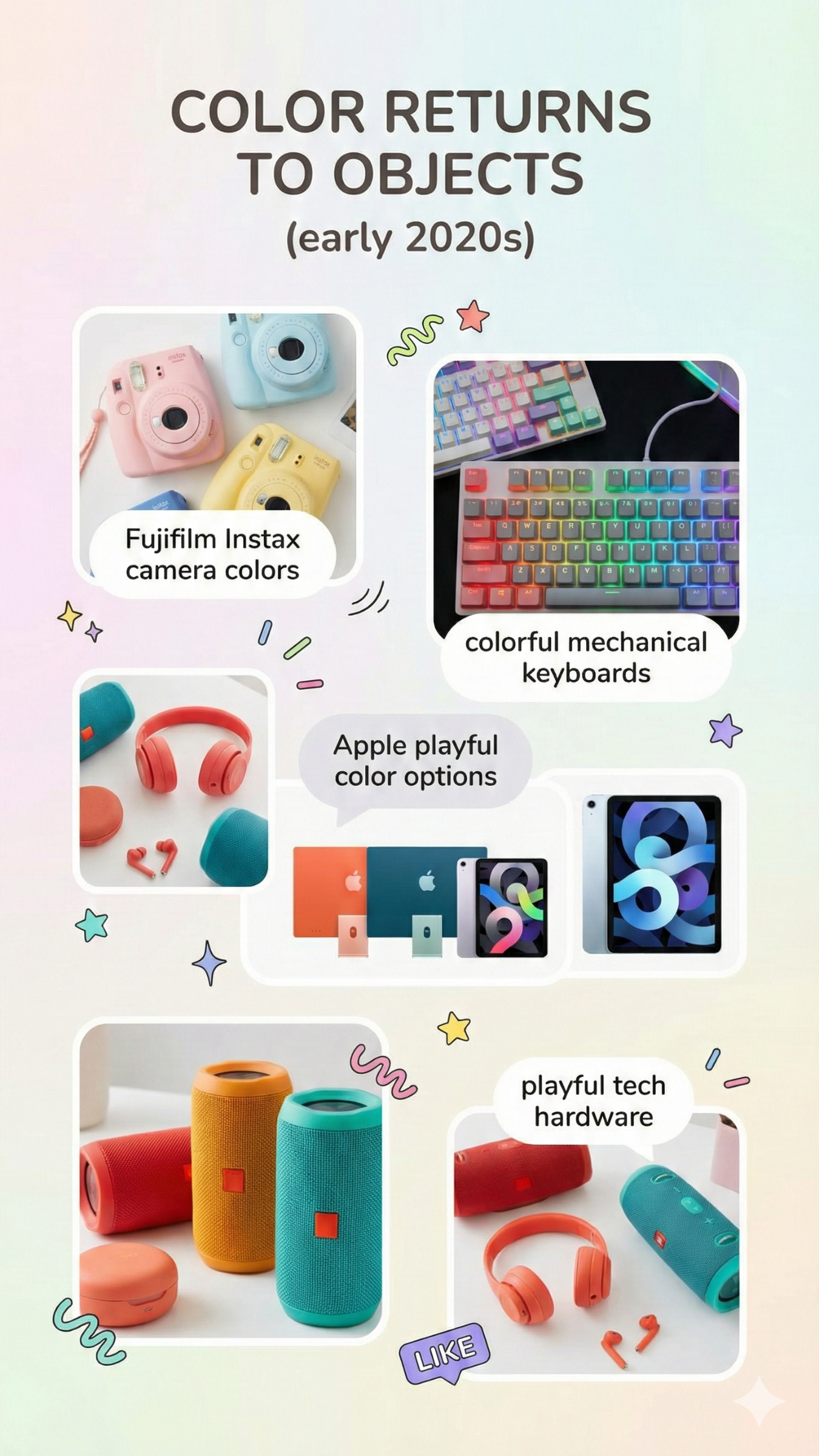
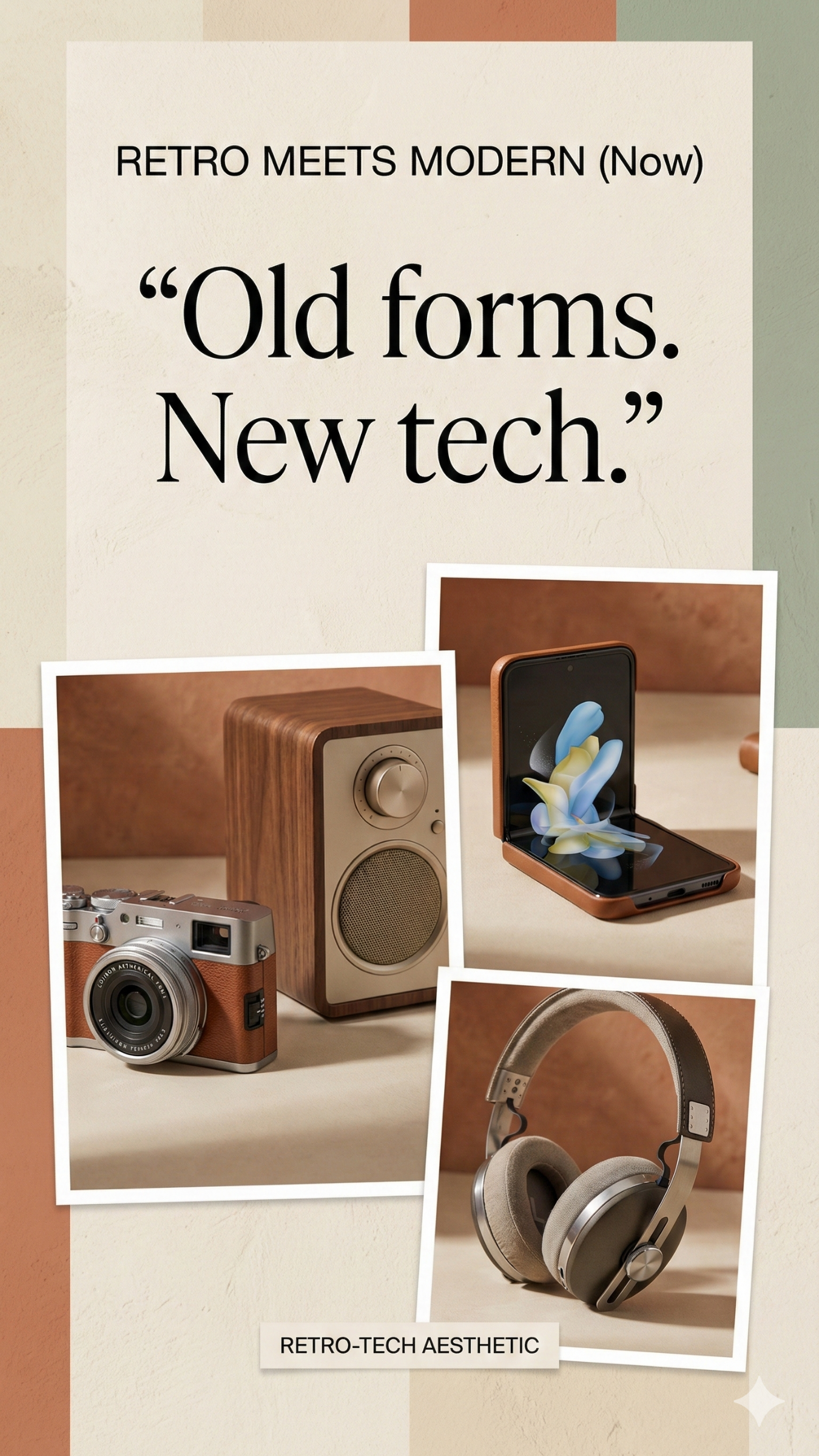
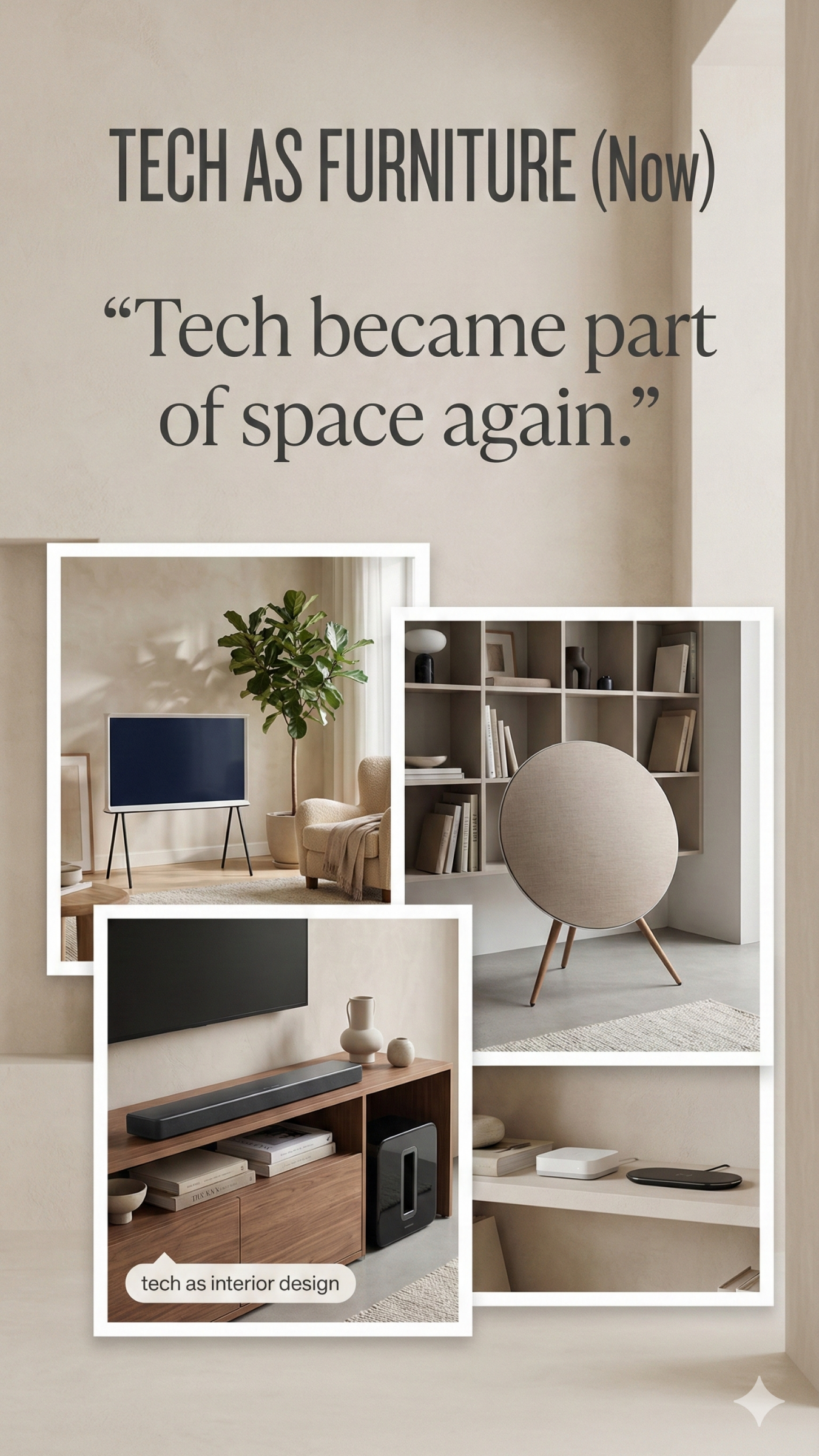
And now it’s slowly coming back. Cameras. Speakers. Keyboards. Tech isn’t trying so hard to disappear anymore. It’s trying to belong. Not loudly. Just… intentionally.
That’s the part I keep coming back to. Color has always been a signal. What’s changing is what we’re signaling now. Less control. Less authority. More presence. More care.
It kind of feels like technology remembering how to live with us again.
Thank you for thinking with me. This piece is part of Ode by Muno, where I explore the invisible systems shaping how we sense, think, and create.
The quote at the intro is from the book, Systems Intelligence.