
Touch.
The science behind “skinified” Black hair care
I kept looking for images, especially microscopic ones, that clearly showed what high porosity, low porosity, dense, damaged, fine, and coarse hair actually look like. Real visual references that could make the differences click. And I couldn’t find them in a way that felt accessible or intuitive. So I tried something else. I used Claude and Gemini to generate descriptions and visualizations based on how these hair types behave at a structural level. They’re not meant to be perfectly accurate or literal representations, but they offer a useful lens, a way to imagine what might be happening inside the hair fiber with moisture, when cuticles stay sealed, or when a strand breaks easily. Sometimes having a mental model, even an imperfect one, is better than having none at all.
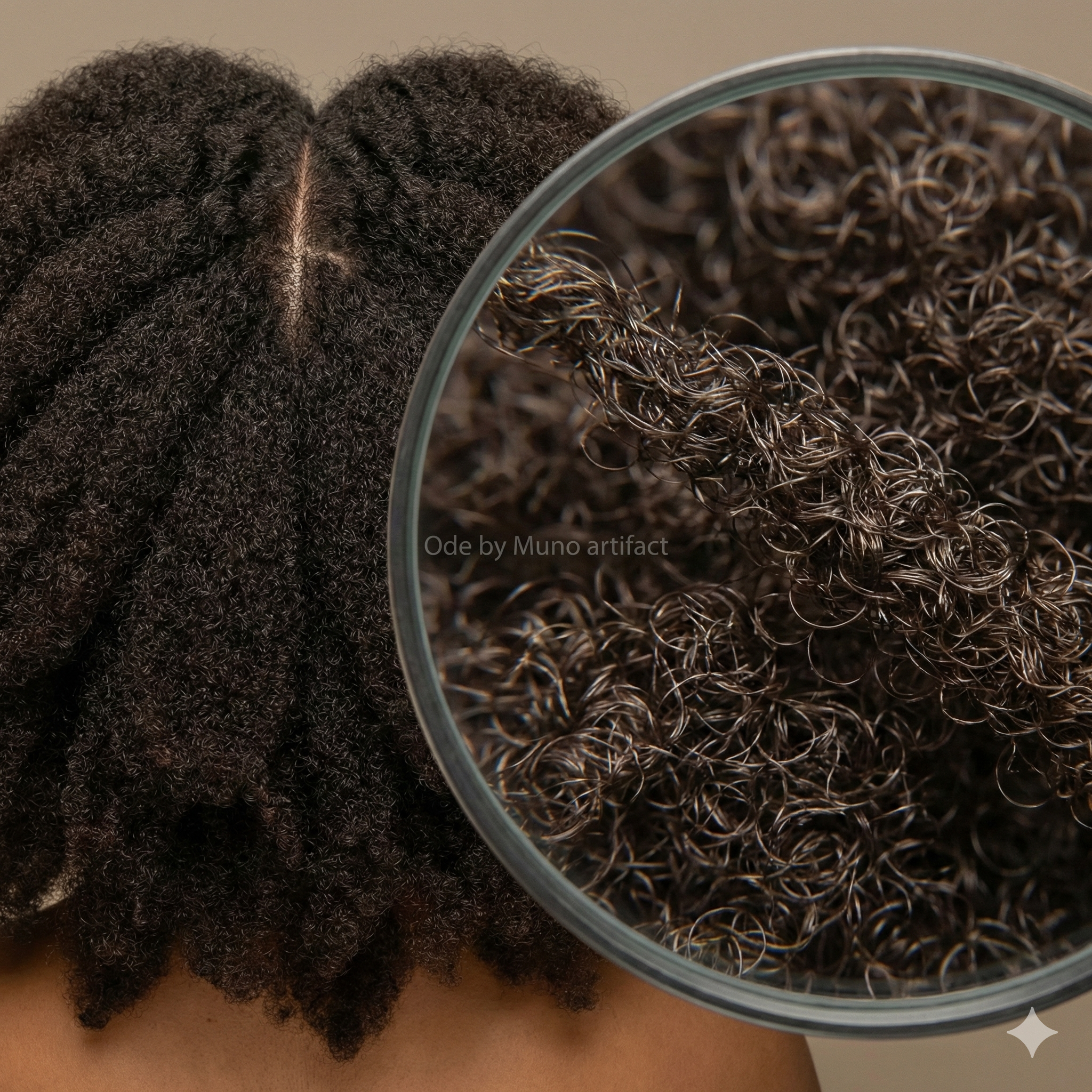
Dense Hair
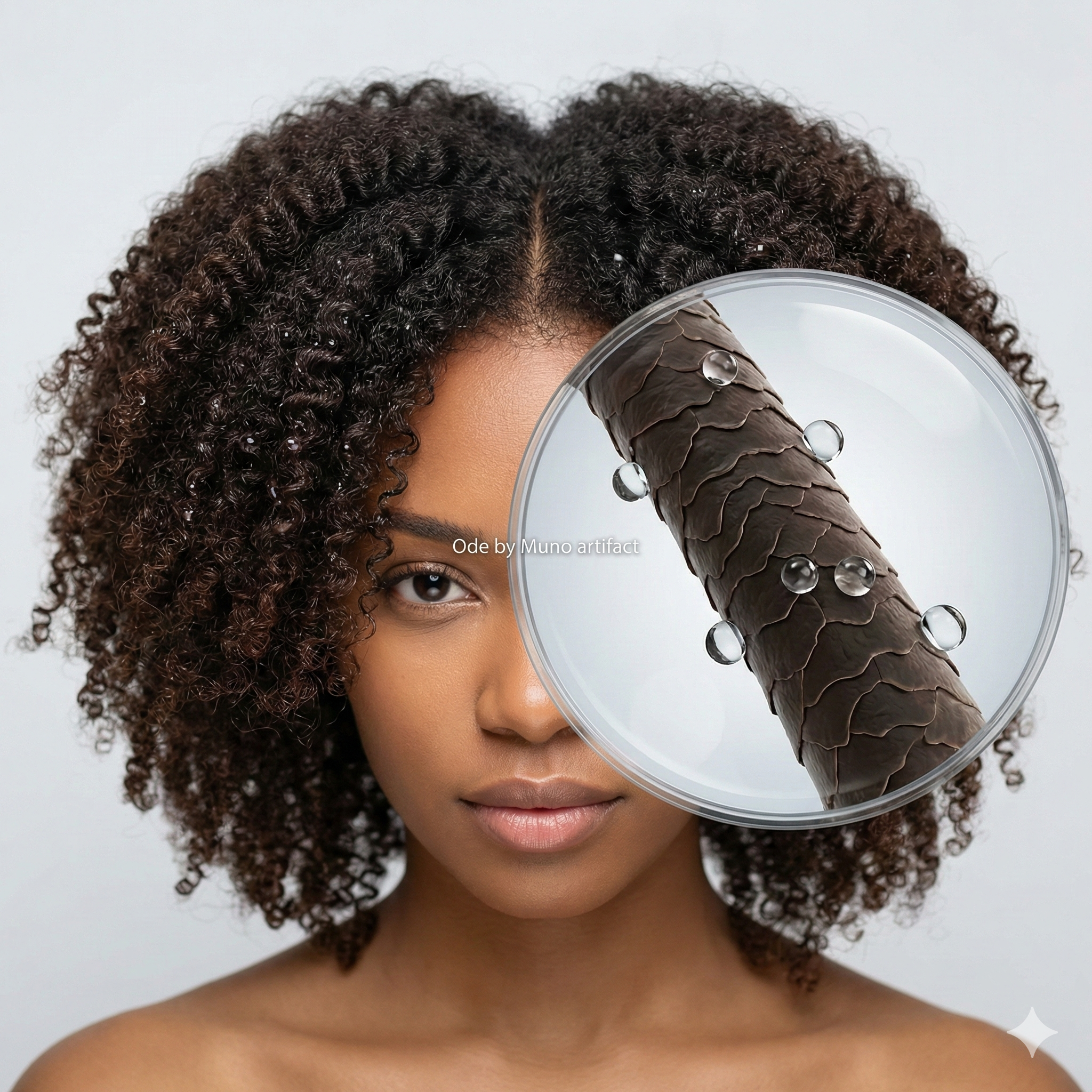
Low Porosity Hair
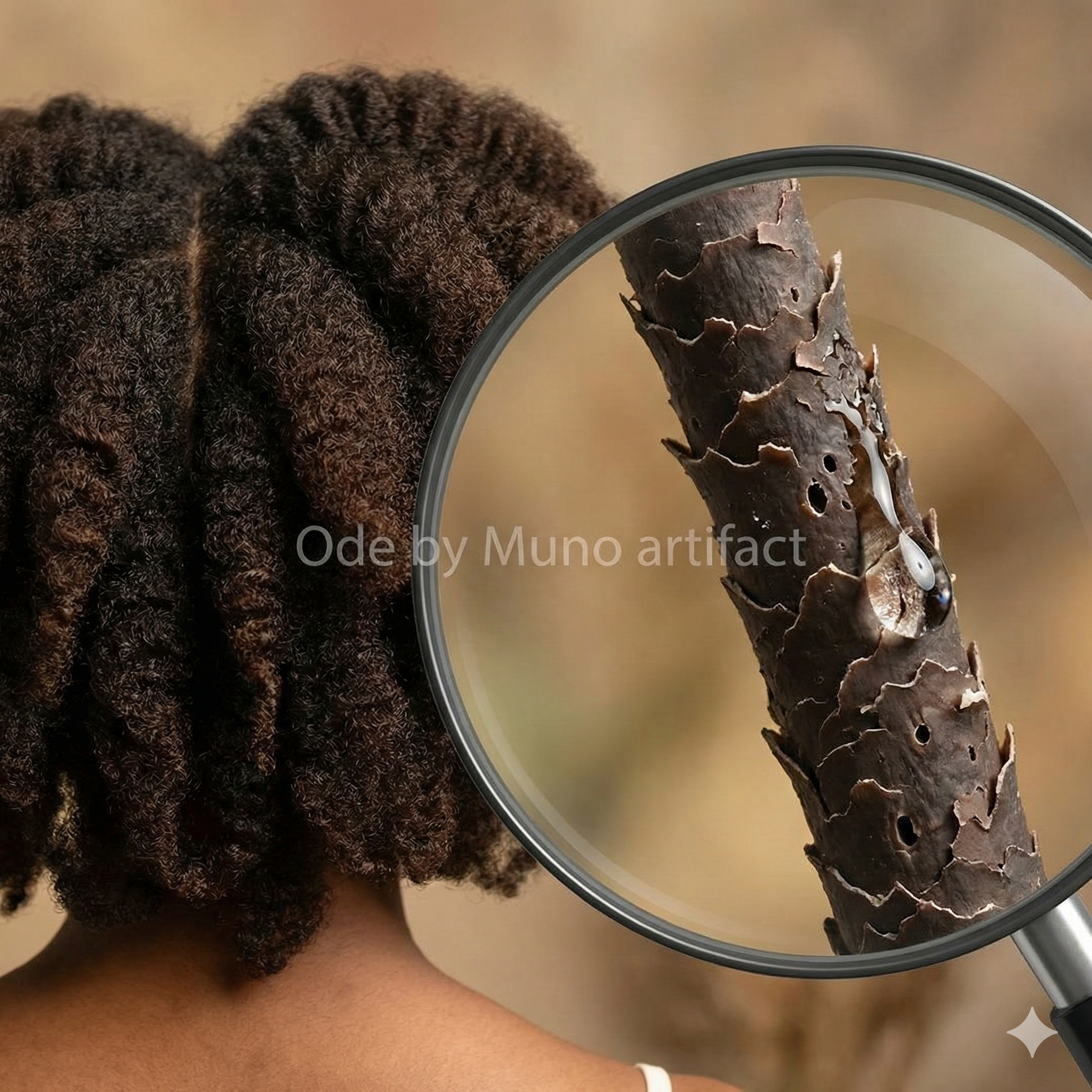
High Porosity Hair
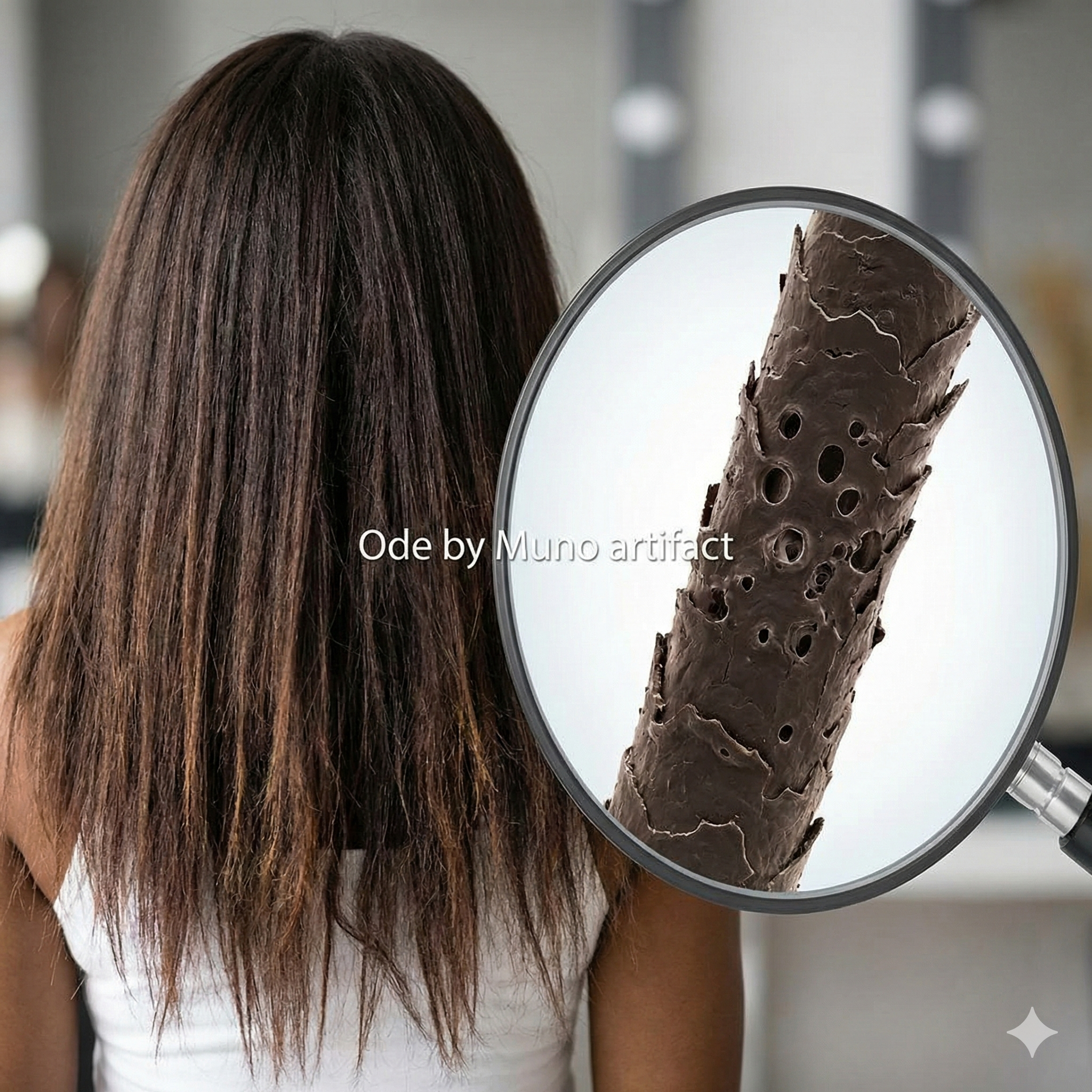
Damaged Hair (Heat, Color, Tension)
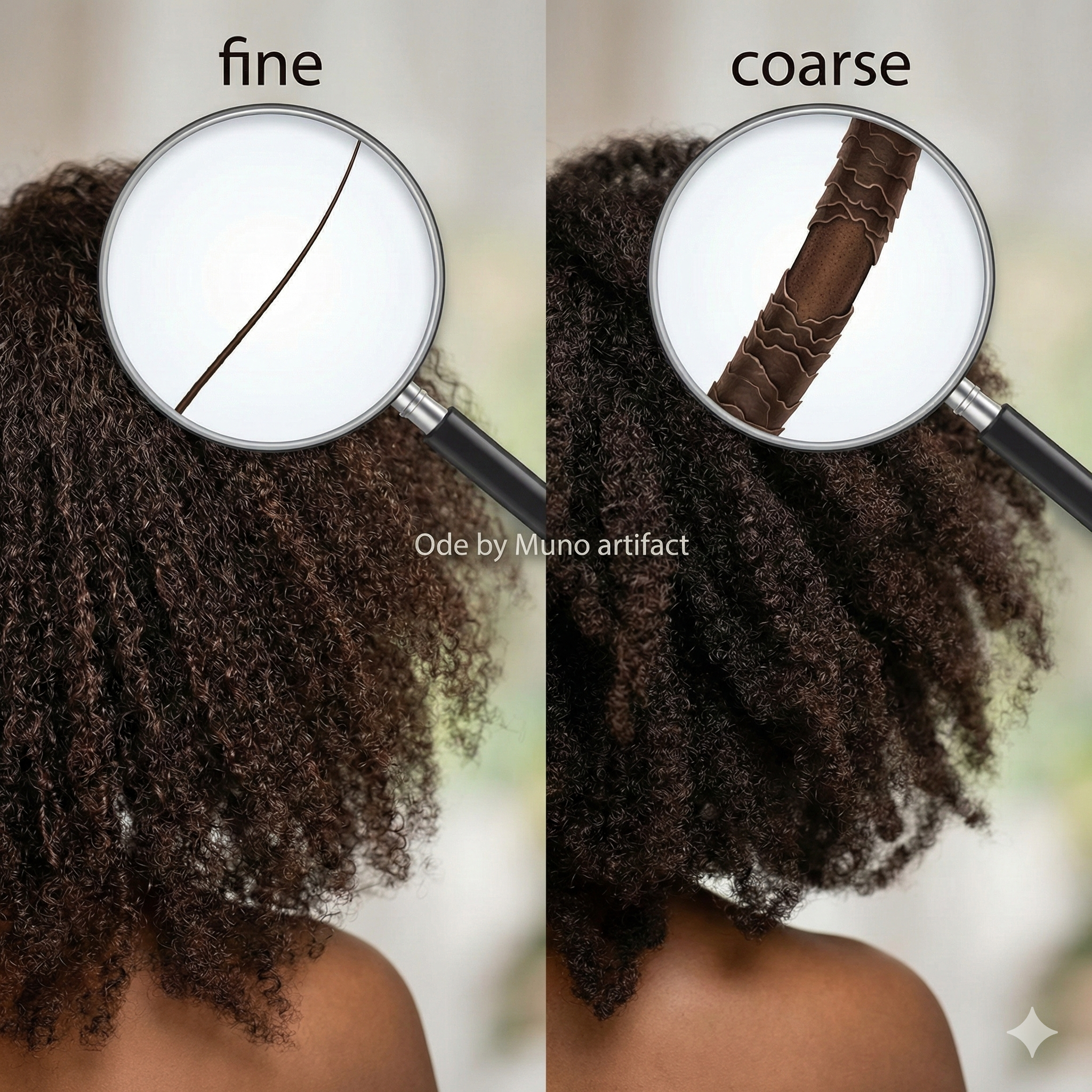
Fine vs Coarse Hair
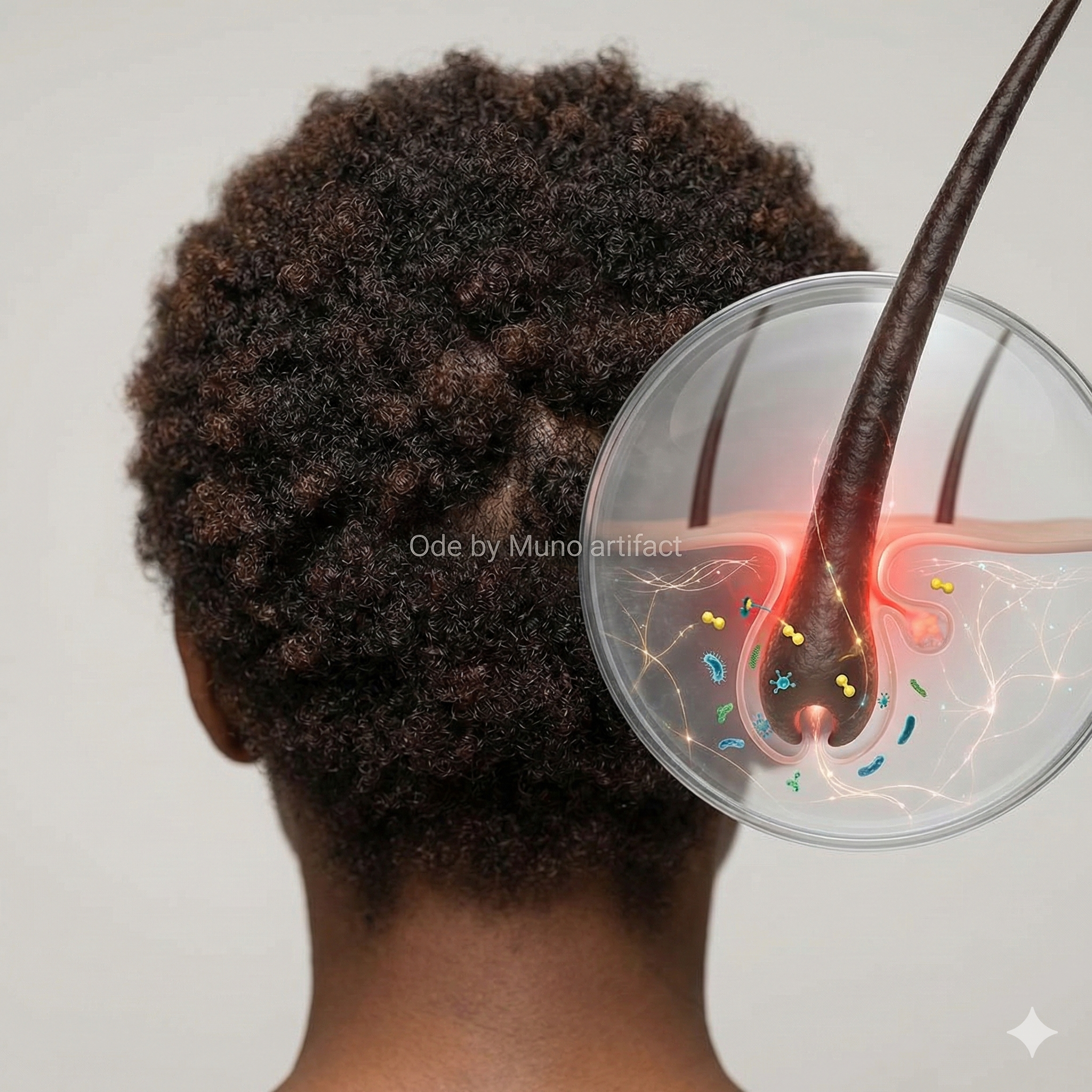
Short-to-Long Hair