
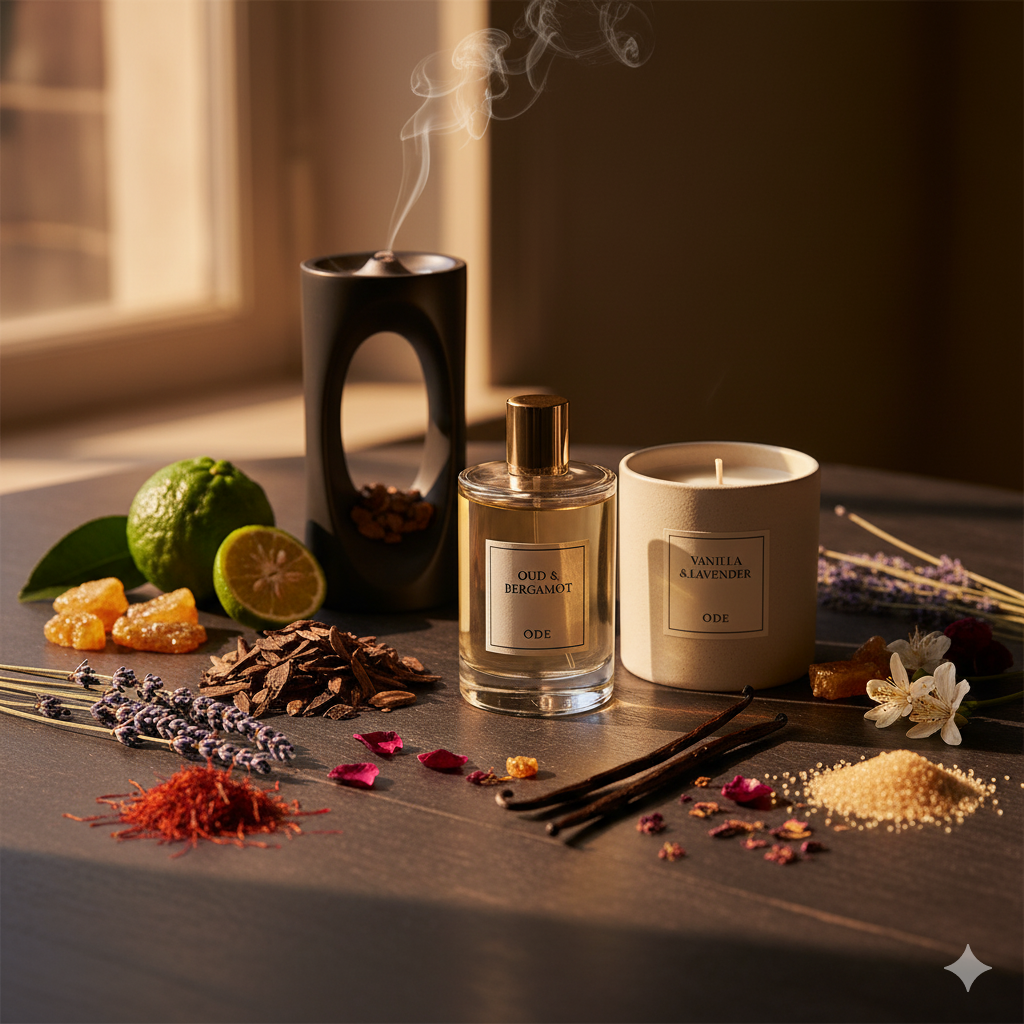
Perfume was our first algorithm
Long before formal math, Tapputi of Mesopotamia was already experimenting with scent. Around 1200 BCE, she distilled flowers, adjusted ingredients, and tested how perfumes evolved on skin and made people feel over time. What she understood intuitively is what we now call the three acts of perfume: the first impression, the heart you live in, and the memory that lingers. We still experiment the same way today, through layering and building scent wardrobes for different moods and moments. Perfumery was one of our earliest systems: input ingredients, test combinations, optimize for feeling.
experience value = emotional impact ÷ time spent
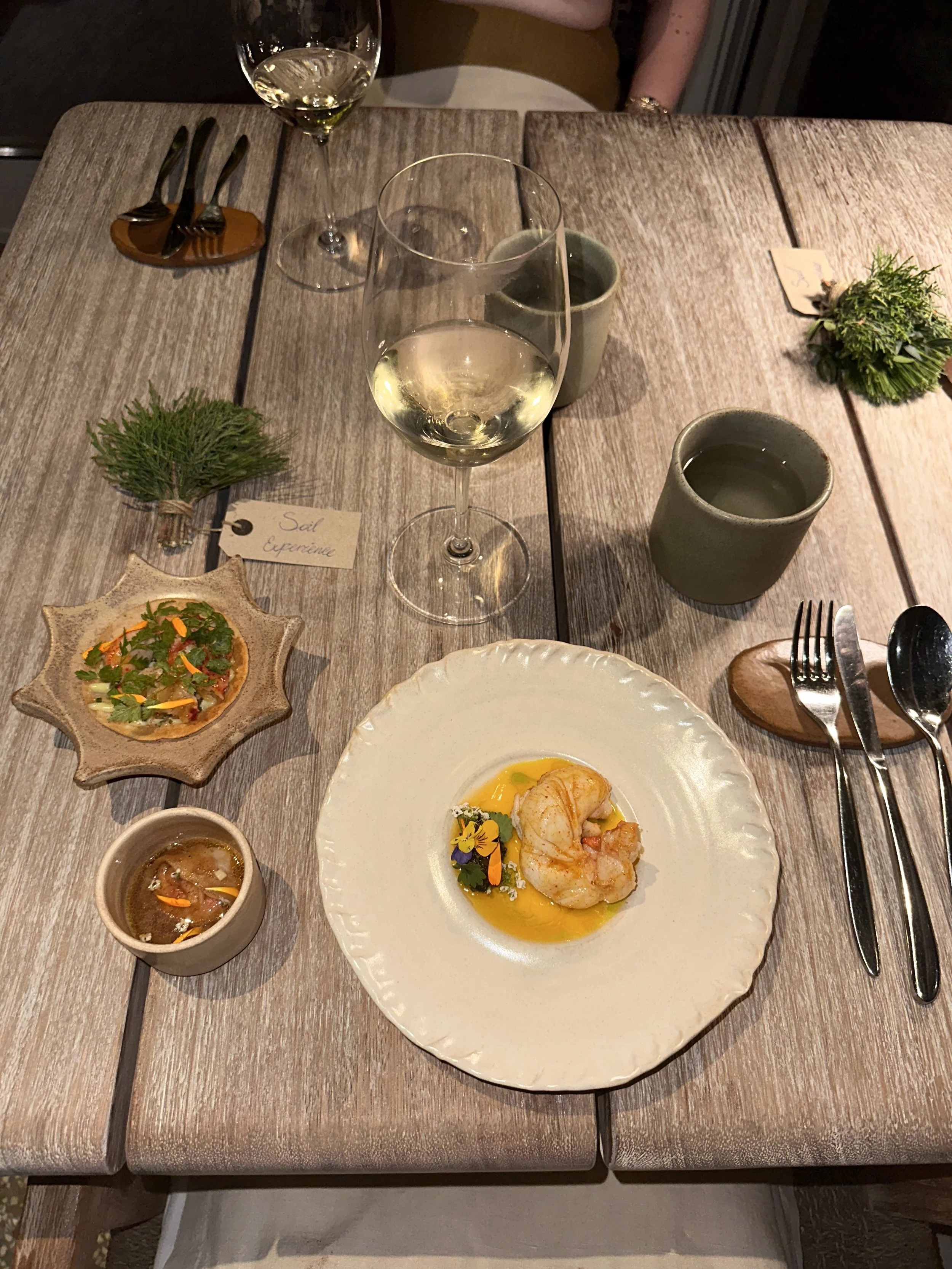
Something fundamental has shifted in how consumers measure value. It's no longer about what you buy, it's about what you feel. Across industries from fragrance to hospitality, from fine dining to beauty retail, I derived that experience value equals emotional impact divided by time spent. Welcome to the Experience Economy 2.0, where brands across sectors are shifting from products and services to holistic sensory experiences that engage emotions, memories, and multiple senses simultaneously.
experience = space · time
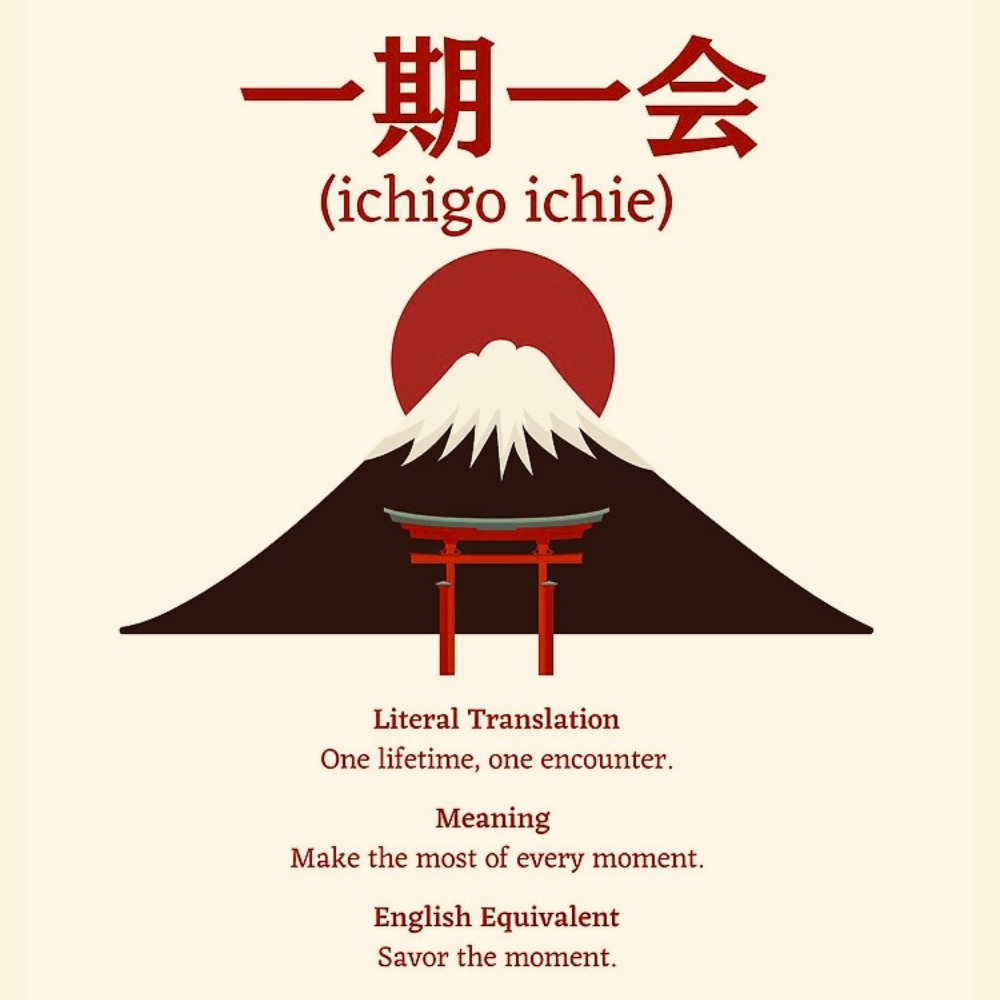
In my last post, I wrote about how how brands now design for how we spend time with them, not just what we buy. The attention/creator economy has turned time into a sense of its own: something you feel, allocate, and remember. So in this post, I’m introducing the Ode Experience, a way of planning around time as a sense. And I’ll use Japan, a trip I planned with two friends, to show how this plays out. The experiences that stay with us are the ones where time is intentionally shaped & the Ode Experience is simply time well spent.
food ⇔ drink : the bipartite graph of perfect pairings
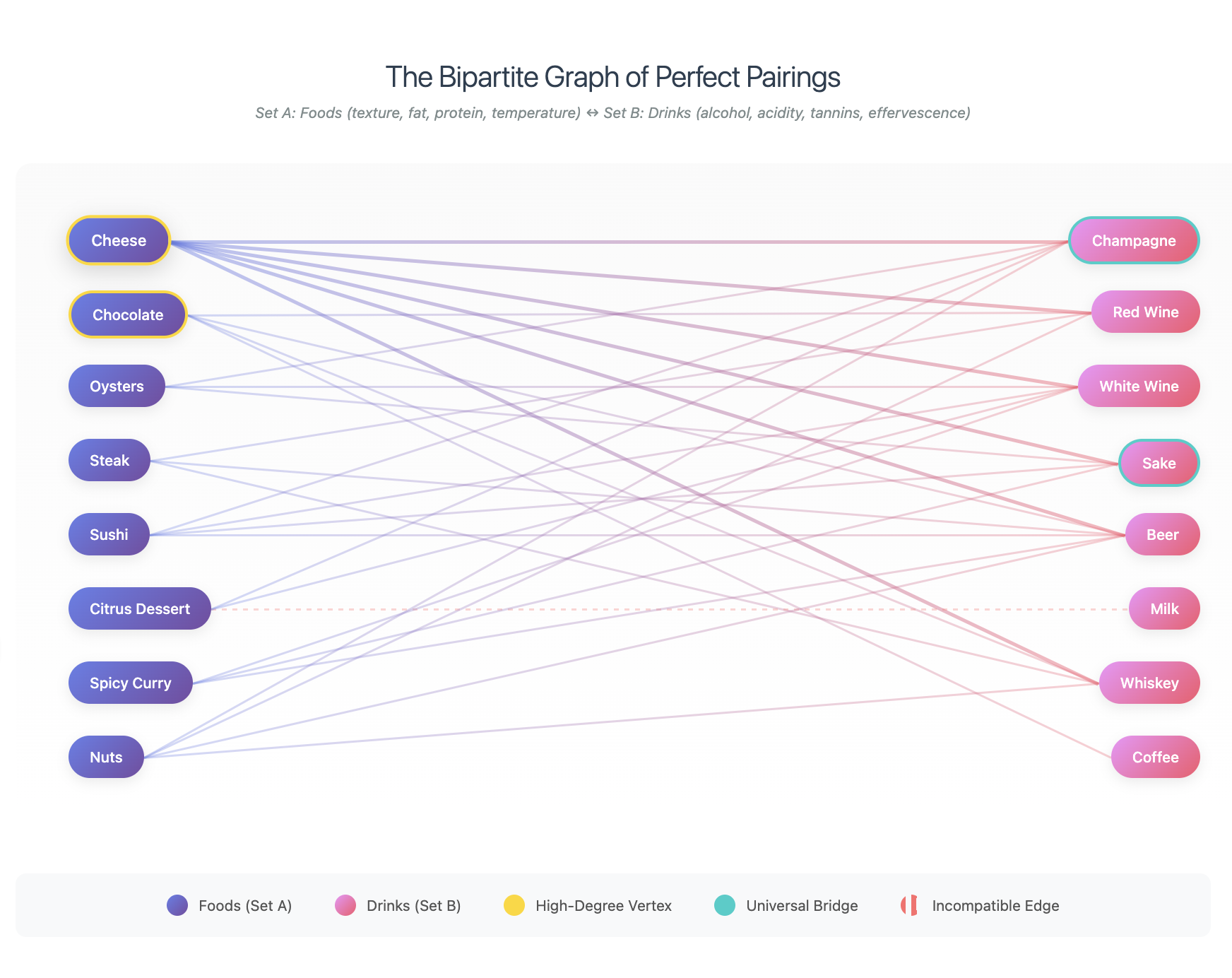
I’ve always found pairings fascinating and exciting. This year I started experimenting more myself, putting together little food-and-drink menus at home. Somewhere in that process, I’ve been building a mental graph. Set A: foods. Set B: drinks. The “edges” are whatever actually works: harmony, contrast, surprise. I used to think pairing was mostly rules but now it feels like learning which nodes in your taste map want to connect, and why.